Delusions to Die By

Though historians may beg to differ, it seems that humans have never been this close to self-annihilation. While wars rage and the earth gets trashed, the most pressing moral inquiry of the masses is this: “How can I get a better deal?”

A derisive snort and mocking applause announces The Presence in the corner.

“Hello, Holy Contradictions,” I mumble.

What I tease into words in the murky dawn might be the wind or a mouse scratching in the wall, but I feel certain something beyond is lurking in the cosmos. I offer greetings most mornings.

“Good day,” HC says, emerging from chimera to full status as a citizen unto itself. It has wings. It has legs. It has a beating, bleeding heart. “You aren’t wrong,” it adds from a perfectly formed mouth.

“You mean my sarcastic comment about the morality of acquisition? The Art of the Deal? Or the nearness of extinction?”

“It’s all rooted in selfish genes and the wrong-headed notion of survival of the fittest,” HC says with scorn. “You think you want fat lives, herd immunity, and evidence of superiority as indicated by possessions and an address on Easy Street.”

“True,” I admit. “That does sound good. Makes me want to be the fittest.”

HC snorts again. “Have you thought that through? C’mon. You’ve got the brain power to get beyond your genes. In the end, the Fittest will stand armed, paranoid, and alone. The winner of the rat race is a rat.”

“Nice platitudes,” I say. “Got a better way?”

HC shrugs. “Stop deluding yourself. No one survives. It’s Now that counts.”

“Thanks,” I snap. “I feel so much better.”

“The ultimate measure of fitness is how you love and protect the unfit. It’s time to break the light into itself, hold the Face of Anger in your hands, and let her bite you.”

My hands are fisted. “You are certifiably nuts,” I say in a low, edgy voice.

“And you are certifiably angry,” HC says with authority.

“Yeah. So, I’m supposed to bite myself?”

HC nods. “And hold the Faces of Joy and Justice but be careful. They’re elusive and explosive.”

“You’re seriously insane,” I say. “I can’t do any of this.”

“Oh, but you can,” HC insists, not at all sympathetic. “Hold all the Faces of Insanity in your hands and let them bite the hell out of you.”

I stare at my weathered hands. The biting has begun.

“I’d rather hold your face,” I plead, frightened.

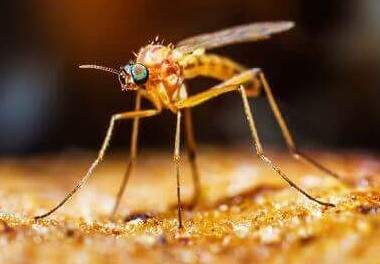
“Oh, my little mosquito!” HC says gently. “What do you think you’re doing?”

A grim hilarity takes hold. I slap myself silly, and for now, we get on with it.
Myth and Ritual

“You don’t like being referred to as Myth and Ritual, do you?” I asked my friend, Myth and Ritual, as September settled around us.

“Not really,” Myth and Ritual answered. “But people do what they have to do. I do what I have to do. Very little is predetermined, but very little is conscious choice.”

This didn’t surprise me. I want to think people have choices. That God has choices. But it’s never that simple.

Take death, for example. Over 6,000 people will die during the hour I spend writing this morning. Not many of them will have chosen to die, but nonetheless, they will pass gently or violently, awake or asleep, young or old, into what humans call death.

“Yes, choice appears to be a rather limited concept,” I echoed. “So whose calling the shots?”

“Ah, there are so many friends invited to that party. There’s Immune System. She’s an erratic one. And those nasty twins, Greed and Poverty. Genetics is always primping in the nearest mirror, giving Folly and Fate the evil eye. War, Famine, and Pandemics all elbow in on the action. Even the occasional virus or mosquito.”

“Enough!” I shook my head. “Those are just excuses.”

“It’s all the same. When Myth or Ritual fail, we step in as the Mother of all Excuses.”

“I am absolutely not calling you that,” I said.

Myth and Ritual laughed. “Got a better idea?”

“Yeah. Today, I’m going to call you Sparky,” I said. “We’re all just walking tinder boxes. You could fan us into flames with a glance.”

“Sparky,” they said. “We like that.”

“I figured you would,” I said. “People chop you into human size chunks and then try to defend you. It’s volatile.”

“That’s outlandish and dangerous!” Sparky declared. “A true deity needs no defense.”

“But good things seem to need defending,” I said. “And bad things need explaining.”

“Yes.” Sparky looked smug. “A dialectic.”

“So, we’re back to Myth and Ritual,” I said.

Sparky frowned. “Maybe. But the horses are saddled. They know the way.”

“To where?” I asked, disoriented by all the non sequiturs.

“To fruition.” Sparky’s voice had mellowed to water. “To peace.”

“How will I know which one to ride?” I asked.

“Different times, different horses,” Sparky murmured. “They’ll come when you call them by name. Courage. Forgiveness. Compassion. Joy. And. . .” Sparky paused. “You might not like the last one.”

Outside my window, fiery autumn foliage was blowing around.

 “It’s Acceptance, isn’t it?” I whispered.

The trees swayed and held their ground even as the wind stripped them bare.

And I loved them for that.

Ecclesiastes for the Average Reader: A Tutorial

To everything, there is a season and a time for every purpose under heaven. A time to eat chocolate, a time to eat greens. A time to float the river, a time to cut hay. A time to blame, a time to own up. A time to back away, a time to give it your all. A time to dig and a time to refrain from digging.

Reader, please provide your own examples of holding on or letting go. C’mon. You know:

But what’s the use? You grow up. You grow old. Your carefully arranged treasures will be donated or dumped. The shrubs will be misunderstood, and the thistles will return. The stove will backdraft, the colors will run. You’re on your own, and the cards are stacked against you. You are not different than the beasts of the field. And as beasts die, so will you.

Reader, please provide three (only three) examples of your existential despair:

You’re a phony, a caricature of sincerity, a grumbler, a whiner, a blamer. You’re a striver after the sun. You’ve lied, stolen things, and lusted after fame and fortune. You’ve coveted and secretly rejoiced at someone else’s misfortune. You build bad fences. Everyone should be on your side. They’re not. You repeatedly make the same stubborn mistakes, and you’re as vain as anyone you know. It’s all vanity. All of it. This might be a good thing. Might not.

Reader, please cheerfully list three of your own moral shortcomings:

At night, you rehash failings and exaggerate the dreadful demands of the coming day. You toss and turn, sweating through self-inflicted anxieties. You torture yourself with blame, fear, and discontentedness. You wish you had control of your mind. You wish you believed in magic. Finally, as you imagine walking the plank, you fall asleep. But then you have to pee.

Reader, please provide all the reasons everyone should party late into the night:

In the meantime, what’s the harm in trying? What’s the harm in resting? What’s the harm in hoping? What’s the harm in keeping your nose clean and your heart open? Sure, you haven’t gotten it all right, and you never will. You’re far from flawless or erudite. Things rarely work out entirely as you’d planned. Wisdom isn’t all it’s cracked up to be. Now is the time to sigh and say “Ah, what the hell.” And the Teacher nods and says, “Seriously, what the hell?”

Reader, please shrug and provide your own what the hells. As many as you’d like:

Good work, dear one. It’s time for ice cream. Or not.  Next week, Revelations.

I Eat Your Joy for Breakfast

God is indulging in a morning nap, sound asleep on a weathered recliner near the garden shed. I’ve noticed that God can sleep pretty much anywhere. But I’m awake and agitated, stewing about climate change, greed, cruelty, and the limited hours at the landfill.

I clear my throat and speak loudly enough to wake anyone within ear shot. “Someone took a huge gamble when they introduced creativity and choice into their evolutionary efforts.”

God startles and sits up. “What now?” he says, rubbing his eyes, raking his fingers through his holy bedhead hair.

“Creativity,” I say. “The bored human is often a deadly human. We need to create and change things up. But then we compare. We get insecure and try to make ourselves more beautiful and have too many children and accumulate vastly more than we need. This leads to overpopulation, scarcity, and war.”

God swings his legs to the side of the recliner, stretches, and groans. “You’re so right. It’s a huge gamble. And yeah, it hasn’t gone that well so far. But it isn’t over.” He sees my scowl and adds, “I mean it’s always over, and it always isn’t.”

He lays back down, situates his hat over his eyes, and pats the space beside him. I perch on the edge. I do not know how to relate to this complacent, laissez-faire God.

“Blur,” he says in a languid voice. “Blur, mingle, melt.”

He means let go. He means he’ll carry me for a while. He intends to be a source of comfort.

“I can’t blur,” I whisper. “I know you have your ways, but I want to do something on my own. I want to make my mark.”

God sits back up. “And there you have it,” he declares.

The profound irony of what I just said hangs in the air between us.

God sighs. “You are still adolescent apes; you need to play. But your marks will all wash away. Remember, the lasting measure of worth is compassion.”

I look down at my hands. God continues. “And the nature of mercy is upside down. The gluttonous will eventually fast. The lips of liars will be purified. It’s all about balance.” He winks and adds, “When you get it right, I eat your joy for breakfast. It’s delicious.”

I stare across the expanse of my life. Finally, I say, “And when you speak, I stir-fry your words for dinner. They’re tasty.” “Fair enough,” God smiles. “That makes me happy.” But as he drifts back to oblivion, I hear him mutter, “Or at least I think it does.”

Hog Heaven

From my bank of unblinking windows I watch the ways of old trees dying. None are a direct threat, so I keep a respectful distance and consider rootedness and wind, drought and disease, and the sustenance dead trees leave for future generations.

Like trees, we exist fleetingly between flood and fire, partaking of a generous past, discovering our relevance even as we decay. I have been reborn many times, birth canals shaping the way things look when I reemerge. This morning’s reemergence is solemn. I am grateful for the stillness.

But my revery is interrupted by two pigs noisily reminding me it’s breakfast time. Obviously, their pen is too close to the window. These exuberant uprooters are stinkers in every sense of the word. I try to limit my fondness, but the way they make eye contact is most endearing. I see interest. Recognition. Maybe even primitive affection. I also see the truth. They are omnivores. If I were down and broken, they would eat me. And I’m sure somewhere in their active little brains, they are aware that I am a predator, and they are worthy prey.

“And thus you could break and eat them,” God says, finishing my thought.

“Eat or be eaten, eh?” I say, scattering soaked corn for the dramatically ravenous pair.

“Almost. But actually, it’s eat and be eaten,” God says. “That’s the plan. A good one, if I do say so myself.”

This is not a new conversation. I wrinkle my nose as images of mold, fungi, maggots, and other faithful workers of creation come to mind. I am an integral part of an inclusive, circular, cleansing, evolving, expanding universe. Pigs, chickens, cattle, yaks, grasses, trees, seeds, whales, mules, plankton, cabbage, caviar. Apples, melons, hybrids, bones, stones, erosion, uprisings, down-fallings. I sigh and look at my hands.

“So, God, what do you eat?”

God laughs. “Oh, I nibble on almost anything. I’m not picky. And before you ask, let me add that I am also eaten.”

I resist this idea, but then I realize I’ve always known the divine and sacrificial taste of God.

“You’re welcome.” God says, dissipating into the blue tangibilities of a day that has arrived unscathed.

There are orange chunks of squash in the trough—the final remains of last year’s garden. I sweeten the deal with an outdated protein drink we bought for a friend with cancer. The pigs are in hog heaven. I’m jealous of their uncomplicated joy.

Uncle Bud

Just days ago our beloved Uncle Bud fell and did not regain consciousness. This past year his body and mind had started giving way, and our collective family grief began. Now it’s in full force. He’s gone.

Among his many achievements and passions, Uncle Bud was a master fisherman. I walk by the river, seeing it through his eyes, feeling his hand-rubbing oh-boy enthusiasm from the inside out. God walks alongside, quiet.

“It wasn’t all rosy,” she says. “For him or your mom…”

“I know,” I interrupt. “They didn’t talk about it much, but I know.”

Uncle Bud was generous, kind, and positive. Filled with good humor and gratitude. In contrast, his childhood included poverty and difficulties most people don’t have to face. In a moment of rare self-disclosure my mom told me that she and Uncle Bud had a pact: They would be there for each other, and they would never, ever give in to the negativity and deprivation they experienced as children.

I’ve known a lot of bitter, unkind people, who constantly blame others for their troubles. Their parents, the government, teachers, partners, neighbors, children—anyone but themselves. Fault-finding is a toxic hobby; blame obliterates gratitude. This is ironic because gratitude lifts the spirit. But for some reason, finding fault is simple, and blame is easy. Gratitude takes effort.

“Why is blaming so seductive?” I ask God.

“That’s a no-brainer,” God answers. “It’s lack of center. Lack of compassion. Insecure people crave admiration. They focus on what’s wrong around them to build themselves up. They’re takers, not givers. Enough is never enough and they are never to blame.”

“Yeah,” I said. “I feel that tension all the time.”

“What tension?” God asks with false innocence.

“I want to be positive and cool like Uncle Bud, but I also want everyone to notice how much I give, how hard I try. I tell myself it’d be good for them to be grateful. But that’s not how it works is it?”

“Being positive is a choice, and gratitude’s a choice. You can’t demand gratitude,” God says with a knowing grin. “Trust me. I’ve tried!”

 “Ha! You’re almost as funny as Uncle Bud.” I smile sadly.

“Thanks,” God says. “He really was amazing.” I nod. We watch the trout rise. And together we remember Uncle Bud with sadness, love, and deep well-earned, willingly offered gratitude for the courageous choices he made and all the ways he added happiness to the lives around him.

Tomorrow and Tomorrow and Tomorrow

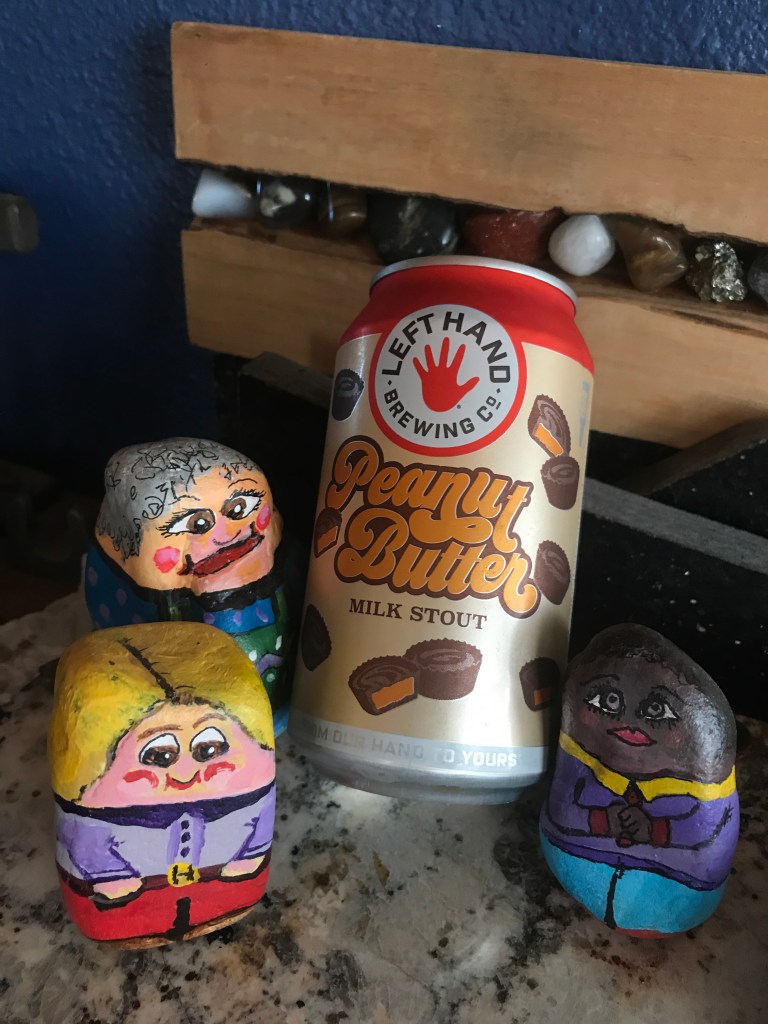
The very greenly greens out my window should be making me happy. The realization that I cannot save the world should be a relief. The ways I am rich should bring me joy: my art supplies and new welder; a soulmate, nice neighbors, kindred spirits; drawers full of chocolate; the asparagus, birds, and well-gravelled roads. But no. I’m not happy. Not relieved. Not filled with joy. I’m surprised God even wants to share my peanut butter milk dark stout. But here she is, swirling the frothy brown around like a connoisseur.

“Sweet and musty,” she says, with an exaggerated French accent. “With une légère saveur de dirt.”

“Stop it,” I say. “You’re not funny. I’m in a very bad mood.”

“Really?” God asks. “Who would’ve guessed?”

I ignore the sarcasm. “The thing is, God, I’m not sure what I want anymore. I thought it was a blue couch and a book club. Silk pajamas. Clarity about what to give away and how to die. But the days roll on … tomorrow and tomorrow and tomorrow creeps in this petty pace…”

“And here you are, strutting and fretting your hour on stage,” God interrupts, picking up on that profound riff Shakespeare wrote for his character, Macbeth, four centuries ago.

“Not strutting,” I protest. “But yeah, maybe fretting.”

God grins. “My favorite definition of fretting is to gnaw with teeth in the manner of a rodent.”

I don’t want to smile, but who can resist that image? God and I clink our glasses together and she says, “When you die, you’re gone. But what you did with your life stays. It’s fine if you leave some teeth marks here and there. I leave some myself occasionally.”

“I know,” I say. “I’ve got the bite marks to prove it.”

“Oh, those aren’t mine,” God says. “Look closer.”

Dental patterns are unique. I know very little about God’s dental features, but I’m familiar with my own. I examine my scars. It appears I’ve been gnawing on myself for years. I run to check nearby loved ones, and yes, I’ve gnawed on them, too. God reveals her tender underarm. Unbelievable. I’ve even gnawed on God.

“Sorry,” I mumble. “That’s not the legacy I was hoping for.” I grab some healing balm and rub it on God’s flesh. The bite marks fade. “I’m so sorry,” I repeat. I offer God my first born, my pajamas, my credit cards, and the book club. God laughs, helps me rub some balm into my own bite marks, and shakes her head.

“None of your stuff fits me,” she says. “But you’re on the right track. Carry on.”

When the Choir Preaches Back

Sometimes I count my blessings; sometimes I count my years, and though I don’t like admitting it, sometimes I count the number of people I think of as willfully, proudly ignorant, and my mood sinks. But as dawn arrives and light asserts itself, my despair dissipates into benign speculation, and I am among the billions awaiting transitions no one can explain. I watch God in the fire and in the lines of frost across the windows evaporating directly into air. I watch God peacefully protesting greed, misogyny, and cruelty. I imagine my grandchildren and their grandchildren carrying genes across the great divides of life and death, and I am both stricken and intrigued. What could I possibly do to lessen the burdens and reduce the suffering to come?

God emerges gentle. Always gentle. Always sacrificial. Always self-assured. Kindling for the fire. Moisture for the frost. God surrounds me, stone tools, dead branches, herds of deer, flocks of sparrows, and a holy stillness in which I can rest. I don’t want to rest. I am aware of how easily I will break and burn and disappear. I want to speed down the runway and lift into a sky that will leave me unbroken and unchanged.

“If you reduce the suffering, you reduce the joy,” God speaks in everywhere voices. “If you take away the burdens, the bones soften. The understandings recede and the cost rises.”

“Hello, Old Friend,” I say. “Let’s not fight today. I won’t disagree or complain or act as if I know anything at all. Instead, could we fly? Could we walk through fire, find the garden, and open the gates?”

God laughs and lifts a million arms in praise. A multitude of God begins to sway to an inescapable beat; a galactic choir robed in sunrise crimson bursts into a seditious version of the Hallelujah Chorus; I’m not Mormon or Jewish, Muslim or Buddhist, Jainist or Hindu, or anything defined beyond my tenuous friendship with God, but as I sidle up, my Friend throws a heavy velvet robe across my shoulders, and I join the altos. We sing the truths of repeated defeat. The roiling ocean of human sorrow buoys us up, the crashing waves, a steady percussion section. Hundreds of soaring sopranos lift off and take the high notes with them, but like spring, they promise to return.

The Meek

“Here’s the question,” I said to God. “Why would the meek even want to inherit the earth? After the unmeek are finished pillaging, what’ll be left anyway?”

Three distinct snow devils twirled by, and then a vicious wind blew the remnants of the last storm across the garden, blurring my view. The weather patterns have begun to express earth’s outrage at its tormentors. The meek stand at the far end of the long arc of justice and there’s no pot of gold awaiting. Only diminishment and misery.

“Interesting question,” God said. “Could I get a couple of scrambled eggs? The brown, free-range ones, if you please.”

“Why?” I asked. “What’s the point? You’re not hungry.”

God shrugged and made his own eggs.

And here’s another interesting question,” I said with some irritation. “Why is nature so exquisite? Elephants. Apple trees. Caterpillars. Orchids. Translucent baby mice, huddled in their circle of pink, bones so tiny they could be eyelashes. Wild skies. Bengal tigers. Wheat fields before harvest. Fire. Ice.” I paused, caught up in the complexity and splendor of it all. Then added, “and why are humans so destructive?”

God ate his eggs, nodding and smacking his lips. “These eggs were fertilized,” he said. “Circle of life and all that. Tasty. But this toast is questionable. I think your flour has gone bad, and I think I’d like some ice cream.”

I sighed. The wind had died down. The air was clean, my vision unimpeded, my flour rancid, my questions mostly unanswered, and for some inexplicable reason, my soul was at peace. A cold snap was rolling in, but we had enough wood. I vowed to have more faith next time and buy less flour. But I bake a lot of bread.

“Survival is a complicated, temporary equation, isn’t it?” I asked God as he zipped his down coat, wrapped his neck with a wool scarf, and pulled his rabbit fur hat down tight. I didn’t expect him to answer, but he did.

“Yes and no,” he said. “On one side are the essentials: Compassion. Humility. Sacrifice. On the other, well, you figure that out.” He took a long lick of what appeared to be licorice ice cream and added, “It may involve delight.” Then he slipped out the door to the west where joyous and majestic mountains rose to greet him. There were snowshoes strapped to his back.

Hair

Human hair is fascinating. We’re not nearly as furry as our ancestors and cousins, but we still sprout the stuff. Left alone, it signals everything from how old you are to how well you slept last night. But of course, we don’t leave it alone. We cover it, color it, play with it, yank it out, let it sluff off, implant, extend, shave, curl, straighten; We cut it, dreadlock it, donate it, and occasionally douse it to kill off the lice.

We’re sometimes born bald. We sometimes die bald. I was yanked from the womb early with forceps that left my head badly misshapen. Fine tufts gradually grew in, and my hair was unremarkable for decades. But then God let cancer have a go at me, and the chemo stripped it all back off.

“What???” God says, emphatically.

“Yes, all of it. Legs, arms, eyebrows, privates…”

“I know what you mean, but ‘God let cancer have a go?’ C’mon. Is that really how you see it?”

“What other way is there?” Me, arms crossed. God, preening in the mirror.

I don’t want platitudes for an answer. In my limited view, if God is God, then that’s that. Good and evil might seem definable in the moment, but as time in our mortal bodies passes, clarity fades and boundaries blur. Any kind of loss, torture, crucifixion, or disease takes a terrible toll. But endings, unsettlings, baldings, and pain often provide the energy necessary for rebirth, joy, peace, and health.

“True,” God says. “But even that isn’t the whole story.”

“So, then what’s the whole story?” I ask. But I have a pretty good idea what God is going to say.

“There is no such thing as a whole story,” God says, with a grin larger than necessary. “The wholeness of the story is in the process. There are no tragic or happy endings, because there are no endings.”

“I knew you were going to say something impossible like that,” I say. “And you know they feel like endings, right?” I tip my head to the side and add, “At least you didn’t blame anyone.”

God touches my face, kisses my head, and nods. “Nice chatting, but I need to go now. I’ve got a hair appointment. Just a trim, but I’m thinking of adding strands of purple here and there.”

God is beautifully grey, but purple will be a nice addition. And as for me, my hair’s been more or less back for five years now. I’m into bleach and occasional blue, but I have tubes of red, green, pink, and turquoise at the ready. I like having choices, but–here’s a small confession—if I don’t like the outcomes, it’s nice to have God around to help me reconfigure.