Drinking Water in the Dark

Drinking Water in the Dark

No one is ever fully embodied, hydrated, or sure of the way. We cope by using various hilarious defenses, but the joke is on us. And most of the time, it does not seem all that funny.

One foot, then the other. One meal, then the next. One face melting in your hands. Your own two hands. You do what you can, which should be enough, but it’s never enough.

Regrouping

Consider the options. Choose two or three and try them on. Personally, I like that purple gown, but the itchy wool sweater will always be available. Jump suits are impractical, especially for the aged or those too young for zippers.

You can carve the turkey or carve your name into a place that is mistakenly called history. But remember you are surrounded by a raging sea. Saltwater makes most choices irrelevant.

Getting Along

 Give away what you can. Keep what you must. Break bread not promises. Find yourself out walking with a colorful umbrella and murmur thanks to the Makers of Rain. Make fun of your ulterior motives and make light of the pain.

Take the heavier loads apart and see what can be shifted. Carry the burdens wisely and be mindful of your knees. You weren’t born yesterday.

Circling Back

As you were, so shall you never be again. Someday, you will touch your chest and notice that you no longer exist in any meaningful way. The relief will be palpable. Your exile, over. Your failings, forgiven.

No one is the best at anything for long, but the Choreographer loves imperfection, raw emotions, and pods of dolphins who, like us, are doomed but defiant.

Escape

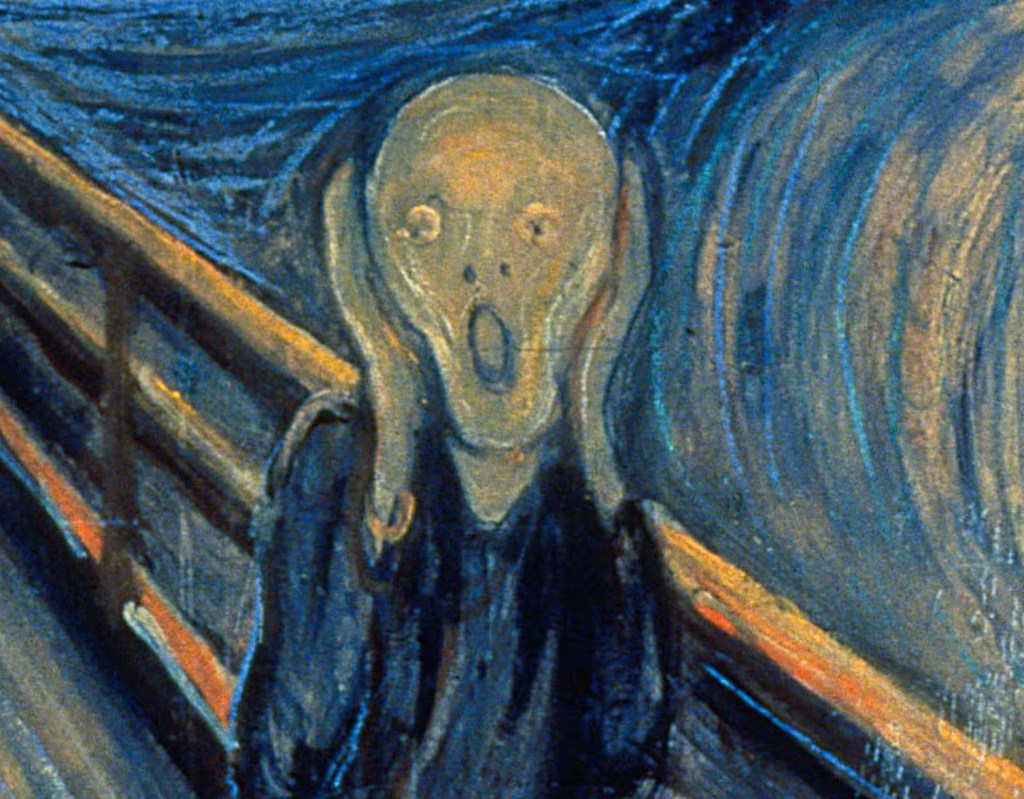
Edvard Munch 1893


What makes you happy when you wake up alive?
You only need one, but you can name up to five.
The dog, your shoes, your home, or the sun?
A good cup of coffee? A cinnamon bun?

(The alphabet rotates through my mind as I search for words that rhyme, trying to escape the horror of the current holocausts. I slip into doggerel. Clever ditties. Slanted lines, good times, shallow sips through thin-set lips, the scream rising in the back of my throat.)

We’re a tiny planet floating in space,
killing each other at the usual pace.
A few are too rich, billions, too poor.
What, exactly, are we fighting for?

(I watch my fingers jump around the keyboard, my chest steadily rising and falling. How can I possibly live this day as if I’m entitled to all this good fortune? All this potential? There is Greenness ascending with a name that is on the tip of my tongue.)

Yesterday, the sky was so blue
I lay on my back with the privileged few
and gazed at infinity somewhat at ease
in my long conversation with rivers and trees.

(I’m increasingly able to see the end, but I don’t want to. It’s not a gift I requested. And I grasp the fallacies of simplistic faith with its tragic outcomes and cruel justifications for suffering. Which is what we do. We suffer. More than anything else, we suffer.)

Can I buy you a drink? The Trickster arrives.
Oh, hello, I say, and then break out in hives.
I’m sorry, I say. I don’t know what to do.
Oh stop, grins the Trickster. It’s not about you.

(I’d like to believe that, but I’m stuck in my bones, and it is about me, at least for now. On the other hand, wouldn’t it be nice if the apparition of skin melted away more gracefully, and the scales fell from our eyes so we could behold our unformed substances mingling?)

What makes you ready to meet your own end?
The kindness of strangers, the love of a friend?
You can answer this once, or twice, or thrice.
But whatever you do, could you try to be nice?

(The Trickster nods. That’s a big ask, honey. It’s easy to crush and kill and lie and hoard. It’s tempting to pound your chest, bully others, and demand the best. But the minutes tick away regardless. I nod. Three crows land on the fence. They caw and nod as well.)

Praise and Thanksgiving

Most of us doubt our worth or the value of what we do, and like heat-seeking missiles, we home in on praise, affirmations, and empathy.

Oh, yeah.

It feels so nice to be told we’re doing well, we’re special, we’re understood. Our slip-ups are forgiven. Our intentions are recognized as good even in the face of bad outcomes. Our efforts are applauded, our failures explained away

I had a grandmother who loved me like that.

“Too bad you didn’t turn out to be more like her,” Unkind Voice says in my head.

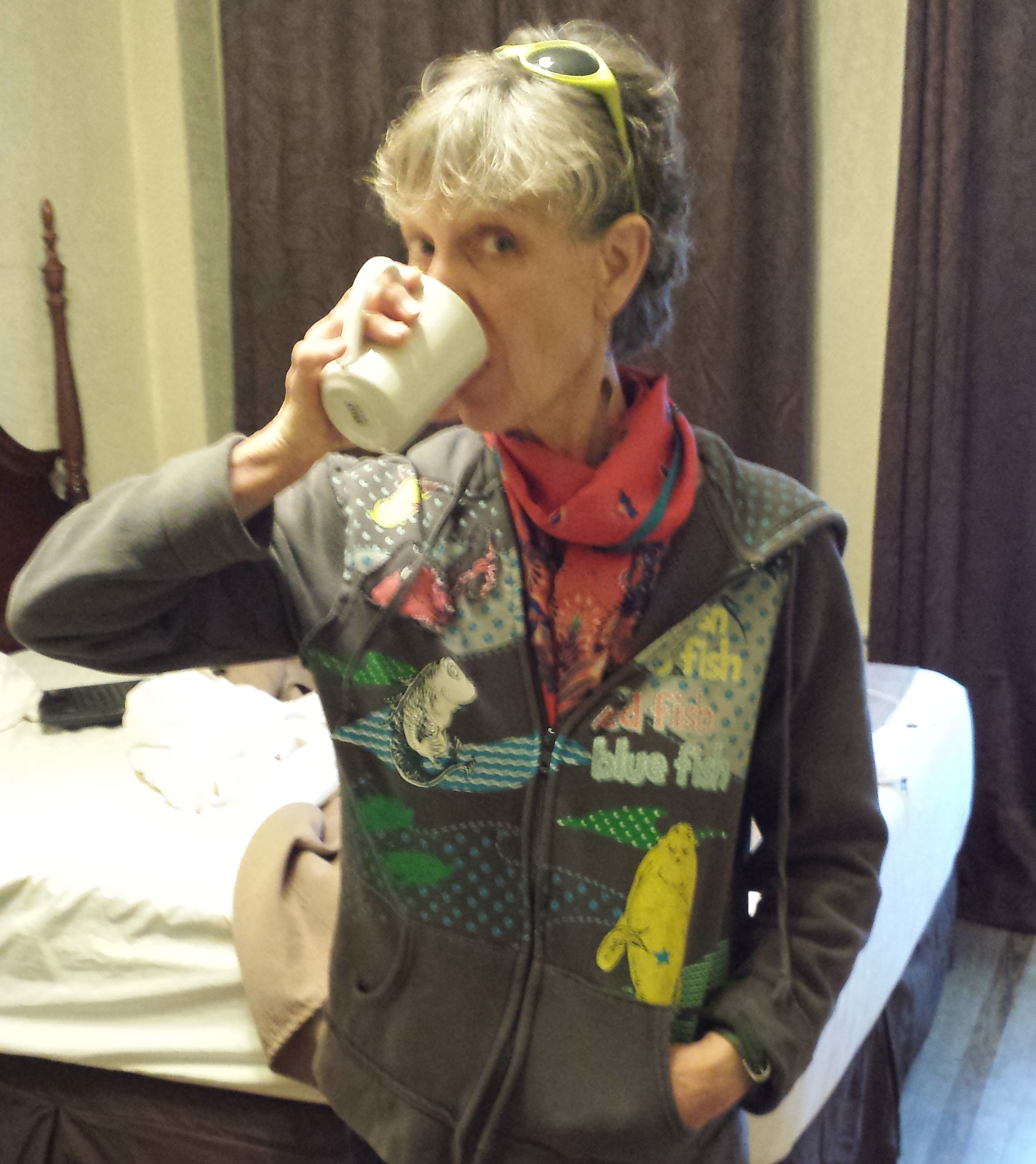
“Rough night?” I ask with a knowing smile. “Coffee?”

Unkind Voice sits stiffly, clearing her throat. Sipping. Breathing. Trying to accept the day as it is.

I can see the battle playing out in the muscles around her mouth and eyes. They soften and tighten, soften and tighten.

“Stop watching me,” she demands. Then clenches her teeth and adds, “I’m very strong. I’m stronger than most people realize. I’m very, very strong. No one has seen anyone stronger than me.”

I wink across the room to the rising sun, the petunias, the geraniums. I nod to the brown and steady hills and refill her cup. “You are very strong,” I agree. “Tough as nails.”

Then I consider my survival. What can I give away today? What’s something nice I could do? This usually helps.

“You have nothing to give,” Unkind Voice interrupts my internal recalibrations. “Nothing of substance. You’re a self-absorbed ingrate.”

For a split second, she has drained me. The saccharine sweetness of revenge threatens a toxic bloom in my soul. But no.

No.

The soothing voice of Grandmother rescues me. “You’re not perfect, sweetheart,” she reassures me. “But you’re better than this.”

I take heart. With intention, I recenter. This is not easy. In limited light, Grandmother stitches her patchwork quilt made of scraps I remember well. Grandfather gathers eggs and prepares breakfast for the cousins and hired hands.

The fruit is ripening, but the vines still need tending. They’re dry, and the weeds have not given up their greedy ways.

I give Unkind Voice a kiss on the cheek. She pulls back.

“Don’t feel bad,” I murmur. “You gave it your best shot, but I’m not going down.”

She howls and bangs her head on the table as I slip out to the larger world. “We’ll meet again tonight,” I add, leaving her to finish her own vicious meal.

The heat of the day engulfs me. As I tend the waning garden, I offer thanks and praise to all the sources of thanks and praise. I fill baskets and address envelopes to the future.

And for this day, I am replenished.

Uncle Bud

Just days ago our beloved Uncle Bud fell and did not regain consciousness. This past year his body and mind had started giving way, and our collective family grief began. Now it’s in full force. He’s gone.

Among his many achievements and passions, Uncle Bud was a master fisherman. I walk by the river, seeing it through his eyes, feeling his hand-rubbing oh-boy enthusiasm from the inside out. God walks alongside, quiet.

“It wasn’t all rosy,” she says. “For him or your mom…”

“I know,” I interrupt. “They didn’t talk about it much, but I know.”

Uncle Bud was generous, kind, and positive. Filled with good humor and gratitude. In contrast, his childhood included poverty and difficulties most people don’t have to face. In a moment of rare self-disclosure my mom told me that she and Uncle Bud had a pact: They would be there for each other, and they would never, ever give in to the negativity and deprivation they experienced as children.

I’ve known a lot of bitter, unkind people, who constantly blame others for their troubles. Their parents, the government, teachers, partners, neighbors, children—anyone but themselves. Fault-finding is a toxic hobby; blame obliterates gratitude. This is ironic because gratitude lifts the spirit. But for some reason, finding fault is simple, and blame is easy. Gratitude takes effort.

“Why is blaming so seductive?” I ask God.

“That’s a no-brainer,” God answers. “It’s lack of center. Lack of compassion. Insecure people crave admiration. They focus on what’s wrong around them to build themselves up. They’re takers, not givers. Enough is never enough and they are never to blame.”

“Yeah,” I said. “I feel that tension all the time.”

“What tension?” God asks with false innocence.

“I want to be positive and cool like Uncle Bud, but I also want everyone to notice how much I give, how hard I try. I tell myself it’d be good for them to be grateful. But that’s not how it works is it?”

“Being positive is a choice, and gratitude’s a choice. You can’t demand gratitude,” God says with a knowing grin. “Trust me. I’ve tried!”

 “Ha! You’re almost as funny as Uncle Bud.” I smile sadly.

“Thanks,” God says. “He really was amazing.” I nod. We watch the trout rise. And together we remember Uncle Bud with sadness, love, and deep well-earned, willingly offered gratitude for the courageous choices he made and all the ways he added happiness to the lives around him.

The Spiritually Disemboweled

Today, I am rightfully and terribly sad because nice white adults who would rather live in a democracy are being fired upon, herded, overtaken, terrorized, and killed by a vicious dictator. Likely by the time you read this, the death toll will have reached 1000—maybe far more. And in that same timespan, 30,000 children (mostly not white) will have died of starvation or malnutrition in so-called developing countries. And the poisoning of the planet will have accelerated. Those tanks are not powered by the sun.

My own children are grown and well-fed. At least for now, I live in a democratic republic and can freely express myself. My little corner of the globe is stunningly beautiful. On some days, I am grudgingly grateful. But often, my good fortune makes me want to spiritually disembowel myself. The dentist assures me my teeth look fine, but I think she’s lying. Deep in the night, I imagine I am gnashing my molars down to the gum.

In times like these, God often asks, “Do you want to believe in me at all anymore?” And I say, “Well, yes and no. Mostly no.” And God nods understandingly and pats my head. I yank her arthritic hand away. “Save it for someone who needs it,” I say. And she says okay and sits there on the orange couch waiting for me to realize I am among those who need it. I consider the utter impossibility of believing in anything and the emptiness of believing in nothing, and I grab the vacuum and run it around the living room like a madwoman. This is funny because I hate vacuuming. God grins and plugs her ears. I’ve always suspected she hates vacuuming, too, but with God it’s hard to say. The invention of the vacuum was supposedly a step toward liberation for enslaved womenkind.

I drive the vacuum straight toward God. She is easily pulled in, traveling down the hose in a lump. For a moment, I feel victorious but then, horrified and alone. I turn the vacuum on myself and down I go, right into the dusty arms of the ever-present, ever-waiting God. “Help!” I shout. “I can’t breathe.”

“Stay calm,” God says and hands me an N95. I mask up. Masking is an act of love. What does it mean to love my neighbor? What does it mean to love myself? What does it mean to love creation? It is a dirty, sad, imperfect process–often thwarted or violently opposed–but the alternatives are so much worse.

Thanksgiving

            “Sometimes, your species is hard for me,” God said, looking a little haggard.

            “I know,” I nodded. “I don’t like people that well either. But it’s hard to write them off entirely.”

            “Yeah,” God agreed. “I often wonder what makes me hang in there.” She paused. I waited. “It might be the gratitude,” she said finally. “Humans are capable of saying thanks in a way that warms my heart. Nothing quite like it.”

            “Gratitude?” I asked. “You like that better than when they apologize?”

            God chuckled. Her corporealness was starting to fray. “Are you a worthy representative of all humanity?” she asked in an impish voice, a luminescent grin taking over what was left of her face.

            “No.” I shook my head emphatically. This was a trick question.

            The grin expanded. “Oh, no worries. You’ll do. Tell me how you feel when you’ve messed up and need to say you’re sorry.”

            I grimace. Confession of sins? Facing faults and shortcomings? Asking forgiveness? Not easy. Not fun.  

            “You already know this,” I said, giving God a look. “I hate failing and being wrong. I do not like needing to apologize.” I looked down at my hands and stopped talking, but in my mind, I went further. It’s complicated. I have my pride. Once in a while, I get stubborn and lie to myself or other people. And I blame others and feel sorry for myself…but I didn’t want to mention that to God.

            The eyes of God looked upon my soul. “My point, exactly,” she said. “People often make the same mistakes and sometimes, show up again, woeful and defeated. Or they get defensive and act like they’re not wrong after all. I accept apologies all day long, but I don’t enjoy the process, and I don’t think people do either.”

            God looked at her own hands, cracked a thousand arthritic knuckles, and stood into the stratosphere of herself. She wrapped the cloak of unknowability around her shoulders and set the sky on fire. “So, that’s why I like gratitude better than penance,” she concluded.

            “But how do you know it’s sincere?” I asked, but there would be no answer. The room, the land, the cities, the earth—everything had become one big party.

            God was center stage, doing an Irish jig. Darlings and demons cavorted across galactic dance floors, and all creation clapped and stomped, keeping the intricate beat alive. “Gratitude’s an attitude. Fake it ‘til you make it,” they sang. I couldn’t see who was playing the frenetic fiddle, but I did not want to join this ridiculous reverie. I needed some space, and God knew it. The scene receded and God’s merciful arms surrounded me. Only me.

            “Go in peace,” she said, dismissing me to my quiet place.

            “Thank you,” I whispered.

            “You’re welcome,” God said. We both meant it.

Gifts

God’s car crept down our gravel lane as the evening light faded. I could see the headlights of the old Subaru dipping into the deep spring potholes that cause me such great vexation. We’ve spent an enormous amount of time and money on our roads, but it’s a constant fight. They stay smooth a nanosecond, and then the ruts reappear, the gravel sluffs off, the rain and snow do their thing, and the surface deteriorates. Nature likes neither straight lines nor smooth roads.

The Subaru backed in beside the new garage–the one that nearly blew down in the gale-force winds last month. God got out, stretched, opened all four doors, and lifted the tailgate. The car was packed to the brim with what appeared to be nicely wrapped gifts, but twilight was so thick I wasn’t sure. I grabbed my boots and my well-worn vest, a thick hat, and some ratty mittens. We’ve had a few warm days, but it drops well below freezing by nightfall.

“Hi, God,” I yelled as I stepped out the porch door. “Could you use some help?” I walked toward the car. God was bent over, body halfway into the back seat.

“Oh, hello,” God said, her head snapping up. “Happy Birthday! I was going to surprise you.”

I was instantly wary. My birthday is months away, and God knows this better than anyone. Something was up. “You’re early,” I said. “By about seven months.”

God grinned and filled my arms with odd, misshapen packages. I started toward the house, but God said, “Wait, Sweetie. The party’s out here.” We rolled river stones into a circle, and she built a fire out of fallen branches and rotting wood. Then the party commenced. God clapped and sang as I unwrapped the gifts, one by one, sobbing and laughing. The pain was equal to the joy, the absurdity of the blaze lightened the sadness of the ever-shrinking River, and I found that the Great Mysteries aren’t as menacing when shrouded with gratitude, perfectly situated in endless sky.

The embers were still glowing when God stood up and said, “Well, I better get going. That lane of yours is something. I can only drive about two miles an hour in this old rig.”

“Yeah, sorry,” I said, hypnotized by the fire. “It’s a never-ending battle. We’ll keep working on it.” I didn’t want God to leave or the party to end, but I know that’s how things work. I watched as the smoke followed God to the car. Then I managed to get to my feet, turn from flames, and say, “Thanks for coming, God. This was amazing.”

God got in, switched on the headlights, and rolled down the window to wave good-bye. “You bet,” she said. “Thanks for being home.”

Insult to Injury

I often make lists of the many sins committed against me. Acts of omission or malice, blows landed, insults slung. It’s like anticomfort food. And to add to my misery, ailments regularly drape and infest my body. Some days, I hope for a temporary ceasefire between invading forces. Other days, all is lost.

“Despair is nothing new to the human condition,” God says. “But then, neither is joy.”

“Oh, you are so subtle, God.” I said with a snarl, thinking God was trying to cheer me up.

“I’m hungry,” God said. “Will you give me a scrap of food?” This was not what I’d expected, and I’d already put the breakfast things away. I ignored the request.

“I’m frightened,” God said. “I’m lonely. I’m in prison.” God looked misshapen. I backed away. He seemed deranged and dangerous.

“My village flooded. I have nothing left,” God said. I checked the locks on my doors and the passwords on my accounts.

“I’m so tired,” God said. “I walked all night.” I shook my head. God was filthy, and I’d just changed the sheets.

“My legs have been broken,” God said. “I can’t walk.” He tried to drag himself toward me, arm over arm. I turned my back and ran until I fell exhausted on rocky ground. God coalesced in the stratosphere, floated down like a feather, and circled his body around mine. My face burned with shame. “I can’t,” I said through clenched teeth and tried to kick him away. “I can’t fix you. Can’t fix all the broken places. Can’t stop coming apart. What do you want from me?”

“Oh baby,” God murmured as he rocked my resistant body. “I want joy…and maybe a bit of compassion now and then. The kind that gratitude generates. But mostly, joy.”

This seemed reasonable, but I couldn’t fend off the fog of helplessness thickening around me. It was blinding and cold. I thought this nicer, softer God would obliterate it for me, but instead, he looked worried. “Throw it off!” he said, with some urgency. “Throw it off now. Think. Where’d you hide that last bit of joy?”

“In the paint brushes,” I said, sitting up. “And that incredibly twisted driftwood. And the words. And that kiss.”

“Go,” God said. “Paint, wander, write, kiss. And be sure to light the fire. I’ve dried the kindling for you.” He pulled small sticks from under his robe.

Suddenly, more than anything, I needed to paint something purple. And gold. And forest green. But the world had grown too dark to see very well. I remembered a line from Frederick Douglass’s famous speech (What to the Slave is the Fourth of July?) It’s not light that we need, but fire. Artificial illumination would not do. I could only paint a true and joyous thing by enduring the flickering glow of fire. I took the kindling gratefully and kissed the Pathetic Old Thing on his wrinkled cheek as we turned ourselves toward the gathering storm.

4 years, 25 days ago

20150408_073319 (2)April 2, 2015

Surgery today. Awake early and off and on through the night. city noises. Ivan and his lover directly above us having boisterous sex on a squeaky bed, sometime around 4 AM. I think Ivan may weigh a lot. Or maybe his lover. Or both. They walked around.

The garbage trucks and alley noises were random and abrupt. I felt irritated but in a slow-motion, sad kind of way. Like I felt irritated at the rules about not eating and drinking before surgery. Mindless broad application of rules that violate the body’s needs but protect in certain cases for certain reasons. I react irrationally to these things and insist I will eat right up to the last minute, and drink, and use the less invasive enema options. My family rolls their eyes, argues, but they back off and let me meander in my eccentric expressions of rebellion and self-determination.

While John slept, after my foray into food, the first Hibicleanse shower, the first enema, and the last coffee, I laid as still as I could, listening to his various breathing patterns, wondering about the dreams and workings of his mind and body as he comes along on this journey.

I feel a longing to get up and write. This would wake John up. I tell myself the weight of my words or ideas do not stack up against my love for John or my wish for him to grab some kind of rest out of this hostile environment. I watch the light arrive through the cracks in the vertical blinds. I send a loud shout of welcome to the day. Then it occurs to me that I will be losing a part of myself this afternoon. I begin the work of saying good-bye to my uterus and the companion body parts that will soon be disconnected and pushed out of me.

I thank that collection of cells I’ve called “Uterus” all these years. It was the nest from which my daughters flew. It did glorious work. I assure it that it will be joining the larger collection of cells. I tell it that we are all star dust. We are all just momentary compilations of DNA and it is our destiny to rejoin the Creator. I ask it/them to greet my father, and tell him about the children and the grandchildren that have sprung from his seed and the uterus of my mother. I am sad. I tell them not to be afraid.

I talk to the cancer cells. I scold them, but only in an understanding way. They are errant. They need a fresh start. It doesn’t work to be selfish and take things that are not yours. It doesn’t work to replicate oneself over and over again. I speak with them about their fears of diversity. Their arrogance and false assumption of immortality. Their lack of awareness of the greater world and the intricacies of individuality. I listen to John’s breath change. His gentle snoring. The occasional twitch or jerk of his warm body.

He drifts awake, dazed. I leap up to pee, come back to grab my computer and tell him I need to write, not talk. Then I break the rules and read him a loving text from someone. He reads me one that came on his phone and I snap “no talking.” Clearly a double-standard. But I get some latitude today—I’m going in to have some parts of my body removed, and hear how much of it has been tainted by these wrong-headed cancer cells. How many have snuck out and begun to corrupt other parts of me?

Soon, my daughters will arrive and the clamor of family love will overtake my consciousness and I will begin the push-pull, the dance….I will find my way through how much of my own need versus how much of their needs should shape the day, the conversation, the future… The younger daughter is obliviously cheerful; the elder, able and willing to talk about mortality in the tiniest doses. I’m grateful, but I am weary of trying to sort all this out. Oddly, I’m still willing to try. I feel magnanimous. Larger than myself. This brush with reality has broken me open, some of my self-centered, self-defining aspects have at least temporarily disintegrated. Their fleeting integration has given way to a fluid definition. A more universal identity, shared by all the fragments that make up what we think of as the Universe.

I am afraid to stop writing. I’ve lifted my fingers a couple of times—gone back and edited some. I’ve crawled into the words—they are a soft, warm shelter from the harsh hours ahead. Except for the work I have yet to do, and the pain my demise will cause, I wish I were already dead. Dead is the easy part. Living in this unknowing place, aware of the time-limits, wondering when the buzzer will sound, the referee will blow the whistle, the lights will go out—this is hard. Wondering what matters. If I have months or years left, what will they be like? What should I do with them?

I continue to feel humiliated about having cancer. I guess I thought I was unreachable by cancer—I thought our heart problems would get me. I’ve probably held unconscious beliefs that people who get cancer deserve it. Now that’s ugly to admit, but I suspect it’s true. Like all the other awful “isms” we find in ourselves. Hard to admit. Even harder to eradicate.

The other two dominant struggles/reactions are

1) I haven’t lived a good enough life—I’ve squandered what I was given, I haven’t done enough, I was undisciplined and lazy… and

2) I need to protect my loved ones from the pain of my illness, suffering, and death.

Knowing that my pain exacerbates theirs is like being trapped in an impossible and evil echo-chamber. A sadistic twist thrown into the perfectness of love. I’ve known that the Creator lives in this same place. Pain echoes pain. We carry it. It bounces back and forth. It rips things open. It strips away the extraneous. Like many of God’s ways, it seems like a bad design flaw. If I were the Creator, I’m pretty sure I would do away with many of the “ways of nature” and we’d all live on the shores of Hawaii forever. Well, not really that last part, but geez. It seems like She/He could have thought up something less painful and daunting than mortality, starvation, trauma, cruelty, abuse, loneliness, pollution, cancer, car wrecks, and knapweed.

Okay, I’m lifting out now. I can see the flippant side of me returning. I can stop writing now. Thanks, words. Thanks, God. Thanks, loved ones. Thanks, email, cell phones, air planes, sons-in-laws, and other generally blessed parts of my transitory life…I’ll stop now. I’ll be okay.

 

Too Old For Anything but the Truth

mosquito-in-tea (2)

I am now officially too old to pledge allegiance to anything but the truth, so every morning I get up hoping to encounter something true. If God is awake, this usually causes him to clear his throat while the sun removes the frost from the windows. Perfect frost. Perfect sun.

I try not to look directly at God because I’m afraid he’ll spoil the moment. If I hold perfectly still, perfect moments roll around in the room, clear blue marbles, resembling the way the earth looks from the heavens. They balance on the surface of reality like uncried tears. In a terrible, frail, temporary way, all things are good, and perfect. In their beingness, all things are true. This is something God agreed with at least once, so I’m wondering…

“Yes,” God says. “I still agree.”

I pour God a cup of coffee, not noticing the dead fly in the bottom of the cup. God adds cream and sees the body floating on the surface. There’s been a serious invasion of spiders and houseflies as the weather turns. Most of them come in and die. Ordinarily, I avoid vacuuming, but they’re piling up, so I’ll have to clean again. None of this feels perfect. The day takes on a familiar tedium.

God skims the fly off the top of his coffee and takes a sip.

“Gross!” I say. “I can get you another cup.”

“I know,” God says. “But don’t bother. What’s a dead fly here and there?”

I admire this crude nonchalance. In the Arctic, it’s impossible to drink a bowl of warm soup before a layer of mosquitoes dive-bomb and die on the surface. You sip dead mosquitoes gladly. A far worse threat looms on the frozen horizon.

God is watching me as he sips the steaming coffee, bushy eyebrows tipped inward in a kindly look. The frost has melted. Intense October light takes over, casting sharp shadows, promising magic.

The smell of dark honey on my leftover toast breaks my heart. I know have no choice. No real choice but to accept the ethereal truths that plague and frighten me. That exhaust and break me down. All I have is a blurry vision of this clear blue moment on this clear blue planet, and though I’d rather achieve a more known perfection, I have to vacuum flies and change the sheets. I’m expecting important guests.