Most people hate going gray and refuse to admit that their wits have begun to wander.
No one loves fading to transparency, reduced to rustling air in the back of the room.
No one enjoys not knowing. Uncertainty is worse than being dead wrong.
So we color up, seeking a visible place amongst two trillion galaxies in the observable universe.
“You’re blah blah blahing again,” the Gaping Mouth of the Cosmos says. “So bite me,” I snap. “Let us consider gray,” Gaping Mouth suggests. “I don’t like gray,” I say. “I’m more comfortable with clarity.”
“I know,” Gaping Mouth says. “And that’s a problem because gray is illuminance-dependent, ambivalent, and courageous. Gray underbellies the vivid streaks of sunset that temporarily take possession of the sky.”
I glare, clinging hard to yellow. “Are you aware of the opponent process theory?” I ask. “In the recesses of the retina, certain cells stimulate one color and inhibit its opponent. I believe this explains afterimages. And Christmas.”
Gales of laughter issue from the Gaping Mouth and all evidence of right or wrong blows away. Leaves of green turn red and then disintegrate.
The sun is gone. I am alone and afraid.
When the galactic glee finally dies down, Gaping Mouth closes to a Gaping Grin. Blood red lips surround pure white teeth gleaming like stars in the blackest sky.
“Darling,” the Gaping Grin whispers as crimson lips pucker and kiss the edges of my soul. “It will help if you remember the transformations necessary to make light.”
Though historians may beg to differ, it seems that humans have never been this close to self-annihilation. While wars rage and the earth gets trashed, the most pressing moral inquiry of the masses is this: “How can I get a better deal?”
A derisive snort and mocking applause announces The Presence in the corner.
“Hello, Holy Contradictions,” I mumble.
What I tease into words in the murky dawn might be the wind or a mouse scratching in the wall, but I feel certain something beyond is lurking in the cosmos. I offer greetings most mornings.
“Good day,” HC says, emerging from chimera to full status as a citizen unto itself. It has wings. It has legs. It has a beating, bleeding heart. “You aren’t wrong,” it adds from a perfectly formed mouth.
“You mean my sarcastic comment about the morality of acquisition? The Art of the Deal? Or the nearness of extinction?”
“It’s all rooted in selfish genes and the wrong-headed notion of survival of the fittest,” HC says with scorn. “You think you want fat lives, herd immunity, and evidence of superiority as indicated by possessions and an address on Easy Street.”
“True,” I admit. “That does sound good. Makes me want to be the fittest.”
HC snorts again. “Have you thought that through? C’mon. You’ve got the brain power to get beyond your genes. In the end, the Fittest will stand armed, paranoid, and alone. The winner of the rat race is a rat.”
“Nice platitudes,” I say. “Got a better way?”
HC shrugs. “Stop deluding yourself. No one survives. It’s Now that counts.”
“Thanks,” I snap. “I feel so much better.”
“The ultimate measure of fitness is how you love and protect the unfit. It’s time to break the light into itself, hold the Face of Anger in your hands, and let her bite you.”
My hands are fisted. “You are certifiably nuts,” I say in a low, edgy voice.
“And you are certifiably angry,” HC says with authority.
“Yeah. So, I’m supposed to bite myself?”
HC nods. “And hold the Faces of Joy and Justice but be careful. They’re elusive and explosive.”
“You’re seriously insane,” I say. “I can’t do any of this.”
“Oh, but you can,” HC insists, not at all sympathetic. “Hold all the Faces of Insanity in your hands and let them bite the hell out of you.”
I stare at my weathered hands. The biting has begun.
“I’d rather hold your face,” I plead, frightened.
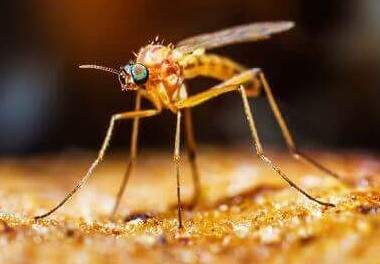
“Oh, my little mosquito!” HC says gently. “What do you think you’re doing?”
A grim hilarity takes hold. I slap myself silly, and for now, we get on with it.
“You don’t like being referred to as Myth and Ritual, do you?” I asked my friend, Myth and Ritual, as September settled around us.
“Not really,” Myth and Ritual answered. “But people do what they have to do. I do what I have to do. Very little is predetermined, but very little is conscious choice.”
This didn’t surprise me. I want to think people have choices. That God has choices. But it’s never that simple.
Take death, for example. Over 6,000 people will die during the hour I spend writing this morning. Not many of them will have chosen to die, but nonetheless, they will pass gently or violently, awake or asleep, young or old, into what humans call death.
“Yes, choice appears to be a rather limited concept,” I echoed. “So whose calling the shots?”
“Ah, there are so many friends invited to that party. There’s Immune System. She’s an erratic one. And those nasty twins, Greed and Poverty. Genetics is always primping in the nearest mirror, giving Folly and Fate the evil eye. War, Famine, and Pandemics all elbow in on the action. Even the occasional virus or mosquito.”
“Enough!” I shook my head. “Those are just excuses.”
“It’s all the same. When Myth or Ritual fail, we step in as the Mother of all Excuses.”
“I am absolutely not calling you that,” I said.
Myth and Ritual laughed. “Got a better idea?”
“Yeah. Today, I’m going to call you Sparky,” I said. “We’re all just walking tinder boxes. You could fan us into flames with a glance.”
“Sparky,” they said. “We like that.”
“I figured you would,” I said. “People chop you into human size chunks and then try to defend you. It’s volatile.”
“That’s outlandish and dangerous!” Sparky declared. “A true deity needs no defense.”
“But good things seem to need defending,” I said. “And bad things need explaining.”
“Yes.” Sparky looked smug. “A dialectic.”
“So, we’re back to Myth and Ritual,” I said.
Sparky frowned. “Maybe. But the horses are saddled. They know the way.”
“To where?” I asked, disoriented by all the non sequiturs.
“To fruition.” Sparky’s voice had mellowed to water. “To peace.”
“How will I know which one to ride?” I asked.
“Different times, different horses,” Sparky murmured. “They’ll come when you call them by name. Courage. Forgiveness. Compassion. Joy. And. . .” Sparky paused. “You might not like the last one.”
Outside my window, fiery autumn foliage was blowing around.
“It’s Acceptance, isn’t it?” I whispered.
The trees swayed and held their ground even as the wind stripped them bare.
After especially hard days, I take a little extra time to gently tuck myself into bed. Sleep well, little one, I say, imagining The Within speaking in a tender voice. I fluff the pillows and give thanks for my great good fortune. I am safe.
But often, like tonight, a wave of guilt hits. Images of war, earthquakes, uprisings, floods, mud slides, fires, and refugee camps take over. No one is ever entirely safe, but everyone wants to be. We steal safety from each other. And the cost of this selfish, temporary safety runs into the billions. With a loaded pistol, I could shoot my way out, right? With enough money, I could build a fortress and save myself. Ha! Fools. We are all safety-seeking fools.
Yahweh clears her throat.
“Oh, hi,” I say sheepishly. “I was just tucking myself in for the night.”
“Hmmm. Is THAT what you were doing?” she asks, glowing orange from the corner.
“No,” I admit. “I was mocking the notion of safety. I feel a little frightened sometimes so I make fun of people who think they can make themselves safe.”
“I like it when you’re honest,” Abba God says. She wraps herself in my spare blanket and lays down beside me. “There’s nothing wrong with wanting to feel safe.”
“Yeah, but…”
“I know,” she interrupts. “It can go too far. Safety, sacrifice, and suffering are contentious triplets, progeny of a brief affair between acceptance and agency.”
What now? I think. “I’m way too tired to talk about this,” I say.
“Me, too,” Asherah God says. “There’s a lot going on. I’m exhausted.”
“I bet you are.” I slip my arm over her shoulder and whisper, “Sleep well, Eternal One.”
She closes the eyes that never close. The breath of Allah is deep and regular, but mine is shallow, and I feel anxious. I remember a prayer I was taught as a child.
Now I lay me down to sleep.
I pray the Lord my soul to keep.
If I should die before I wake,
I pray the Lord my soul to take.
Whoa! No wonder we’re all so frightened. What child wants to die in the night and have their soul taken by a mysterious, possibly nefarious God?
If anyone’s taking anything in the night, it’ll damn well be me, I think, watching the rise and fall of the chest of The Infinite beside me. Then I relax and smile at my hubris. I don’t even own a gun.
My feet are propped comfortably in front of me. Morning light plays over the intricate curves and delicate runs of bone, cartilage, joints, digits, nails, veins, and varying hues of smooth, innocent skin. From this angle, the lumps and bumps don’t show. I’m caught in the magic of backlit flesh, sad that it is such a transient reality.
“Ah, don’t cry,” the Artist says, but it’s obvious she’s gratified by my reaction. Art is about emotion and recognition. It solves problems by simplifying and causes problems by revealing. At this moment, my feet are perfect. They don’t belong to me.
Perfection dwells in the twinkling of the eye, not the tally of a lifetime. It never lasts, but it leaves telltale signs: a smear of sacrificial blood wiped away, a cruel thought left unexpressed, a knowing glance, a long, hard day. Perfection is when traffic stops both directions to let a single ray of sunlight reach a dark place.
“God,” I say, pulling my achy feet back under me, reclaiming their imperfections. “These feet remind me of you. You’re both getting less reliable. Why did you choose evolution and entropy for design motifs?”
“I love entropy!” God declares with no hint of apology. “Random loss, chaos, the gradual decline into disorder; these spawn the next iterations of myself. You can’t expect me to convert everything into predictable mechanical work. Sometimes, thermal energy must stay put so there’s room for wonder.”
“Oh, that’s so you, God. Cold. Self-absorbed. Molecular. Can’t you stop for a minute and sympathize? Even if decline is fodder for the future, even if transition is the ground source of wonder, it’s still tough.”
“Well, it’s just as tough being eternal and waiting around,” God retorts. “But that’s not the point. Of course, it’s hard. The challenge is to grow softer and wiser. In the short run, denial makes things easier. But never better. Be brave.”
“Fine,” I say with a dismissive wave. I’ve heard it all before. I get up and put on my favorite red socks. They will help me venture into a mundane day. “I suppose you expect me to be grateful for things like warm socks and a working automobile.”
“Of course, I do,” God says with a self-satisfied smile. “And mind if I ride along? I need to check some inventories.”
“Not at all,” I say. “But bundle up. It’s wicked cold out there.”
“Rough night?” God asks gently from deep within the wee hours.
“You know it was,” I say with some desperation.
“Yeah, I guess I do.” God looks haggard. “Thanks for not pelting me with your anxieties. I needed the rest.”
Though it may be blasphemous to report this, I’ve lost track of the number of times I’ve glimpsed God limping across my consciousness, disillusioned, tired, and sad.
The act of construing (or being) God beyond the guarantees and constraints of our limited vision is sometimes labeled blasphemy by those with frightened rigid streaks. And it can be dangerous. There are still people defending God by killing other people.
We sit. The day lumbers forward.
I have a gallon of forest green paint and an array of possible surfaces. God has a universe in mortal pain. Is it blasphemous to pity God? If I forget the dance steps, is it heretical if I just move in a way that meshes with the music and the tempo?
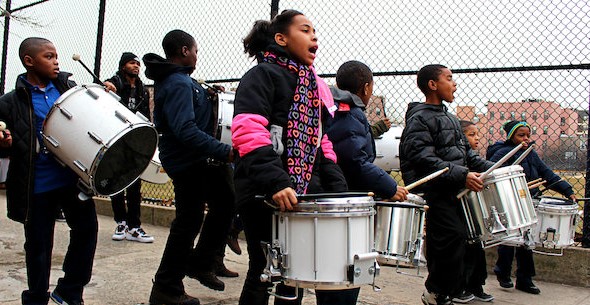
“Funny you mention tempo,” God says. “I could use a new set of drums. Mine’ve been beat to hell.”
“No surprise there,” I sigh. “Everything about you has been beat to hell.”
“And back?” God asks with a hopeful tilt of the head.
“And back.” I nod. “Maybe that’s why you get so wiped out. Hell and back is a rugged journey to make over and over.”
We sit. Afternoon has somehow arrived.
“You’ve made that trip for me a few times, haven’t you?” I don’t have to ask; I was along for the ride.
“It was worth it.” God ruffles my hair, looking a little perkier.
“Want some pasta?” I offer a plate of leftovers I’ve warmed up. “Happy to share.”
“That’s kind of you,” God says. “But I think you better eat it yourself. And open the paint. And get on with what’s left of the day. There’s another night coming.”
“I know,” I say. “And I’ll do my best.”
An army of motley angels is marching by.
“What do we want?”
“Justice.”
“When do we want it?”
“Now.”
“Gotta go,” God says, and begins to parade down the hall, a whole battery of raucous and enthusiastic drummers. I want to cling or march along, but God waves and shouts, “Baby, open the paint. And even if it gets crazy dark, try to keep the beat.”
Nearly all the windows in our house are oriented south for solar gain, but the view to the north is exceptionally nice. Our inner space reflects a set of values, givens, and limits. We’ve filled most rooms with books and rocks to hide lapses in judgment. Outside, the garden has gradually improved—I love repurposing metal coated with rust and twisted stumps that are not yet dust. It takes a practiced eye to see the beauty.
“Yes,” God says, disrupting my existential mulling. “I love repurposing, too. Especially the fragile and distorted.”
“Hi there, God,” I say in a falsely chipper voice. “How about you be nice and take care of me today? Let’s exercise, write, do some art, drink green smoothies, and then after I’ve fallen fast asleep, how about you carry me gently into the next realm?”
“What?” God says in mock surprise. “You want to cash it in?”
“Well, yeah. Or, maybe,” I say. “I don’t like aging. I want an easy way out.”
“An easy way out,” God echoes, nodding. “Thank you for being honest with me.” This is a standard phrase therapists use when clients drop a verbal bomb about their homicidal, suicidal, malicious, vindictive, hopeless, violent urges and fantasies. It buys a little time.
But God doesn’t need to buy time. I’m suspicious. God already knows I’m as afraid of dying as the next person, but I’m deeply ambivalent about staying alive. Fighting for every last breath soaks up resources, drains loved ones, involves a fair amount of suffering, and has the same outcome. What’s a few more days or even years if they are filled with pain, struggle, and hardship? It may look heroic, but there are many ways to define heroic. Leaving willingly, gracefully, at the right time might be another definition. I glance sideways at God.
God glances back. “How’s that bucket list coming?” she asks, with a mischievous smile. “I know you’re inclined toward rescuing and saving, but don’t put the world, or yourself, on the list. You can save neither.”
“God, darling,” I say. “I don’t even know what ‘save’ means. And how’s your bucket list coming along?”
“Thanks for asking, sweetie,” God says. “But let’s talk about why you want to know.” This is another classic therapy maneuver; turn the question back on the client. But then God reaches over, takes a drink of my coffee, and salutes herself in one of my many mirrors. This is not a classic therapy move. Too invasive. Too intimate. Impulsively, I look straight at God, grab her cup, and take a swig. The coffee is hot, dark, and bitter. I want to spit it out, but God bows her head, palms together, touching her lips. I have the distinct impression she’s cheering me on, so I swallow and raise the cup. We look in the mirror together. It takes a practiced eye to see the beauty.
You will be happy to know the accent wall is now midnight blue, the ladder-backed chair rescued from the dump, lime green, gold, maroon, and yellow, and though my life has not gotten noticeably better, I used recycled paint, so there are five fewer dented cans awaiting resurrection in the basement. They are empty. I’m happy. I’m drinking the leftover Malbec wine for breakfast, but I would prefer dark beer. We must all make sacrifices.
Among the things set free by the storm last night are five rotten cottonwoods, one majestic willow, and twenty-six irrigation pipes rattled loose from their line of duty and sent tumbling dangerously through the darkened sky. Those of us left behind have accepted the fact that we will not be able to save the planet by ourselves. The wind has agreed to help but at great cost. Millions of unwilling children have lined up along the shoreline hoping for food. The tide will rise and take them. Their elders will follow. Millions of other species have unwittingly signed on for extinction, simply by being themselves—ugly, simple, and in the way.
For a while, we will fight to save the pandas, the owls, and the wealthy; the beautiful and those who make us laugh. I, for one, will write words infused with angry sympathy for those born into suffering, born with few options, those who then hate, radicalize, and destroy. The war games continue.
I kick at the shins of God, trying to wake them up. This cannot be the Original Intention. I am a foolish Cinderella. They are a flimsy Prince Charming. I am Jack. They are the Giant. I plant magic beans. They are the purveyors of binder weed and quack grass. I install solar panels. They are the sun and patchy morning fog. They are the good witch, the man behind the curtain, the placebo effect. They are a modest chemical reaction, and we are atoms splitting, cloaked in a thick shawl we’ve drawn over our shoulders, thinking it was pure merino wool. It is not. It is denial. I have considered freezing to death instead of protecting myself with lethal and selfish lies. When souls stand naked in the end, truth will be the only shelter. Not power. Not possessions. Not beauty. Not brilliance. Truth is always grounded in humility, compassion, and sacrifice. Sometimes, to practice, I wear clothes thinned to threads by others and endure the brutally cold light for as long as I can.
God and I are listening to Bonnie Raitt on Youtube. “I can’t make you love me if you don’t,” she croons, her voice resigned, gentle. The lyrics were inspired by an article about a man who’d shot up his girlfriend’s car. During sentencing, the judge asked the offender if he’d learned anything. He replied, “Yes, I did, Your Honor. You can’t make a woman love you if she don’t.”
“Well, that’s true,” God says. “But don’t extrapolate. She’s singing about eros–an attraction that’s sensuous, artistic, and spontaneous.” God gave me a chummy wink. “It may not have been that wise, but I put eros slightly out of your direct control. And I’ll admit, I get a kick out of watching eros make fools of you all occasionally.”
My mind drifts to some of my youthful escapades that may or may not have been fueled by eros. I keep silent. God laughs.
“I hid it in the genes; biology and all that,” God says, but quickly adds, “I also gave you a modicum of willpower and common sense. You can channel eros in some very nice ways.” God smiles. “It’s a source of energy.”
“Yeah,” I say. My mind drifts to the notion of loving my enemies; definitely not a source of energy.
“Ah,” God says. “Let me clear that up for you. It’s a problem with language. I never command eros. It’s there or it isn’t. My first–and actually only–commandment is this: Have compassion. Choose self-sacrifice. Act for the common good. I don’t just hope you love each other in this sense of love. It’s a full-on mandate.” God pushes back in the recliner, watching me squirm.
“Penny for your thoughts,” she says. And I say, “You already know what I’m thinking, But fine, I’ll say it. I’m thinking about mandates. I don’t like seatbelts. They make me itch and feel claustrophobic. There are mandates I hate.”
“Yup,” God says. “I know that.”
“But on the other hand, I detest second-hand smoke, and drunk drivers terrify me.”
“I know that, too.”
The song continues. “Morning will come, and I’ll do what’s right. Just give me ‘til then to give up this fight.” The longing in her voice, the beautiful, ultimately loving surrender always chokes me up. Such a heart-wrenching choice.
“Now, about those seatbelts,” God says. “You realize that in a crash, your untethered body becomes a bludgeon, right? It’s a mandate for the common good, not your comfort.”
“Yes, Ma’am,” I say. “That’s why I wear the damn things.”
But sometimes, I finish my half-beer in the car when I’m not driving. I haven’t shot up any vehicles, but I admit I still have some work to do.
“Oh, most of you have quite a bit of work to do,” God says. “And not to rush you, but like the song says, morning will come.”
The long gray bird is back with her disconnected head and graceful wing. She defines space that would otherwise be undefined, and she does so without much deliberation. She could have easily been compost or firewood which would have been fine. But for now, she’s an expression of God and grace, small nails, and a blank wall.
Last night on the news, I saw a soldier in combat fatigues: helmet, rifle, boots. He was sitting vacant-faced on the steps of a bombed-out building, the dark child beside him barely clad. Neither of them will ever find their way to my easy world. In fact, they may not even make it home.
I sleep, and in my dream, I welcome them. They are God. To the Soldier I say, “God, darling. You are beautiful and deadly. I wish you were obsolete.” To the Child I say, “Get up and run. It’s not safe here.” The Soldier looks me in the eye and hands me his rifle. “You cannot define the space around me,” he says. “I have to do that myself.” He lifts the Child into his arms with a certain finality and cushions her head safe against his chest.
I don’t know where they’re going or if they’ll return. I wave and try my best to smile, but the departure leaves me bereft, without purpose or direction.
“God,” I whisper, awake and facing morning, “You know I’d like to extend my reach; do things that make me feel important and complete. I’d like to turn the tide of hate into an ocean of love. I’d like to make the fear go away.”
The God of early morning is often soft, responsive to my naïve and narcissistic longings. She is patient. Unafraid. She knows that in any given moment, I could pull her off the wall, snap her neck, and put her in the woodstove, thus ending the torment of hope. She laughs like smoke. She is the residue of a well-lived life, the stubble in the field. She is sapling and ash, beginning and end, warrior and rose.
“I know,” the God of early morning whispers back. I hear the murmur of wings as the gray bird takes flight. “I am of your doing, and you of mine.” I nod, and again I wave and smile. But this time, no grief. I’m at peace with the leavings. Joyful, even. There is little doubt that in my next dream, I will learn to fly.