Balance

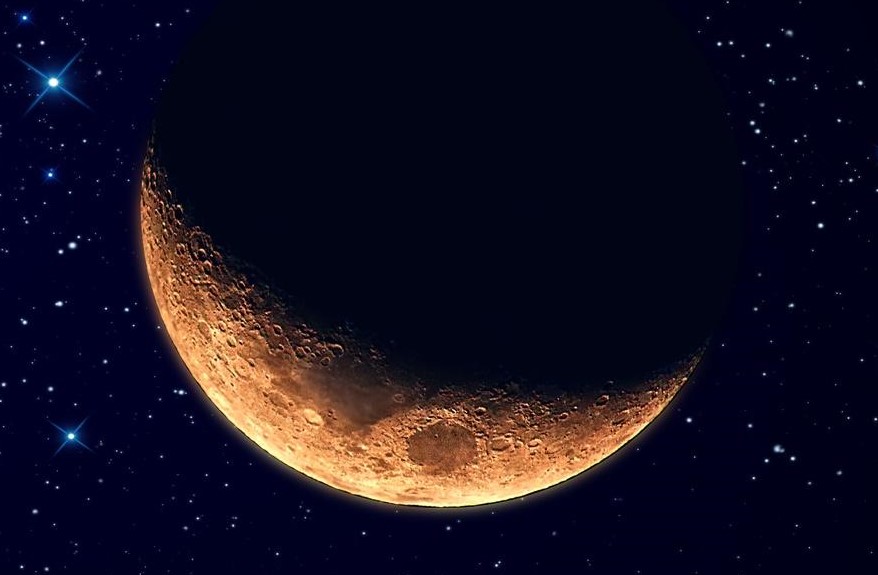
God was clipping her nails this morning and a luminescent fragment the shape of a crescent moon landed in the backyard: a beautiful asteroid, a source of light, the end of the raspberries.

 My entire garden is now filled with holy DNA. If this were a crime show, I could easily make a positive identification, but would there be a conviction? Even with humans, that’s never a sure thing. With God, highly unlikely.

“Sorry about that,” God says as she lifts the massive sliver of fingernail from earth and tosses it into the cosmos. “Careless of me to clip so close.”

“You could’ve wiped me out,” I say in an accusatory tone. “I can’t handle these jagged leavings and dangerous castings off.”

“I said I was sorry.” God can be a little defensive sometimes. She pauses, then adds. “Ah, c’mere. You don’t look so good.”

“Yeah, I’m not feeling all that well,” I admit as I crawl into the downy nest that God and I have created for the coming hibernation.

“Me neither,” God says with a sniffle. “Probably just a cold, but with all the upheaval, it’s hard to know for sure.”

“Isn’t it peculiar that before execution, the prisoner can choose a last meal?” I ask as we snuggle in. I ignore God’s quizzical look and continue. “So, what would you order?”

God is silent for a minute, then asks, “Sometimes, you’d like to kill me off, wouldn’t you?”

“Yeah,” I admit. “You’re precarious and whimsical. Inscrutable and endless. I need something easier. Less promise. More substance.”

Again, silence. Then, “I’d have nuts and berries mostly. Goat cheese. A little pasta. And three or four stiff drinks. White Russians, maybe.”

I whack God with a roll of political flyers from the recycle pile and offer her a megadose of vitamin C. She flinches dramatically, smiles, and takes two of the chewable tablets.

“How ‘bout a siesta?” she asks.

I shake my head. “You go ahead. I’ve got to transplant the rhubarb and that poor little pine tree.”

“Oh, good grief,” God says. “Can’t you leave well enough alone?”

The pine tree is a sore subject. I’ve moved it four times because I keep changing the layout of the garden and it’s in the way again. I want it to thrive but only where I want it to thrive.

To my chagrin, I start to cry a little. “I’m tired of everything,” I say. There’s a catch in my voice. “Especially myself.”

“I know, honey,” God says. “That’s why a little nap is such a good idea.”

Hedged Bets

“I had to invent death because none of you hold still long enough to sort out what matters,” God told me this morning as I rushed around, distracted, getting ready for a demanding day.

“Well, that sounds vindictive,” I said. The toast was burned, and I’d just poured sour cream in my coffee.  “Inventing death might be creative, but I assume you’re aware that the living prefer to stay alive.”

“I know,” God admitted. “I haven’t worked out all the kinks yet, but I have good intentions.”

The Subdivisions of God began their own conversation. The Source of Transformation looked down at her hands. “I’m not proud of causing so much fear,” she admitted to the others. “And such grief.”

Liquid God spoke from the banks of the drought-reduced river. “It is in sorrow and weakness they find their way,” he said. “But it’s hard to accept drying  up, having less to offer.”

God the Rodeo tried to sell everyone tickets, promising rides on the bucking broncs, but the Rest of God refused. “I’m sick and tired of the cacophony,” she said, her voice deep and mountainous, her presence profoundly still.

I wanted the others to go away. I wanted only her.

“See?” God said, merging back into Oneness.

“No, I don’t see,” I protested. “Being surrounded by peace is different than being dead.”

“Is it?” God asked. “How would you know?”

“Just a hunch.” I shrugged. Then I reached into my pocket and pulled out a fat roll of rodeo tickets. “Hedging my bets,” I admitted with a sheepish grin.

The corral gate swung open, and God the Rodeo raced toward me on a shiny black stallion. “Let’s go, pardner!” he hollered.

I ran toward him, and just like in the movies, God reached down and swung me up on the back of the sweaty horse. I wrapped my arms tight around his lean waist, and together, we galloped madly toward what we knew was the setting sun.

To my astonishment, I saw the Rest of God ahead, clearing away debris from the flood. And Liquid God had pooled up so we could quench our thirst. The surface of the water was so smooth there was no difference between my reflection and my face.

With reverence, we dismounted and kneeled to drink.

Holy Preppering

The question of what to believe and what to believe in has plagued humans since consciousness seeped into our thick skulls and we uttered our first Why? So many ways to explain what happens, what matters, and how things are related: Science, sorcery, nature, love, revenge, big bangs, money, freedom, justice, magic, self, country, and a wide variety of gurus, presidents, and Gods; it boggles the evolved mind.

When things don’t go our way, we also ask Why not? We assign culpability for painful, scary, disappointing events. Awful things must be someone’s fault: the failings of the various Gods, the devil’s doing, the stupidity of our fellow humans. It’s comforting to blame.

But such attributions are simplistic and often wrong. Absolutes are always nuanced. We naively pit cause and effect against chance because for a species of meaning-makers, meaninglessness is terrifying.

“Yes,” God agrees cheerfully. “It’s astonishing what humans think up to believe in. Accepting meaninglessness, ever-evolving truth, or limited comprehension is tough.”

“Don’t you think I know that?” I ask.

 God shrugs.

Recently, I had a brief encounter with a bona fide Doomsday Prepper. Talk about meaning-makers! Preppers believe fervently that a specific global disaster is imminent, and they enjoy actively preparing for it, honing their skills to endure against the odds, spinning conspiracy theories late into the night.

They hoard food, toilet paper, and usually, weapons. They have generators, animals, flour grinders, and secret stashes of who knows what else. If they are rich, they are building biodomes where they can live once the rest of the earth is uninhabitable.

Generally, they’ve formed God in their own image. This God wants them to have supplies and ammunition. This God wants them ready. This God wants them to survive.

“That’s so sad,” God says. “So isolating. Devastation around every corner. Enemies on every horizon.”

“I know,” I agree. “And it’s likely self-fulfilling.”

“Maybe,” God says. “But what matters is who you’re prepping to share with and who you’re prepping to kill.”

My heart sinks. “Well, that’s easy. We share with those who are like us and kill those who are not. And we kill anyone who threatens our loved ones or our supplies.”

 God nods. “It takes an enormous amount of prepping to be ready to love your enemies.”

“I don’t even know what that means,” I snap, crossing my arms.

“Oh, I think you do,” God says patiently.

“Nice chatting,” I say, backing away. “But I have things to take care of.”

“Going to order another crate of toilet paper?” God asks with a grin.

“Yes,” I admit. “But I’m planning to share the outhouse with anyone who needs it.”

It’s Everything but God

It’s everything but God this morning. My eyes are looking straight ahead, my ears tuned to my own frequency. My logical mind is busy with the mundanity and indignities of life.

If God were a little more forceful, a tad more insistent, I might be more respectful and self-disciplined, but she’s soft as down plucked without permission. Conforming and accommodating. Groveling like a beaten dog.

 I’d like to see some bared fangs. Some absolutes. I’d like to see the enemies of God cut down and the friends of God elevated to their rightful places.

 “Excuse me,” Meek God says. “But if you don’t mind my saying so, you’re a fool to think that’s what you’d like.”

In my miniscule corner of this nondescript town in this big state tucked into a greedy, powerful nation flattened on the face of this round little planet floating along in an increasingly cluttered stratosphere, the lights are on, the refrigerator is humming, and God has slipped in. But I am not reassured. I am not settled.

“Good,” Soft God says. “You should be neither.”

Unlove is flooding the lower elevations of what was once called civil society. I would like the steel-toed boots of an angry God to stomp out the wildfires of hate and wipe the sneer off the cocky faces of the very, very rich.

“Do you have a cold washrag I could put over my eyes?” God asks in a weak voice. “I’m feeling a migraine coming on.”

I help her lie down on the long orange couch. We both know it isn’t a migraine.

My children have futures. I have a past. We still have choices. This pale, eternal God has nothing. The patience required of omnipotence is infinite and painful.

I know this because God recuperates at my place sometimes. Even if all I do is sit or distract myself with idle bemoanings, I manage to offer a modicum of shelter and some nourishment.

For instance, I won a huckleberry pie at a political gathering last night. When God’s feeling a little better, I’ll share it. And then we’ll move into this day. Me, living as deliberately as possible. God, well. God. Elusive. Loving. An ever-mutating virus, a long-suffering containment, the final cure.

“Sounds like a plan,” God says from deep within my history and my compelling but scattered intentions. She pats my cheek as if I were a caring child or a faithful nurse. And for that brief moment, I am both.

Fittings and Flushing

At 5:53 this morning, I was chanting fittings and flushing over and over because the new toilet seems to be malfunctioning which I must investigate so it can be returned within the grace period if need be. And I need to call the plumbing fittings store because I’m in the market for a new pressure tank.

I do not allow myself to get out of bed until 6 a.m., so given my distractibility, if I wake early and think of things, I recite them until I’m up and can write them on a list.

This discourages God. The holy art of being chill eludes me even though, as God has pointed out for decades, fretting at dawn does not necessarily enhance the chances of a good day.

But today, the chanting paid off. By 9 o’clock I had called the fittings store; the size of pressure tank we need will have to be ordered, not just picked up. And I’d flushed enough to realize the flapper chain was too short. An easy fix.

Next, there’s the broken screen door handle. And powdery mildew is taking over the garden, and right at this moment, a wasp is buzzing around in the living room. Even though we usually have five or six swatters available, I can’t find a single one.

But I do find God, standing motionless in Mountain Pose on the porch.

“Hello, God,” I say. “What’re you doing out here?”

“Considering autumn. Funerals. Firewood. Frost. Harvest.”

“Want me to memorize a list for you?” I ask facetiously.

“No.”

God picks up one of the onions drying in the sun. She peels away dirt-encrusted layers until she reaches the moist, succulent flesh and releases the pungent signature of onion. “This will take care of it.”

Only God can do this with an onion. She had summer mark this tragic year with three gargantuan pumpkins, renegade tomato plants, and cauliflower heads, white as snow, which we’d forgotten were there.

Spring is one of my worst distractions. We always overplant, but this will change.

Nothing stays the same. Nothing lasts. To know this is a burden and a blessing.

Between impermanence and consciousness are caves and canyons worn by water, made beautiful by clay, resisting, yielding, and resisting again.

Letting go.

Hanging on.

And letting go again.

That tasty cauliflower grew to fruition unnoticed, but the gigantic, neon pumpkins are entirely obvious, frantically ripening a raucous orange on frost-damaged vines. God and I are cheering them on–God perched comfortably on the pinnacle of forever; me, less centered, patting the pumpkin’s belly, dreading the coming winter, but imagining pie.

Uncle Bud

Just days ago our beloved Uncle Bud fell and did not regain consciousness. This past year his body and mind had started giving way, and our collective family grief began. Now it’s in full force. He’s gone.

Among his many achievements and passions, Uncle Bud was a master fisherman. I walk by the river, seeing it through his eyes, feeling his hand-rubbing oh-boy enthusiasm from the inside out. God walks alongside, quiet.

“It wasn’t all rosy,” she says. “For him or your mom…”

“I know,” I interrupt. “They didn’t talk about it much, but I know.”

Uncle Bud was generous, kind, and positive. Filled with good humor and gratitude. In contrast, his childhood included poverty and difficulties most people don’t have to face. In a moment of rare self-disclosure my mom told me that she and Uncle Bud had a pact: They would be there for each other, and they would never, ever give in to the negativity and deprivation they experienced as children.

I’ve known a lot of bitter, unkind people, who constantly blame others for their troubles. Their parents, the government, teachers, partners, neighbors, children—anyone but themselves. Fault-finding is a toxic hobby; blame obliterates gratitude. This is ironic because gratitude lifts the spirit. But for some reason, finding fault is simple, and blame is easy. Gratitude takes effort.

“Why is blaming so seductive?” I ask God.

“That’s a no-brainer,” God answers. “It’s lack of center. Lack of compassion. Insecure people crave admiration. They focus on what’s wrong around them to build themselves up. They’re takers, not givers. Enough is never enough and they are never to blame.”

“Yeah,” I said. “I feel that tension all the time.”

“What tension?” God asks with false innocence.

“I want to be positive and cool like Uncle Bud, but I also want everyone to notice how much I give, how hard I try. I tell myself it’d be good for them to be grateful. But that’s not how it works is it?”

“Being positive is a choice, and gratitude’s a choice. You can’t demand gratitude,” God says with a knowing grin. “Trust me. I’ve tried!”

 “Ha! You’re almost as funny as Uncle Bud.” I smile sadly.

“Thanks,” God says. “He really was amazing.” I nod. We watch the trout rise. And together we remember Uncle Bud with sadness, love, and deep well-earned, willingly offered gratitude for the courageous choices he made and all the ways he added happiness to the lives around him.

Bored

God yawned as I complained about the demands of the coming day. This was not unusual. Sometimes God and I get bored with each other. To liven things up, I keep a steady supply of driftwood and other distractions nearby. There are old windows with rippled glass, stacks of books, blank canvasses, angular stones, and stairs going nowhere.

“I’m not bored,” God claimed between yawns. “I just didn’t sleep well.”

“The nights are getting colder,” I said. “Maybe you need more blankets.”

I had no idea what makes for a good night’s sleep for the Entirety of the Universe, and I don’t know where the Holy Ones rest. But I was a little chilly last night. Funny how we impose our own solutions on the problems of others. This might be a loving impulse, but it can also be quite self-centered.

Besides, I wasn’t sure I believed him. The yawning wasn’t the only sign. It was the restlessness in the room, the drumming fingers, the sense of confinement and finality. It was half-eaten toast, the dull movement of time, the impossibility of eradicating weeds, the distant call of migrating geese.

 “I don’t know, God,” I said. “I think you are bored. Maybe you didn’t rest well because you’ve lost your zest for life.

“Maybe,” God agreed. “I’ve been feeling a little down lately. Humans are growing increasingly abhorrent to the rest of the galaxy. You’re so darn short-sighted and greedy. I don’t see things ending up the way I’d hoped.”

Sometimes, when God talks like this, I fold inward in despair. But this time, I rallied. “God, you need to get a grip,” I said. “You are not helpless, and you aren’t a quitter. Don’t give up on us—or at least, on some version of us. You’ll feel terrible if you do.”

God took a last swig of coffee and sighed. “You might be right. Where’d you put those extra covers? Maybe I will try a little nap.”

I grabbed a down comforter I’d found at a thrift shop and the patchwork quilt my grandmother made from worn-out clothing. God curled his weary body, and I tucked him in. “Rest well,” I whispered as I kissed the wrinkled forehead of eternity.

“Thanks,” he mumbled. He snuggled deep into the stubbornly hopeful scraps of endless generations and began to snore. I tiptoed out to the garden, sat on my favorite boulder, and peacefully imagined the shimmering possibilities on a horizon I will never see.

Believing

Humans are natural believers but the things we choose to believe in vary radically: Exercise, Love, Money, Science, B vitamins, Power, God, Not-God, Red Meat, Medicine, Herbs, Famous People, even Wishes made on Falling Stars. The propensity to believe makes us vulnerable to being duped. And often, instead of being open or skeptical, we act as if loyalty to a belief is a virtue. It’s humiliating and painful to be wrong, so we ferociously defend what we believe in.

“And yet…” The Creative Force woven into all things seen and unseen jigs into view decked out as a troupe of Finnish dancers raising money for the war.

“Hello, God,” I say, waving. I clap to the beat as The Troupe does synchronous high kicks and fancy footwork. At intermission, they link elbows, pass the hat, and fly away. I assumed they were Finnish, but there’s an Irish feel in the remaining air.

What makes something Finnish or Irish or Nigerian? Who’s in? Who’s out? No matter how glittery or damning, all the fine distinctions are temporary. Driven by beliefs, such dichotomous thinking can cause great suffering. It’s deadly to believe rather than inquire. We overlook the still, small path that leads us alongside the unknown and unknowable.

“That path is narrow and dangerous,” God warns in the strained voices of those who’ve fallen away. “Unknowing isn’t safe.”

“It’s safer than pretending,” I say. “Safer than being certain something is true when it might not be.”

“And are you certain of that?” God teases in a thousand laughing voices. I laugh, too. I admire these courageous, vague expressions of the God Who’s Fallen Away. They don’t name themselves God, but I do.

“This may seem obvious,” God says. “But I need neither definition nor defense.”

“I beg to differ,” I argue. “What about the least of you?”

There’s a tall woman in a Russian prison, a short man beaten senseless, a desperate woman forced to be a mother, flood and fire victims, prisons burgeoning, the rich getting richer as the poor sink further into despair.

“Ah, I see what you mean,” God agrees. “But definition? Defenses? These won’t help. Justice. Mercy. Lives laid down, not weapons raised up. Wealth distributed, not hoarded.”

“Much harder,” I say in a sad voice. “Nearly impossible.”

And again, God agrees and without further ado, fades into the nightly news.

Why not admit I know nothing but do something outlandishly braver regardless? I ask myself as I get ready for bed. May as well take a few risks. You’re going to die either way.

This may not be the best way to fall asleep, but it’s an excellent way to wake up.

Guidance for the Chronically Critical

I hail from a long line of judgmental souls who sometimes wish they were kinder than they are (or were). I know this both as judged and judger. And I wrestle mightily with each.

“Me, too,” God chimes in with a gentle punch to my shoulder. It’s hot today. We’re enjoying the living room, cooled by the thick cement floor and sizable rocks absorbing the ambient heat. This makes me happy and severely judgmental of anyone who thoughtlessly builds shelter without passive solar features. Cooling and heating with fossil fuels provides easy comfort while hastening our extinction. I’m also mean to people who forget to turn off the lights, use too much toilet paper, do laundry with hot water, or leave their engines running for more than 30 seconds.

“Judging is a trap,” God says. “A sure way to slide into the lake of sticky, jealous, self-centered misery.”

“But you’re like the Judger-in-Chief. How do you avoid the lake of sticky, jealous, self-centered misery?”

“Oh, I don’t. I slide right in. There’s always someone swimming around in that cesspool of righteousness. I usually bring lifejackets and a ladder.”

“And?” I ask. I imagine God offering flotation devises to weary people dogpaddling around in the soup of their own harsh judgments.

“Usually, no takers. But occasionally someone sheds those weighty layers of pride, takes my hand, and asks for a towel.” God smiles. “I like it so much when that happens.”

“But they got there because they correctly assessed that others are stupid, hateful, selfish, or inferior, right?”

 I smile a wonky smile. I know my judgments aren’t always accurate or loving. Furthermore, judgments leveled at me fail to consider how hard I’m trying. And finally, people foolishly judge God, or impose cruel judgements in the name of God, causing injury rather than healing. “So, what’s there to do?” I add.

“Forgive, forgive, forgive,” God says. “Forgive.”

“I knew you were going to say that.” I shake my head. “But sometimes, I don’t want to, or I don’t know how.”

“Work on it,” God says. “Take your soul to a car wash. Eat some of your choice words for dessert. Refocus on justice, not revenge. Give with a smile; don’t take with a snarl. Say thank you. Life’s neither easy nor fair, and that can be incredibly sad, so once in a while, curl up and cry it out.”

God lays down and curls tight to demonstrate. I’m afraid the tears are going to begin so I hop off the couch and try to tickle God’s underarms. The last thing I need today is a weeping God.

“Gottcha!” God yells, grabs my arm, and pulls me down to tickle back. We roll around like bear cubs, nipping, laughing, trying to pin each other.

“It’s okay to bite a little,” God says. “But don’t break the skin.”

Thin Ice

My religious friends keep warning me that God and I are skating on thin ice. Especially when God names himself Prostitute or Fat Boy. Especially when she manifests as many, and the guarantees are few. We shrug. It’s what we do.

A man named Mick once told me that our postings make him laugh until he cries. He was puzzled as to why. He reads them every Sunday in an alley where an apple tree drips fruit to no avail, and he sips a yellow beer for communion.

The peyote that is God brings paralysis. The river that is God brings release. It’s the author God who writes you using metaphor and mint, drawing symbols in the sand for your protection, throwing ashes to the wind to guide you home.

We are mostly made of water: a fluid interaction between energy and thirst, a form of transportation, a sacrificial lamb. A sheer veneer of ice embodies danger with a certain kind of grace. But the pace of truth exhausts me, and I’m tempted to give up.

God removes his mittens. Offers me bare hands. The crowd of God applauds as I stand on shaky skates and push off using boulders and other people’s dreams. The sheen of God beneath me, the sky of God above, I am hypothermic mercy and cold, defiant love.

My remaining bones grow brittle with God’s blessing. I no longer take the time to make my bed. God shakes her head. When salt dissolves in water, ions form electrons, positively charged. With saline in my veins, the poison makes a promise that I’ll live another day.

Fat Boy tries to juggle. My Prostitute wears pink. She says, “Look at me, I’m funny, and when I’m cold, I’m slick.” But when I look, it’s only water and a wiser way to die. There’s thunder in the distance. And like Mick, I start to laugh. Until I cry.