Meditation, prayer, or even simple quiet times are thought to be beneficial, but there are no guarantees. In timeout, stimulation is reduced to the view of the corner and the scooting of the chair upon which the offender fidgets. This consequence of naughtiness is supposed to reduce agitation and encourage reflection, but it often visits holy hell on the mind screaming for more adrenalin. Try it sometime. Naps don’t count.
Staring off into space is somewhat different. The body slumps. The eyes glaze over. Brain activity appears to be reduced to breath and balance. Scientists have yet to determine if the space being stared into is internal or external, just as they cannot completely verify the source of dreams.
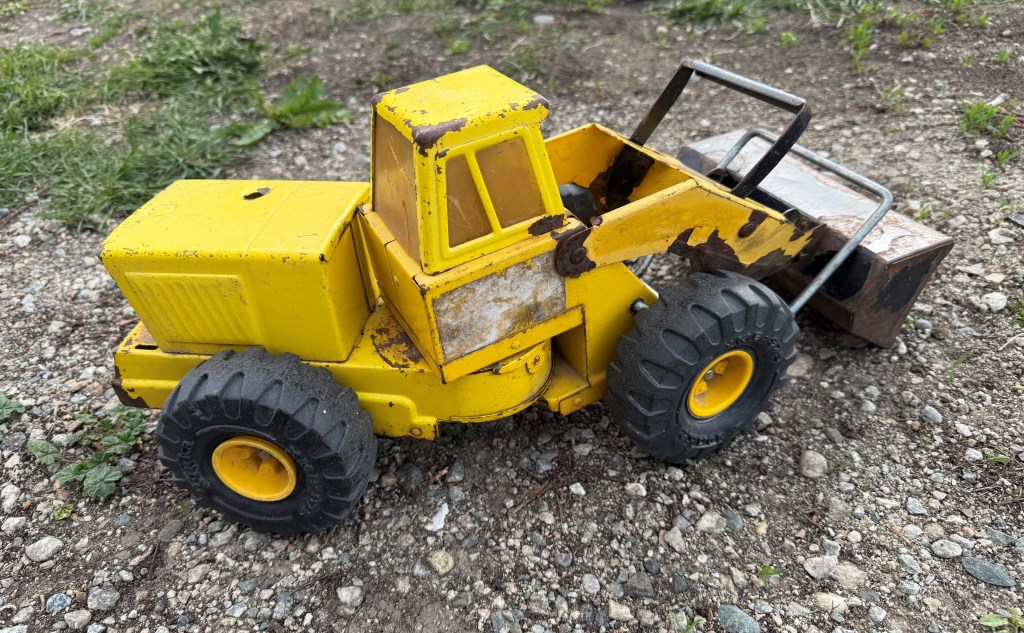
“These are dusty byways,” Road Grader interjects. “On certain neural pathways, the ruts can get deep and dangerous. The gravel sluffs off to the sides. Sometimes, a load of crushed rock has to be hauled in.”
Unfortunately, I understand what Road Grader is saying. When access to meaning is choked off by franticality or self-indulgence, even primitive stillnesses might provide a faint trail back to intentionality. But these accidental down times can go wrong, or peter out into the vast nowhere, leaving you uncertain where to stand.
Road Graders of the Soul do precision work, leveling, removing debris, and clearing the Way. If the Road Grader roars into your blank stare and begins widening your consciousness, don’t panic. Offer pastries and fuel.
“Now that’s some good advice,” Road Grader declares, slapping me on the back a little too vigorously.
“Ow!” I yell. “I’m not a monk in training. No hitting.”
“Sorry,” she says. “But I like having your attention.”
“Why?” I ask, still smarting from the slap.
“What else would you be paying attention to?” she asks.
I stall. She waits.
“Okay. Fine. My attention drifts to the sorry state of the world, my list of things to do, my ailments, and/or how to consume less sugar. I might even ruminate on revenge or rehearse edgy rebuttals. I can’t go around immersed in lovingkindness all the time.”
“Of course not. But you can go around making things a little easier for those in need.” Road Grader pats her lap and beckons. I climb aboard like a thrilled little kid. She won’t allow me to maneuver the levers that adjust the blade, but she lets me steer, and for hours, we level the playing field beneath us in deliberate, glorious circles.
“This might be my new calling,” I exclaim joyfully. “Just smoothing the way. Removing bumps.”
“Maybe,” Road Grader grins. “But don’t forget about backhoes. Digging in is fun, too.”
_*_*_*_*_*_*_*_*_
For more uplifting, cheery poems and conversations just like this one, you can order our book from the YOU KNOW WHO (AMZN), and for a mere $13.99 you can torment your soul every day. xoxoxo


