To Linger

Decades ago, the Headmaster of Magdalen College stood and told the guests to rise and bid farewell to the experience of High Table. “Do not linger,” he adjured. Though we may have been inclined to hold on to the experience a little longer, we obeyed. The Brits have a way about them.

“Yes, they do,” God snickered as if we shared an inside joke. “Stiff upper lip, you know. They still haven’t learned to linger very well, let alone dawdle or tarry.”

I gave God a puzzled look. “Don’t those words mean the same thing?”

Professor God stepped to the podium and cleared her throat. “To linger is to revel in the twinkling glory of gowns and frippery. To linger is to dig into your purse, pull out hidden cash, and spend it on the moment or a stray notion, untallied time on a beach watching seagulls or the setting sun. Lovers linger.”

She gazed beyond me. Then continued.

“To dawdle has a touch of defiance. Sometimes, the dilly-dally is designed to dismay those holding the door. Dawdling is the other side of dread or the empty stare of a mind that’s taken flight. Avoiders dawdle.”

I could relate to dawdling. I do it frequently. God chuckled and shuffled her notes.

“Now, to tarry is another way of tinkering with time. To tarry is to tithe from your cache of tightly wrapped and labeled hours—the ones you use to prove your worth. Tarrying is a calculated intention, a contribution to a promise you believe is true. The hopeful tarry.”

“No,” I said. “Tarrying is torture.”

“Ooooh?” God tipped her head in that maddening, knowing way she has.

My consciousness began to fracture as I tried to explain.

“If you tarry in the garden, the Garden might ask, ‘Darling, why are you here?’ and you might acknowledge your fear. The lifted glass is emptied. The tables are being cleared. The holy ghosts have shed their robes and are digging up the Commons.”

The trance deepened. The Hive Mind of the Mystical dragged me further into the fog. Hungry soil seethed beneath my feet. The contours of connection undulated like waves in a primordial sea.

“I do not know where I begin or end,” I managed to whisper.

“Nor does anyone,” the Garden said. “Tarry with me. I’m lonely.”

I shook my head and the sun broke through. My shadow and I ran for shade. “Sorry,” I yelled over my shoulder. “But we’ll have other times.”

“That we will,” the Garden smiled wistfully. “That we will.”

*******

For more uplifting, cheery poems and conversations just like this one, you can order our book from the YOU KNOW WHO (AMZN), and for a mere $13.99 you can torment your soul every day. xoxoxo

Missionary Position

Certain faith systems send out missionaries to convert others to their way of thinking, and sometimes it works. Believers beget believers. This has been going for a very long time.

As a species, we search for meaning. And we want to belong. It’s far easier to convert or cling to a set of beliefs that guide and justify our behaviors than it is to be open, kind, and accepting. Some questions simply cannot be answered on this side of existence.

My Coauthor nods in agreement. This surprises me. I smile and begin making breakfast.

“When’s your next mission?” he asks in an innocent voice.  “And which bibles shall we print up?”

I should have known there’d be some smartass dimension to deal with.

“I’m no missionary,” I snap. “I’m a ‘live and let live’ kind of gal.”

My Coauthor cracks up. “In your dreams, Bossypants.”

“Ah, c’mon,” I protest. “It’s obvious there are better or worse ways to live. But I don’t insist. I don’t even shame people. . . very often.”

“But do you love them?”

I shrug. “What’s love?”

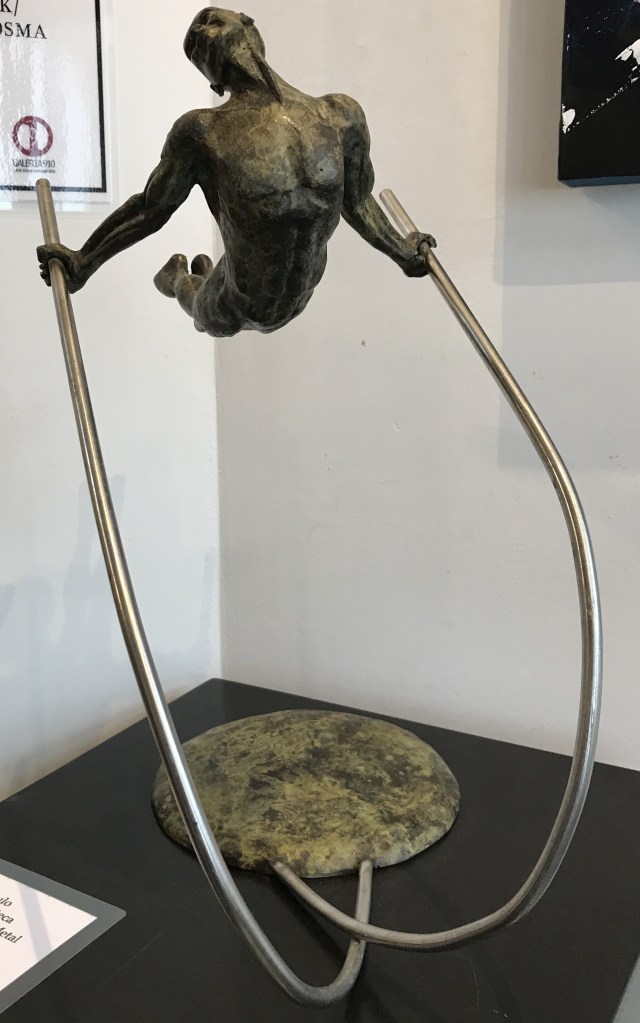
“A precarious tightrope that ends in a certain kind of death.”

“Scrambled or over easy?”

“Over easy, please.”

I serve the fertile eggs and sprouted wheat toast. We chew thoughtfully.

I break the silence in an uneasy voice. “I don’t know much about that precarious tightrope, but I do know something about death.”

“You know very little about death.”

“More coffee?”

“Yes, thanks. And feel free. Tell me what you know about death.”

My hand trembles. I refill his cup a little past the brim.

“I’ve been bedside of those passing. I’ve watched wasps writhe. Chard wilt. Bullets to the head of predators. Shovel to the neck of the snake. I’ve watched the light depart.”

The Coauthor nods. “And tell me what you know about love.”

My words fly away. I bow my head. I am the writhing wasp. The beheaded snake. The martyred lamb. The poisoned earth.

 My Coauthor is the dark night in whom I swim and drown. Food withheld, I starve. The constant laying down and taking up of life roils the waters.

 I am a missionary unto myself, but there is fluidity to my position. My body. My blood. Complicit and compliant. The most reluctant sacrifice you’d ever want to meet. The Coauthor is my broken heart, still beating.

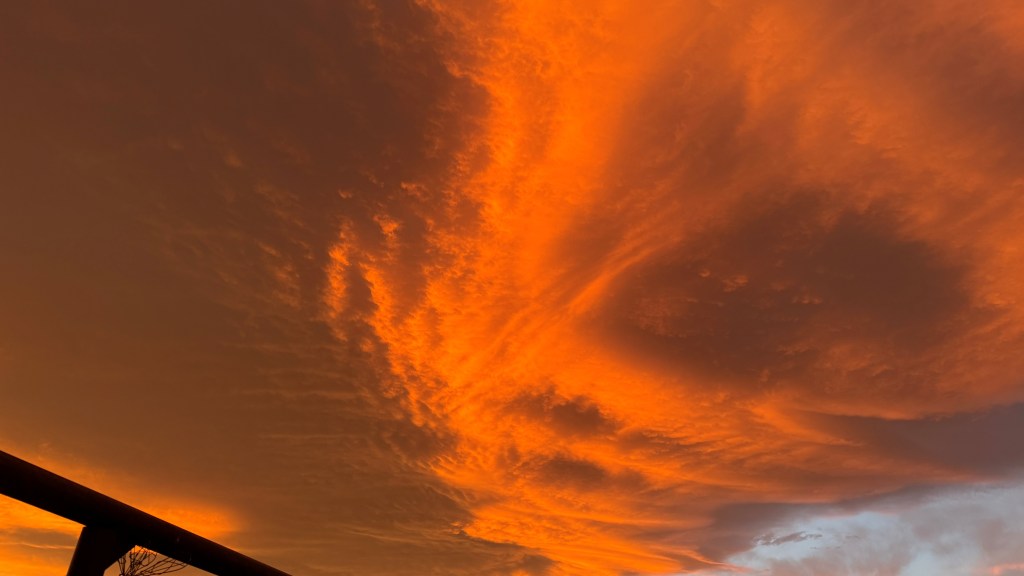
I lift my eyes. A spectacular sunrise yanks me to the window and wraps me in the membranes of an apricot sky.

“Today.” I finally whisper. “Today is all I know about love.”

Delusions to Die By

Though historians may beg to differ, it seems that humans have never been this close to self-annihilation. While wars rage and the earth gets trashed, the most pressing moral inquiry of the masses is this: “How can I get a better deal?”

A derisive snort and mocking applause announces The Presence in the corner.

“Hello, Holy Contradictions,” I mumble.

What I tease into words in the murky dawn might be the wind or a mouse scratching in the wall, but I feel certain something beyond is lurking in the cosmos. I offer greetings most mornings.

“Good day,” HC says, emerging from chimera to full status as a citizen unto itself. It has wings. It has legs. It has a beating, bleeding heart. “You aren’t wrong,” it adds from a perfectly formed mouth.

“You mean my sarcastic comment about the morality of acquisition? The Art of the Deal? Or the nearness of extinction?”

“It’s all rooted in selfish genes and the wrong-headed notion of survival of the fittest,” HC says with scorn. “You think you want fat lives, herd immunity, and evidence of superiority as indicated by possessions and an address on Easy Street.”

“True,” I admit. “That does sound good. Makes me want to be the fittest.”

HC snorts again. “Have you thought that through? C’mon. You’ve got the brain power to get beyond your genes. In the end, the Fittest will stand armed, paranoid, and alone. The winner of the rat race is a rat.”

“Nice platitudes,” I say. “Got a better way?”

HC shrugs. “Stop deluding yourself. No one survives. It’s Now that counts.”

“Thanks,” I snap. “I feel so much better.”

“The ultimate measure of fitness is how you love and protect the unfit. It’s time to break the light into itself, hold the Face of Anger in your hands, and let her bite you.”

My hands are fisted. “You are certifiably nuts,” I say in a low, edgy voice.

“And you are certifiably angry,” HC says with authority.

“Yeah. So, I’m supposed to bite myself?”

HC nods. “And hold the Faces of Joy and Justice but be careful. They’re elusive and explosive.”

“You’re seriously insane,” I say. “I can’t do any of this.”

“Oh, but you can,” HC insists, not at all sympathetic. “Hold all the Faces of Insanity in your hands and let them bite the hell out of you.”

I stare at my weathered hands. The biting has begun.

“I’d rather hold your face,” I plead, frightened.

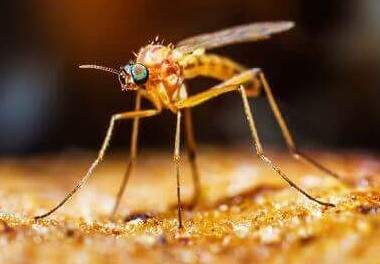
“Oh, my little mosquito!” HC says gently. “What do you think you’re doing?”

A grim hilarity takes hold. I slap myself silly, and for now, we get on with it.

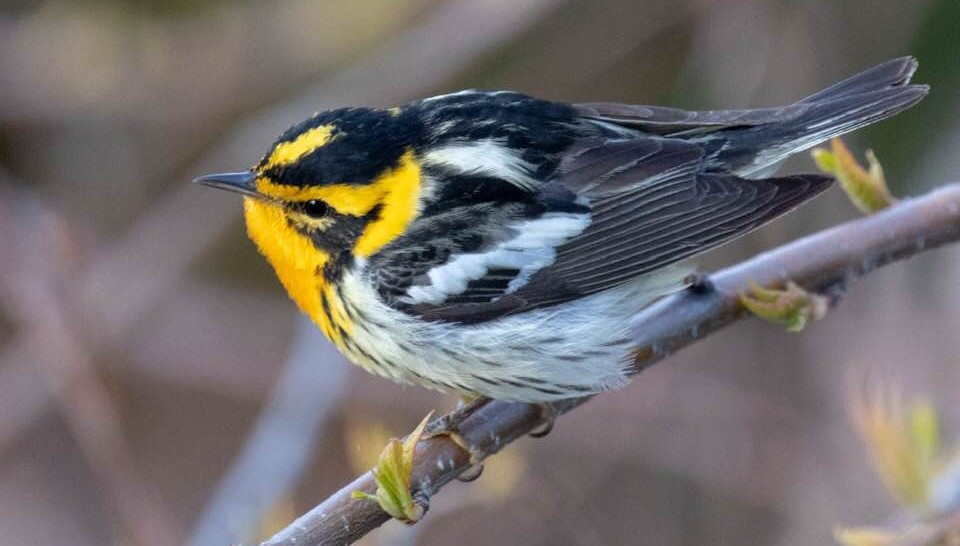
Watching a Goldfinch Eat Chokecherries

I’m tired of calling you God, I say, 
as I watch a goldfinch eat chokecherries.
And I’m tired of being called that,
God answers in green, disrobes to fire.

I’m surrounded with absurdity, anger, and absolutes,
but the branch does not break with the weight of the feasting bird.
Sky backdrops vultures circling
but they don’t block the sun.

Layers of harvest are upon me,
a comeuppance of carrots, chard, and beets.
Leering pumpkins, wily cucumbers,
and basil going to seed.

Going to seed.

My hands smell of onion.
My eyes sting from wildfire smoke.
The Collective strums chords
composed for disintegration.

What, then, shall I call you? I ask, settling. Sad.
I’ve always liked Improbable, God says,
then adds but Maybe.
Too much. I shake my head. And not enough.

God smiles a rather evil smile.
Perhaps you could crowdsource the Question.

No way, I say. I wouldn’t like their answers,
and they’d rip me to pieces.
That’s a given, God sighs.
But for now, gather and share.

I don’t want to, I admit.
Improbable but Maybe begins to rain.

If you want to achieve exit velocity, It whispers,
You need to strengthen those wings.

Did I say I wanted to fly? I ask

But that’s exactly what I want.
And I admit, I’ve said it many times.
I do want to fly.

Gone

To begin my morning wrestling match, I typed the word gone and then backspaced it out of existence and then typed it again. It sits on my screen, a fragile, arrogant four-letter word with its dukes up, ready to go a round or two with denial. But here’s the truth:  I can make it disappear and reappear the rest of the day if I’m so inclined.  I am more or less in command of my words. This is comforting. Sobering.

Spoken or recorded, words can linger beyond the speaker or the author. We fawn over first words. Cherish the last. The words in between muddle along, hurting, encouraging, freeing, frightening, disguising, delighting, warning, elucidating, lying, and shaping whatever they touch.

“Hello,” God says. “What have we here?”

“Me, muddling,” I say. “Thanks for interrupting. It was getting weird in my head.”

Gone can do that,” God says. “Try go or going instead. More energized and hopeful. For now, that’s probably better for you.”

“Don’t pamper me.”.

God looks surprised. “Why not?”

“I want to be tough enough to handle it on my own.”

“Handle what?”

“You know. Goneness. Endings. Closures. Failures.”

“Oh good grief.” God digs his fingers into my shoulders. “Listen.”

I listen.

The rumble of a gravel truck. The neighbor’s choice of music. Birds singing. Fire crackling. Familiar sounds.

“Good,” God says. “Can you bring any of that back and hear it over?”

“Well,” I say with a grin. “That truck won’t make those exact sounds again, but I think Pandora is on replay next door.”

This cracks God up. “Ha ha! Pandora. Good one. So you think your playlists will save you?”

I look at God like he’s lost his mind. I shake my head and try to turn my back which is silly. There is no back.

“And there is no gone,” God says gently. “There’s nothing but Now. Type that.”

“I just did.”

“Good. What you think is solid, what you think is redundant, what you think will last, it’s all just Now.

“But wouldn’t it be great if words could pass through into forever?”

“Actually, there’s one word that does that,” God says.

“I suppose you mean Now,” I say.

“Nope,” God says. “It’s my favorite name—quite difficult to translate. In your native tongue, the closest you’ve got is love.”

I dig my fingers into God’s shoulders and in my most serious, sad voice, I say, “God, love is what makes gone so painful.”

“I’m fully aware of that,” God says, equally sad and serious. “But the alternatives are worse.”

The End is Always Nigh

Once upon a time, I took comfort in this bit from Ecclesiastes: Generations come and generations go, but the earth remains forever. The sun rises and the sun sets, and hurries back to where it rises… Of course, I now realize the earth will not remain forever. It depends on asteroids, nuclear bombs, and cosmic waste. Forever isn’t an option.

For every goddamn action, there’s an equal and opposite reaction. I realize that attempting to inhabit impermanence is oxymoronic. But I can’t stop myself.

Mounted on a skittery horse, I navigate the slippery slopes of transience with a rope in my teeth trying to lasso the good moments and make them last. If my attention snaps the wrong direction, I could find myself swinging from the saddle horn. Depending on how badly this spooks the horse, my chances of climbing back on would be slim to none.

“Your metaphors aren’t working for me,” God says. “You don’t even like rodeos.”

I shrug and grin. “True. But you know what I like even less than rodeos?”

“I imagine I do since I’m God.”

Undaunted by the sarcasm, I continue. “I don’t like death or uncertainty or good things ending or rotten things continuing ad nauseum.”

“Well, blow me over with a feather,” God says.

“And I don’t like suffering or feeling inadequate. I don’t like making decisions or wasting time. I don’t like diseases or injuries, aging, accidents, robberies, lies, cruel jokes, or greasy food. I don’t like mediocrity, bullies, or vicious dogs.”

“Good to know,” God says, peering down at me. Like a hog rooting for grubs it seems I’ve dug myself a surprisingly deep hole. It’s easy to do in the spring mud.

 “So hey, could you use a hand?” God asks.

This strikes me as condescending. I’ll climb out on my own when I’m good and ready.

In a mocking voice, I answer, “So hey, instead of you dragging me up, how about I make room for you to come down?”

“Sure,” God says, handing me a shovel. “I’ll get my boots. Want me to bring anything else?”

“Water,” I say, but I immediately regret it. God’s up to something.

Sure enough, the flood begins. The shovel becomes a floatation device. I’m lifted from the grave I was digging, and I kick myself to shore.

The water recedes. The sun shines.

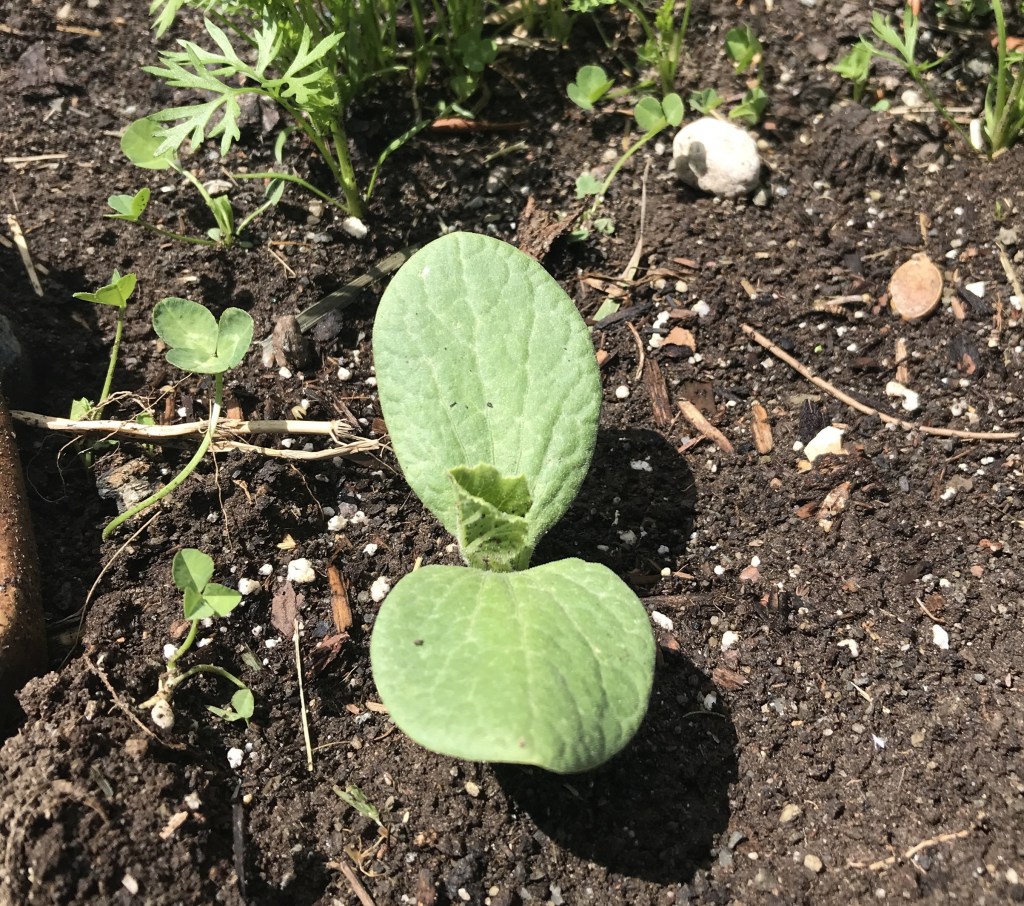
“Still early,” God observes, squinting at the horizon. “Might be a good day to start some seedlings on the porch.”

“But I don’t even know if I’ll be around to harvest,” I pout, hoping for a guarantee.

“Doesn’t matter,” God says. “Plant.”

New Year

Shadows of the year now gone stretch long in the setting sun as they strut and prance through orange willows one last time. Imposing slabs of ice have accumulated. It’s late. There isn’t much left to believe in.

“Seeing is believing,” God says in a teasing voice.

I don’t feel like being teased. Or loved. Or spoken to. The costs run too high. All around me, endings. Winter. The charred remains of fire and flood. Memorials planned, attended, forgotten.

“Fruitcake?” God asks, sliding a plate toward me. “Coffee? Beer?”

I glare.

“C’mon,” God says. “Get over yourself.”

“I AM over myself.” I straighten my spine and adjust my scarf. “And I’m over you.”

“Nope,” God says. “Neither.”

She’s right. I’ve bid the year goodbye, but it hasn’t disappeared. My body bears evidence of tenacity and time. There are debris piles chafing my soul, defiant streaks in my hair, and protests on the streets of failed and failing states. Star athletes are still on their knees. I would drop to mine in a nanosecond if it would further the cause of justice, but I’m not on the team. I don’t go to the games.

“Wrong again,” God says. “Everyone’s on the team. Even you, slugger. Here. Eat up.”

She pushes the holiday Chex mix toward me. I push back. She kneels and gives me a wide grin. Then she tips her head back and pours the entire bowl into her mouth. She chews obnoxiously loud, her tattooed hand rubs her ample black belly, and she sways back and forth, moaning as if the stale snack is the most delicious thing she’s ever tasted.

“You can stop now,” I say, laughing. “You’re ridiculous.”

“No!” she declares. “I’ll never stop.”

I shake my head.

She continues, “Honey, there will always be leftovers and reasons to drop to my knees. This is the communion of saints, the eternal transmutation, the saving of that which can be saved.”

“And what exactly can be saved?” I ask. But I know the answer. Nothing. Everything. God is energy, mass, and the speed of light. The maestro. The melody. Scientist and clown. I’ll never understand why she takes time to make me laugh, but I’m glad she partakes of leftovers with such gusto.

“Have a happy, blessed, sacred, holy, peaceful prosperous new year,” I say to God with a grin of surrender.

“Thanks,” God chuckles. “You crack me up.”

We link elbows, and the Magnificent, Unattainable God of Now waves the billions in. Together, we bid a sad farewell to that which will not come again and bravely greet that which is coming but will not last.

Managing Distractions

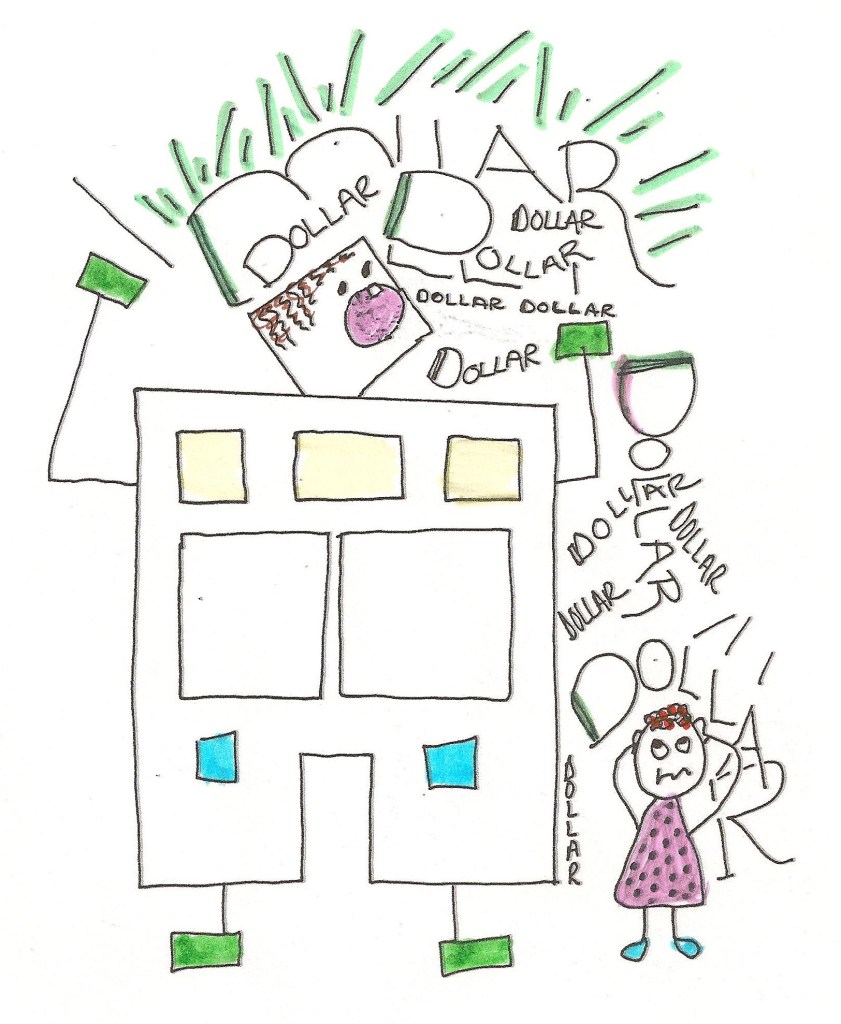
(Illustration from my book “When Baby Corporations Come To Play”)

During the next 22 minutes, I hereby resolve to sit in a soft purple chair facing out into my personal chaos and not move anything but my fingers. Warily, my body will relax; my thoughts will filter through a maze of urges, accusations, poetic phrases, and old jokes. Most likely, I will revisit yesterday’s indignations instead of remembering recent joys.

God will appear in fits and starts. She’s as subtle as the noisy microwave and the insistent hum of the cheap refrigerator I’m enduring for the sake of the planet. Or so I say.

I let myself love the pinkening of the sky, even though the pink is fleeting, and my love will go mostly unrequited. The sky does not have time to love me back for very long.

God moves freely around the room. She is interested in the ways lime green and pumpkin orange can change a life for the better. So am I. She seems fascinated with the ease and strength of torque screws, the ticking of old-fashioned clocks, the dangerous games people play in their minds, and the lyrics. And I do mean The Lyrics. The One Song. Sometimes, I sing along but I make up my own words. It’s safer that way.

At heart, God is a rapper. She claims she’s still writing relevant verses. I doubt it. What does she have to offer the gamers and the insistently ignorant? The magnificently greedy, the already generous? Or me, for that matter? And why do I think there should be a set of lines I can understand? As if that could save a single hair on my waning head.

Each minute is a minute unto itself. Round, perfect, weightless. I want to crawl into one and float away, but they burst like bubbles when I touch them. They take no prisoners, allow no passengers, and mercilessly disappear. All I can do is admire the flawless roundness, and shape myself to the circling earth, as if I, too, were a moment in time. Enough but empty. Complete but hungry. Irridescent, transparent—a shade of blue that only God can imagine.

It’s time to leave the soft purple chair and move into the falsely ordinary shards of the day. “Farewell,” I say to each of the 22 minutes, my voice tender and sad. The sky has given up on being pink, but God is still puttering around, admiring whatever she has in her hands as if nothing has slipped away. “Want to go for a walk?” she asks. I lift the skin on my face into a smile and look into her eyes. “Sure,” I say to the Eternal, the Great Intangible, the Path, the Lover, the Rapper, the Generator of the Splintered Now. “Sure,” I say, standing and ready. “Let’s walk.”

Instructions

Photo credit: Scott Wolff

God’s face will come off in your hands if you pull hard and twist.
Your own face is a fluid river. Not something you should readily admit.
The mysterious whispers from the shadows are ancestors sighing. Sigh with them.
After a hearty meal, a small bird balances on the tip of a branch. This is impossible.

If you aren’t stoned or near death, the day might seem ordinary. It’s not.
If you assume things will remain the way they are, you’re mistaken.
What you see, what you hear, what you believe–all unlikely. All contingent.
You may think you understand the ways of the world. You do not.

Your petty fears are confetti in a gale force wind. Celebrate their flight. You’ve won.
The rotten cottonwood with the eagle’s nest has blown down. For this, grieve.
There is nothing left to win or lose. Take God’s face out of your pocket. Wear it.
Use jagged stones to chew your food, and you will be briefly sustained.

Let your guard down, put your feet up. Be playful with the local delusions. Laugh.
You’ll notice the joke is on you, which is very good news. Rejoice.
Music blares into the wee hours of a morning you don’t own. Listen.
God will say unto you, “May I have this dance?” You wonder what to do. Dance.

In certain moments, you imagine that your angular finger is a twig. This is true.
When the sparrow lands to groom herself, you suspect it is the end. It is not.
Put your better ear to the ground or on the thin chest of newborn child. Say hello.
You’ve never fully lived here, but you call this place home. And it is.

The Will of God

IMG_6671

At 3:00 AM I was unwillingly awake with an old church song stuck in my head. I tried to breathe it away. I tried to layer another song on top to cancel out the insistent tune. I finally fell asleep, but now, with the dawn, the song is back. Coffee, Paul Simon, a nice Vimeo poetry reading—nothing has obliterated this song. So, like any sensible, mystically-oriented writer, I Google the lines to see from whence they come. Alas. It was an easy Google. New Testament. Writings of a fellow mystically-oriented writer called Paul in the book called Romans. Here are the words of the song:

We are heirs of the Father, we are joint heirs with the Son.
We are children of the Kingdom. We are family. We are one.

But guess what? The song is a bit selective. The whole verse has a disturbing caveat. We are one, alright…IF we share in the suffering. But isn’t God’s love supposed to free us from suffering? Sometimes, I like a good paradox. An enlightening dialectic. But this morning, I don’t like the song, I don’t like the verse, I don’t like suffering, and I hate my internal judge who says maybe I haven’t suffered enough, so I can look forward to more or die a total slacker.

God arrives gently. “How’s the book coming along?” he asks. He’s talking about a book I’m writing on suicide.

“What’s the point of anything?” I answer. “The book is freaking me out, and I doubt anyone will publish it anyway. And why is suffering even a thing?”

“Bones break,” God says. He sighs. “Fire burns. Hunger happens. I don’t like it any better than you do.”

I believe this is true even though I’m talking to the Biggest God. The One who could fix it all. The One with perfect pitch who plucks the strings of the cello, paints the sky, births the morning, ties the knots, upends the endings, buries the dead, begins with no beginning, ends the day with no end.

“I’ve been working on my will,” God says. “What would you like to inherit?”

My insides drop. “You can’t die,” I say from a very cold place.

“Of course I can,” God says. “I do it millions of times a day. It’s a job requirement.”

“That’s stupid,” I say. “You’re God. You wrote the job description.”

“Yes, I did,” God says. “Now, what would you like to inherit?”

I look at God, utterly astonished at the ridiculous question and impossible answer.

“Nothing,” I mumble.

“What’s that?” God says, leaning dramatically across the couch.

“NOTHING,” I shout. And I mean it.

But God snaps open his briefcase, and a fully formed day leaps out, intensely pigmented, filled with the aroma of baked goods and lilacs, songs in my head, words at my fingertips, and a horizon barely out of reach. Just the way I like it.

“Okay,” I say. “For now.”

“Yes,” God says. “For now.”