Remember Your Lines

Sing a song of sixpence, a pocket full of rye.
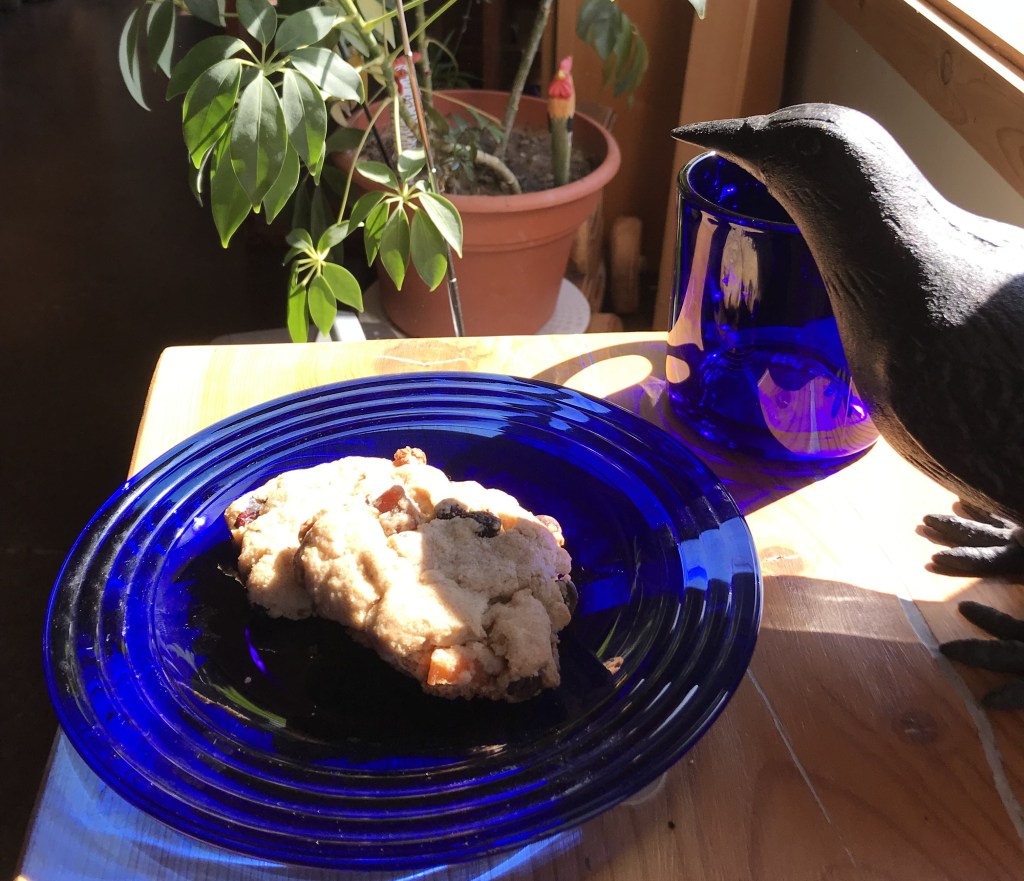
Four and twenty blackbirds baked in a pie.

When the pie was opened, the birds began to sing.
Wasn't that a dainty dish to set before the king?

The king was in the Whitehouse counting out his money.
The queens, in Mar-a-Lago, eating bread and honey.

The maid worked for the government hanging out fake clothes,
But down came a blackbird and pecked off her nose.

There was DEI commotion, but Little Jenny Wren
Flew down into the garden and put it back again.

Outside my window, four and twenty blackbirds form an undulating carpet of wings. From them, I take hope. From me, they take grain. We do not begrudge each other these small takings. Is that enough?

“That’s a fair exchange,” the Unimagined whispers. “It is enough.”

As far as I can tell, I’ve lived in this one body my entire life. I’ve not thrown it on a grenade, but if needed, I think I would. I’ve not run it into burning buildings to save those unconscious from smoke inhalation, but if needed, I think I would. But would I?

These are my fantasies and aspirations. When I grow extra beans or beets, I share. Once, I was walking with a friend in the city late at night, and a mugger knocked her down. I chased him, but he got away. How are we to know if we are bit players or heroes?

“It’s your story,” the Writer says. “Remember your lines.”

My heart breaks for the runner who stumbles or the farmer whose tractor runs out of fuel while plowing the muddy field. The glancing back. The long walk home. The crowd dispersing. The rich preparing to eat themselves alive, knives sharpened, bones strewn everywhere. “Wait!” I shout, aware that I, myself, have stumbled and looked back. “Are those my bones?”

The Living Companion laughs. “Those are the ancestor’s bones. You still have flesh.”

I still have flesh. I still have carrots and dried kale. Oh, Force of Life, give me the audacity of blackbirds singing from the center of the pie. The king cannot partake of singing birds. And may I borrow the tenacity of little Jenny Wren, putting the faces together again?

The Bane of My Existence chucks me on the chin. “Sure, but keep in mind, some things broken cannot be fixed. And don’t sing alone if you can help it, honey. The harmonies will help you remember your lines.”

Humpty Dumpty sat on the wall.
Humpty Dumpty had a great fall.
All the king’s horses and all the king’s men
Couldn’t put Humpty together again.



Good and Evil, Weeds and Greens

I just ordered extra-strength mold and mildew killer for a nasty basement area that hosts a strain of fungi I do not like. And later today I’ll chop, pull, and in some cases, spray chemicals on bugs and weeds and tenacious grasses that are choking the good stuff.

I hate this.

I hate every single stupid aspect of the battle between good and evil, weeds and vegetables, beneficial bugs and destructive infestations, liars and truth-tellers, thieves and the generous of spirit. I realize there’s a purpose for all of creation. Nature is not mistaken. We know a little but not enough. Defining anything as a weed or as evil begs the question of an omniscient creator who pronounces all things good (or potentially good, or redeemable). It violates my premise that God knows what God’s up to. This is why being rational sucks sometimes. The whole of life is filled with unsettling contradictions that must be addressed or endured.

I’m a consumer and a provider–a lover, hater, poet, pragmatist, winner, loser, dreamer, doodler; I’m easily duped but wise in the ways of my insular world. On occasion, I fail to be honest or kind—but I’m skilled at manufacturing reasons to justify myself.

As a human, I have a large degree of autonomy. I have the prerogative to be caring or cruel, truthful or deceitful; I have power over those weaker than I am. Each day arrives new but slightly tainted by the dregs of the day before. The brilliant colors of an unguarded sky disorient me as the hot wind of redundancy stirs the August dust. By late afternoon, I see in my face the toll taken by trying to live well. What do the “evil” people see—the depraved and debauched—do they see the same contours?  Small victories and apparent defeats? Do they glimpse God with her arms crossed, waiting? Do they see my futile longing to give every living thing another chance?

The problem with weeds and germs is that they don’t know their place: they’re not humble. They roam around the party sipping wine from everyone’s glass. They are invasive and infectious. Taking unfair advantage, they form self-defeating monocultures and thus fail to be a balanced part of an intricate ecosystem.

The God I hang out with is the Balancer-in-Chief. She climbs on the scales, lies down in the street, lets the bastards starve her to death. She sustains injuries from the blast, drowns in the flood, joins the protests, widens the cracks, and endures. Unlike me, she seems to know it will come out okay in the end. There will be justice. There will be mercy. There will be love. I shield my eyes from the glare of the moment, but I can only see so far. So while I’m still able, I yank at the weeds with a ferocious mix of futility and hope, and with a certain sadness, I leave their roots exposed to the merciless sun.

Mice

IMG_6764 (2)

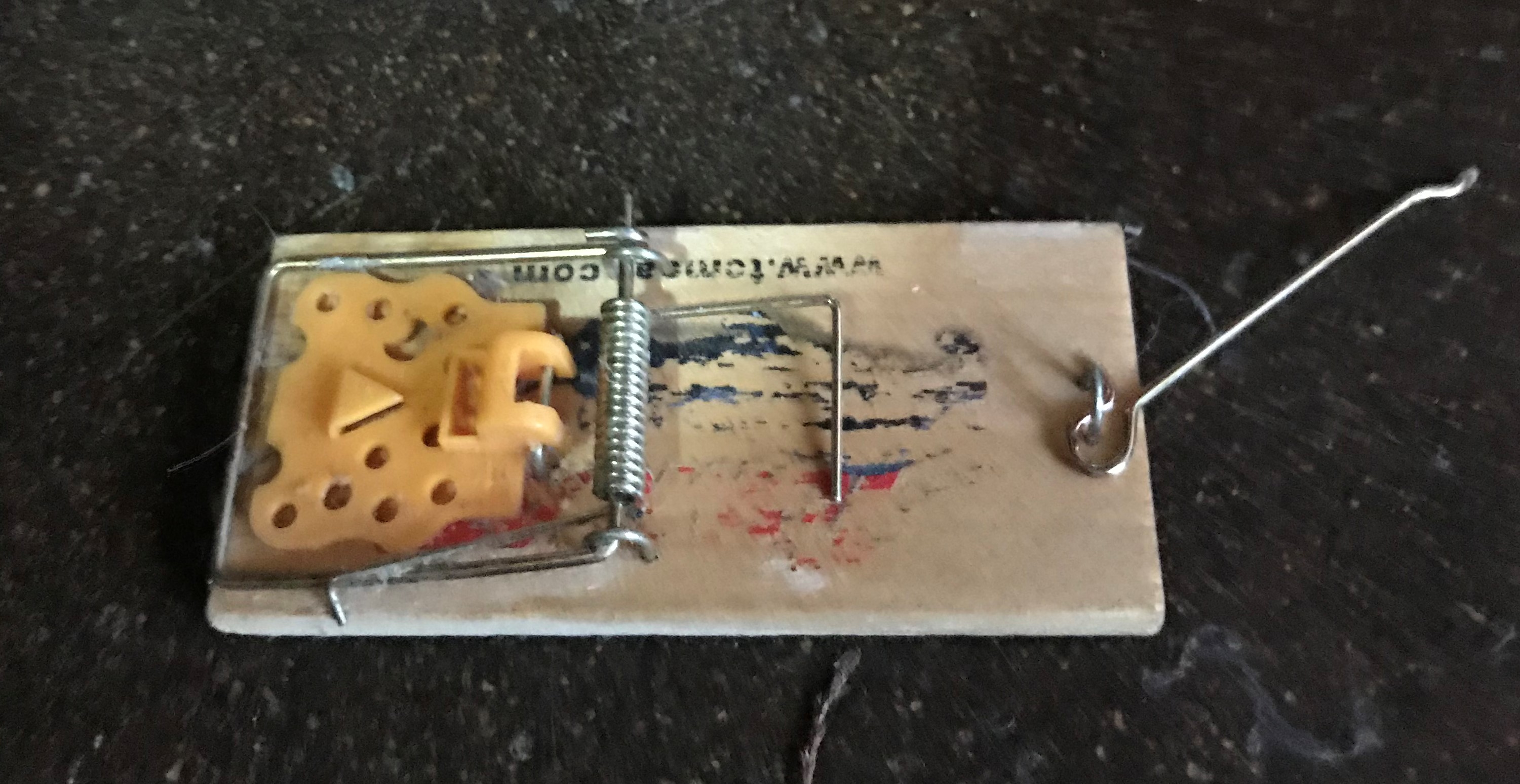
‘Tis the season for the battle between humans seeking untainted cupboards and mice seeking warm, tasty accommodations. Humans have superior fire power. Mice have elastic bones. It’s a version of David and Goliath. And yes. Humans are Goliath. We are big, smart, and temporary. They are small, but they are many. We will eventually lose. But in the meantime the traps are set, ultrasonic sound devices are plugged in, and steel wool is stuffed tight in every conceivable nook and cranny.

Finding their bodies broken and contorted in the snapped traps is distressing, disgusting, and sad, but not as sad as finding their poop turds in our rice or oatmeal or my neatly folded towels. I don’t like war. I don’t like killing. But I draw the line at surrendering to rodents.

The previous owner of our home had given up. Frail and confused, she lived among the mice, littering her leftovers around the house, letting them have the run of the place. I suspect their offspring remember the halcyon days. The remnants of their reign are mostly cleaned and gone now, but just last month in the root cellar I found a long-necked bottle with a perfectly preserved skeleton. Decades ago, the mouse had squeezed itself in, dropped to the bottom, and belatedly discovered there was no way out.

“I remember that little fella,” God says, reading over my shoulder.

“Oh, hi,” I say, in a friendly voice. I wave my hand toward the easy chair. God settles in with a sigh and says, “Thanks. Do you mind if I put my feet up and take a quick nap?”

I shrug and nod, my face conveying fond approval. God’s eyes close. I consider the weight of omnipresence, momentarily glad I did not create the ever-evolving universe. I am not God.

Wind moves warm air across the snow, and an eagle flies by with a fish dangling from its beak. I think of a phrase from a long, sorrowful poem by Alfred, Lord Tennyson: nature red in tooth and claw… and the line Dorothy Day loved from The Brothers Karamazov: Love in action is a harsh and dreadful thing compared to love in dreams.

I have seen the way of a cat with a mouse. I have seen the way of an owl with a kitten. My entire being strives to accept the turning of the seasons, the transformations, the endings with unknowable beginnings, but I can’t quite get there. I am tender with grief.

God dozes while we sit warm in the risen sun. I’m everyone and no one. I’m alone, but I am together. I am the fish and the eagle. I am a mouse in a dark brown bottle. There is no escape, but I’m glad for the company.