Would You Like Me Better as a Bird?

Photo Credit: Scott Wolff

Sometimes God could try to be a little nicer. More fully present. Sure, there are days when we get along fine, but other days God goes silent, and I feel like the world is all my fault. For-profit prisons. Liars worshipped. Migrants capsized. Socialism demonized. Women as chattel and baby machines. The earth abused for our comfort.

On these days, I stomp, kick, and scream. I don my self-righteous armor, mount my trusty steed, and aim my lance at the nearest dark-web, conspiracy-theory, Fox-watching neighbor. This only happens in my head, but even so, I’m surly and unpleasant. Which is ironic since it likely reduces God’s motivation to stop by.

Then I notice the birds. The spectacular seed-eating bug-eating preening singing chirping flocking soaring birds. They are so present, so varied, so temporary. I see God letting them hop on her chest, giggling because it tickles. I see God lining their nests with sacred down. I see God in the lift of their wings. I see God dangling from their beaks. Their blithe innocence is sleek and beautiful.

Even in my ragged unbelief, in my sad and porous bones, I know that no sparrow falls alone. The hairs on my head, the lilies and dandelions, the war-ravaged children, the unsheltered, unloved, unknown. The conscripted. The billions unwillingly born. We’ve all been absorbed in the ocean of Knownness. Swelling buds, the receding tide: illusions of the highest order. We are figments of God’s imagination, players in a dream dreamed by God. I often think I want to free myself, but it seems I have no wings.

Is this my fatal flaw? Is this why I get mired in unlove?

Would you love me more if I could fly? I fling the question into the void, expecting only an echo back, but the Void quickens, and laughter cascades down like lava, vivid orange and dangerous.

“Oh, little fool,” the Void says. “You know I love you as much as you’ll allow.”

I tear up. There is a long, pregnant pause. Then the Void whispers, “And baby, you may not remember, but you have always known how to fly.”

This should be good news, but it frightens me.

I consider the wings of the morning and the skeletal lightness of being while young robins jump around under the lilacs to gain the strength they need to fly. Malignant tendrils of greed give way to the released and rising outbreath of the dead. The Void is right. I have always known how to fly.
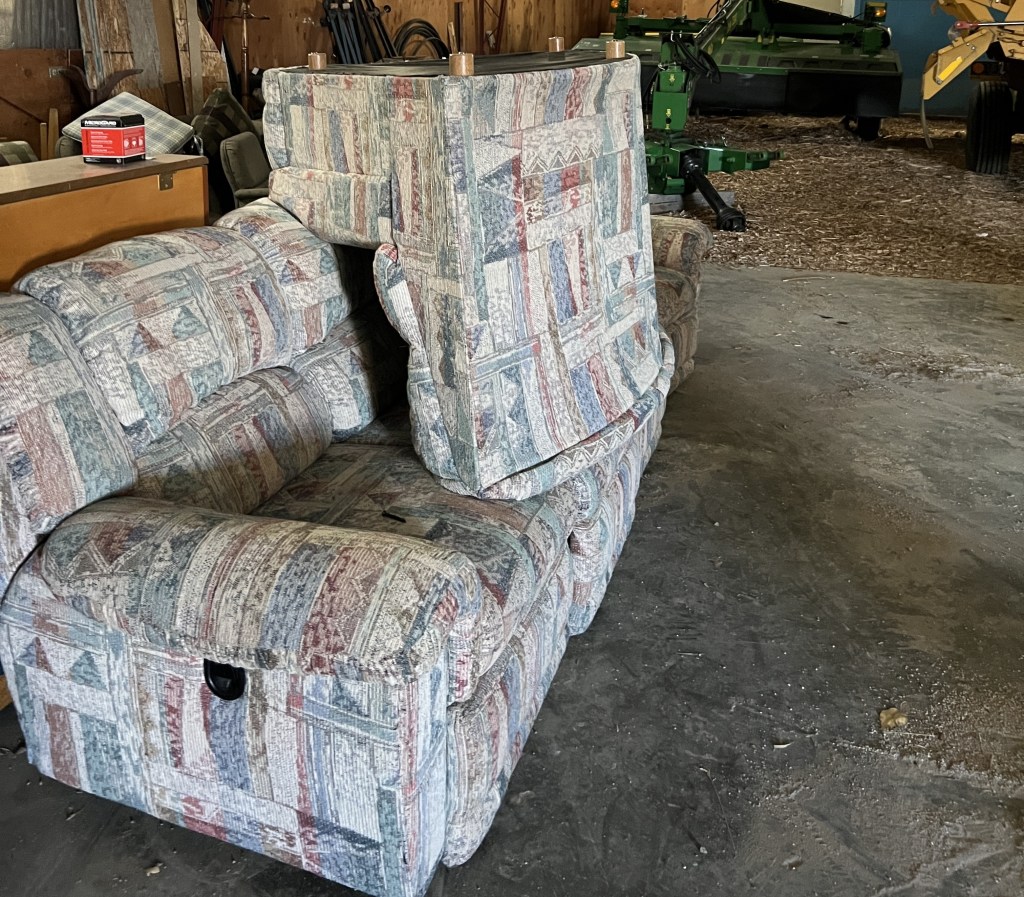
The Perfect Couch

I’ve searched for the perfect couch for a large portion of my adult life. I maintain a steady presence on the internet marketplaces and frequent the thrift shops scattered across the three states we travel the most. My couch karma is pathetic. Once, I broke my vow to only buy used items and bought a new one. That didn’t work out either.

Over the years, God has cheerfully sat on each of them except for the small sectional coated with multiple layers of nearly invisible cat hair. That one didn’t even make it into the living room. Too bad. It would have matched the nostalgic recliner I’m usually sitting in this time of day. If any cat people are interested, the sectional is piled in the barn. Blue geometric design. Can’t miss it.

“You’re funny,” God says, lowering himself into the sagging cushions of my most recent attempt.

“I know,” I reply, proud but sad. My mom would have turned eighty-nine today. I didn’t engage in any “Happy Birthday in Heaven” posts, but I’ve sent my regards to wherever the essence of mothers goes.

Generally, my mom did not like secondhand furniture, but she loved this little recliner that last year because she could put the footrest up and down on her own. Limits and needs humiliated her. She would have starved rather than ask someone to cut up her meat. I can relate.

It is one of life’s ironies that if we live long enough, we come to understand the disappointments, fears, and irritating quirks of our elders from the inside out.

“No, no. That’s not irony,” God says. “That’s mercy.”

“I don’t think so,” I say. “It feels vindictive. It makes me wish I’d been nicer and tried harder to understand.”

“No amount of niceness takes mortality away. You were nice enough.”

“I’m not so sure.”

“Trust me,” God says, “You were nice enough.” Then he adds, “Say, I didn’t sleep well last night. Mind if I take a little rest?”

He yawns, snaps the wobbly footrest up, settles back, and is soon snoring peacefully. I watch his chest rise and fall while George Winston plays melancholy piano in the background. Such short lives. Such very short lives.

I guess maybe it is mercy, I think. Better to understand later than never. A rush of adoration washes over me. I lower my own footrest quietly to tuck a turquoise blanket around the vast arthritic feet of my friend, the patient creator, the weary one, snoozing on my latest bad couch.

Hog Heaven

From my bank of unblinking windows I watch the ways of old trees dying. None are a direct threat, so I keep a respectful distance and consider rootedness and wind, drought and disease, and the sustenance dead trees leave for future generations.

Like trees, we exist fleetingly between flood and fire, partaking of a generous past, discovering our relevance even as we decay. I have been reborn many times, birth canals shaping the way things look when I reemerge. This morning’s reemergence is solemn. I am grateful for the stillness.

But my revery is interrupted by two pigs noisily reminding me it’s breakfast time. Obviously, their pen is too close to the window. These exuberant uprooters are stinkers in every sense of the word. I try to limit my fondness, but the way they make eye contact is most endearing. I see interest. Recognition. Maybe even primitive affection. I also see the truth. They are omnivores. If I were down and broken, they would eat me. And I’m sure somewhere in their active little brains, they are aware that I am a predator, and they are worthy prey.

“And thus you could break and eat them,” God says, finishing my thought.

“Eat or be eaten, eh?” I say, scattering soaked corn for the dramatically ravenous pair.

“Almost. But actually, it’s eat and be eaten,” God says. “That’s the plan. A good one, if I do say so myself.”

This is not a new conversation. I wrinkle my nose as images of mold, fungi, maggots, and other faithful workers of creation come to mind. I am an integral part of an inclusive, circular, cleansing, evolving, expanding universe. Pigs, chickens, cattle, yaks, grasses, trees, seeds, whales, mules, plankton, cabbage, caviar. Apples, melons, hybrids, bones, stones, erosion, uprisings, down-fallings. I sigh and look at my hands.

“So, God, what do you eat?”

God laughs. “Oh, I nibble on almost anything. I’m not picky. And before you ask, let me add that I am also eaten.”

I resist this idea, but then I realize I’ve always known the divine and sacrificial taste of God.

“You’re welcome.” God says, dissipating into the blue tangibilities of a day that has arrived unscathed.

There are orange chunks of squash in the trough—the final remains of last year’s garden. I sweeten the deal with an outdated protein drink we bought for a friend with cancer. The pigs are in hog heaven. I’m jealous of their uncomplicated joy.

Still Life

There are two granny smith apples in the basket, slightly bruised and aging out. 
The thought of eating one sets my teeth on edge. I don’t know why I buy them.
It’s a repeating pattern with me and fruit. I have unfettered access 
and there’s room in my cart, but is that reason enough? 

I sit with the ethereal miracle of vibrant green, tangerine, and sweet potato 
in the loosely woven wicker that holds things together for now.
Minutes and hours fall from the heavy sky. I keep watch, 
and in my own way, I pray.

There’s tea steeping and a bag of chips open in case God comes by. 
She likes the salt. I like the company. I try to be accepting, 
not greedy, not demanding, not intrusive, not filled 
with expectations. Just quiet and receptive.
But it sucks. It’s harder than winter.

The God small in each of us is to blame for tart apples and the long seasons 
of discontent. We are unskilled at listening, even less skilled at loving. 
I hear God in the hallway, dragging something behind her walker.
It must be laundry day.

Well, I can’t wait forever. I have errands and obligations. 
I understand how the self-important God of billions 
might ignore me now and then, but the laundry lady?
When God embodies thus, the roles reverse. 
She’ll ask me for quarters and for help
folding her flannel sheets.

Road Rage

When I’m driving around, sometimes a line pops into my head and I think it deserves a whole poem. Like this little phrase earlier today: The exquisite pain of knowing… The chances of remembering it for long were slim, so as I negotiated the traffic, I repeated it over and over, even though I didn’t think I was in pain. I was, instead, enraged.

The roads were terrible; people were driving stupid. It’s election day and as usual, my beloved state has gone to the highest bidders. Good, honest people ran against paranoia and lost. I knew I was angry, but when God tapped me on the shoulder I jerked the wheel and yelled, “Fuck you, God.” This surprised us both.

I’m home now but there’s no poem waiting for me. God made a hasty exit at a red light. Fine with me. Who needs any kind of God riding along, let alone a misrepresented, passive one?

To ward off a potential return, I put my fingers in my ears and sing la la la la la. I think of people who don’t love me and hate them for it. And then I retract the hate because I don’t want to be loved anyway. I’m weary of it all. I make herbal tea and wait for the end.

“Finished?” God asks, in a quiet, almost tender voice.

“Yeah,” I say. “You?”

“Oh, I’ve been finished for a very long time.”

“Did you quit or were you fired?” I’m still feeling a little hostile, but I push a slice of sourdough toast toward God. Breaking bread together might help.

“Technically, I was finished before I started,” God says, and takes a bite of the toast.

I make a face, hoping to signal that I don’t like these cryptic answers.

God also makes a face. “There’s something wrong with this toast. It’s bitter.”

“Well, why don’t you whip out your magic wand and fix it?”

God smiles. “Because as I said, I’m done. I turned in my wand so we could be friends. Maybe you should feed this to your pigs.”

“We’re going to eat those pigs someday,” I say.

“I doubt it,” God says. “But good on you for trying.”

The snow continues, and visibility is limited. There will be anger, anxiety, and accidents throughout the day. Night will fall and bring a temporary peace. This moment will be the last for some. The first for others.

God remains soft and circular. I am linear and limited, and I realize that this is the knowing that brings the exquisite pain.

No worries, I whisper to myself. You’re tough. And you can always make more bread. This isn’t true, but God doesn’t contradict me. For that, I am grateful.

From Whence We Came

Almost every day, God and I sit in a ratty blue recliner angled toward the window and sip beer. God expects me to hold still and listen. I try, but it seems nonsensical—an inefficient and unreasonable request.

Then I remind myself that efficiency isn’t the only road to success and not everything worthwhile is reasonable. The ability to reason is one ingredient in the soup that defines us, but it’s not the entire recipe. There’s sausage, kale, and wonderment. There’s an extravagance in creation that can’t be explained. Abstract thought and scientific inquiry may be the pinnacles of evolution, but pinnacles need foundations. Humans rationalize cruelty as readily as they eat that second donut.

“Working on some interesting similes and metaphors this morning, aren’t we?” God teases, sliding from chair to mirror to window to bird, sashaying to music I can barely hear.

“I’m thinking about foibles and do-overs,” I answer, happy that God seems loose and crazy today. “Could I have the last ten minutes back? I went down the wrong rabbit hole.”

“Nope,” God says. “Why do you even bother to ask? You know better.”

“No, I don’t,” I say, gleeful and untethered. “YOU know better.”

God winks and pulls me out of the chair. We do a four-pig jig creaking around the room in old bodies. We dance straight through the newly purple wall and fall, barriers breaking like bones.

I am blissfully unaware of dinosaurs, dodos, and all the hapless creatures currently facing extinction before they even have a name. They can all be Adam. They can all be Eve. I love them fiercely, but I can’t save them. I can’t even save myself (and truthfully, I don’t want to).

God’s reading glasses fly off while we’re cavorting. They shatter against the edge of a light green piece of granite I keep nearby for thermal mass, and small pieces fly everywhere. But no worries. The dangerous shards gather themselves into a coarse form of collective compassion, willing to return to the fire from whence they came. The fire from whence we all came. The fire to which we will all return.

“Sorry about your glasses,” I say. “I could read to you until they’re fixed if you’d like.”

“I’d like that very much,” God says.

“Do you mind if I start in the middle?” I ask. “I’ve already read the first chapters.”

“Not at all,” God says. “I suspect I know the plot.”

“I’m sure that’s true,” I say, oddly defensive. “But the descriptions are spectacular. And the details matter.”

“Yes, they do,” God agrees. “They really do.”

Balance

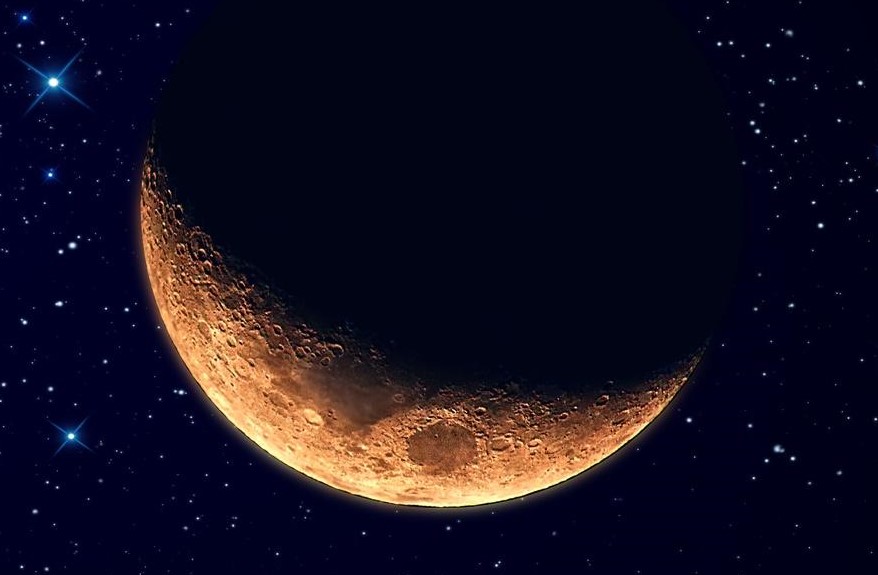
God was clipping her nails this morning and a luminescent fragment the shape of a crescent moon landed in the backyard: a beautiful asteroid, a source of light, the end of the raspberries.

 My entire garden is now filled with holy DNA. If this were a crime show, I could easily make a positive identification, but would there be a conviction? Even with humans, that’s never a sure thing. With God, highly unlikely.

“Sorry about that,” God says as she lifts the massive sliver of fingernail from earth and tosses it into the cosmos. “Careless of me to clip so close.”

“You could’ve wiped me out,” I say in an accusatory tone. “I can’t handle these jagged leavings and dangerous castings off.”

“I said I was sorry.” God can be a little defensive sometimes. She pauses, then adds. “Ah, c’mere. You don’t look so good.”

“Yeah, I’m not feeling all that well,” I admit as I crawl into the downy nest that God and I have created for the coming hibernation.

“Me neither,” God says with a sniffle. “Probably just a cold, but with all the upheaval, it’s hard to know for sure.”

“Isn’t it peculiar that before execution, the prisoner can choose a last meal?” I ask as we snuggle in. I ignore God’s quizzical look and continue. “So, what would you order?”

God is silent for a minute, then asks, “Sometimes, you’d like to kill me off, wouldn’t you?”

“Yeah,” I admit. “You’re precarious and whimsical. Inscrutable and endless. I need something easier. Less promise. More substance.”

Again, silence. Then, “I’d have nuts and berries mostly. Goat cheese. A little pasta. And three or four stiff drinks. White Russians, maybe.”

I whack God with a roll of political flyers from the recycle pile and offer her a megadose of vitamin C. She flinches dramatically, smiles, and takes two of the chewable tablets.

“How ‘bout a siesta?” she asks.

I shake my head. “You go ahead. I’ve got to transplant the rhubarb and that poor little pine tree.”

“Oh, good grief,” God says. “Can’t you leave well enough alone?”

The pine tree is a sore subject. I’ve moved it four times because I keep changing the layout of the garden and it’s in the way again. I want it to thrive but only where I want it to thrive.

To my chagrin, I start to cry a little. “I’m tired of everything,” I say. There’s a catch in my voice. “Especially myself.”

“I know, honey,” God says. “That’s why a little nap is such a good idea.”

Hedged Bets

“I had to invent death because none of you hold still long enough to sort out what matters,” God told me this morning as I rushed around, distracted, getting ready for a demanding day.

“Well, that sounds vindictive,” I said. The toast was burned, and I’d just poured sour cream in my coffee.  “Inventing death might be creative, but I assume you’re aware that the living prefer to stay alive.”

“I know,” God admitted. “I haven’t worked out all the kinks yet, but I have good intentions.”

The Subdivisions of God began their own conversation. The Source of Transformation looked down at her hands. “I’m not proud of causing so much fear,” she admitted to the others. “And such grief.”

Liquid God spoke from the banks of the drought-reduced river. “It is in sorrow and weakness they find their way,” he said. “But it’s hard to accept drying  up, having less to offer.”

God the Rodeo tried to sell everyone tickets, promising rides on the bucking broncs, but the Rest of God refused. “I’m sick and tired of the cacophony,” she said, her voice deep and mountainous, her presence profoundly still.

I wanted the others to go away. I wanted only her.

“See?” God said, merging back into Oneness.

“No, I don’t see,” I protested. “Being surrounded by peace is different than being dead.”

“Is it?” God asked. “How would you know?”

“Just a hunch.” I shrugged. Then I reached into my pocket and pulled out a fat roll of rodeo tickets. “Hedging my bets,” I admitted with a sheepish grin.

The corral gate swung open, and God the Rodeo raced toward me on a shiny black stallion. “Let’s go, pardner!” he hollered.

I ran toward him, and just like in the movies, God reached down and swung me up on the back of the sweaty horse. I wrapped my arms tight around his lean waist, and together, we galloped madly toward what we knew was the setting sun.

To my astonishment, I saw the Rest of God ahead, clearing away debris from the flood. And Liquid God had pooled up so we could quench our thirst. The surface of the water was so smooth there was no difference between my reflection and my face.

With reverence, we dismounted and kneeled to drink.

Fittings and Flushing

At 5:53 this morning, I was chanting fittings and flushing over and over because the new toilet seems to be malfunctioning which I must investigate so it can be returned within the grace period if need be. And I need to call the plumbing fittings store because I’m in the market for a new pressure tank.

I do not allow myself to get out of bed until 6 a.m., so given my distractibility, if I wake early and think of things, I recite them until I’m up and can write them on a list.

This discourages God. The holy art of being chill eludes me even though, as God has pointed out for decades, fretting at dawn does not necessarily enhance the chances of a good day.

But today, the chanting paid off. By 9 o’clock I had called the fittings store; the size of pressure tank we need will have to be ordered, not just picked up. And I’d flushed enough to realize the flapper chain was too short. An easy fix.

Next, there’s the broken screen door handle. And powdery mildew is taking over the garden, and right at this moment, a wasp is buzzing around in the living room. Even though we usually have five or six swatters available, I can’t find a single one.

But I do find God, standing motionless in Mountain Pose on the porch.

“Hello, God,” I say. “What’re you doing out here?”

“Considering autumn. Funerals. Firewood. Frost. Harvest.”

“Want me to memorize a list for you?” I ask facetiously.

“No.”

God picks up one of the onions drying in the sun. She peels away dirt-encrusted layers until she reaches the moist, succulent flesh and releases the pungent signature of onion. “This will take care of it.”

Only God can do this with an onion. She had summer mark this tragic year with three gargantuan pumpkins, renegade tomato plants, and cauliflower heads, white as snow, which we’d forgotten were there.

Spring is one of my worst distractions. We always overplant, but this will change.

Nothing stays the same. Nothing lasts. To know this is a burden and a blessing.

Between impermanence and consciousness are caves and canyons worn by water, made beautiful by clay, resisting, yielding, and resisting again.

Letting go.

Hanging on.

And letting go again.

That tasty cauliflower grew to fruition unnoticed, but the gigantic, neon pumpkins are entirely obvious, frantically ripening a raucous orange on frost-damaged vines. God and I are cheering them on–God perched comfortably on the pinnacle of forever; me, less centered, patting the pumpkin’s belly, dreading the coming winter, but imagining pie.

Believing

Humans are natural believers but the things we choose to believe in vary radically: Exercise, Love, Money, Science, B vitamins, Power, God, Not-God, Red Meat, Medicine, Herbs, Famous People, even Wishes made on Falling Stars. The propensity to believe makes us vulnerable to being duped. And often, instead of being open or skeptical, we act as if loyalty to a belief is a virtue. It’s humiliating and painful to be wrong, so we ferociously defend what we believe in.

“And yet…” The Creative Force woven into all things seen and unseen jigs into view decked out as a troupe of Finnish dancers raising money for the war.

“Hello, God,” I say, waving. I clap to the beat as The Troupe does synchronous high kicks and fancy footwork. At intermission, they link elbows, pass the hat, and fly away. I assumed they were Finnish, but there’s an Irish feel in the remaining air.

What makes something Finnish or Irish or Nigerian? Who’s in? Who’s out? No matter how glittery or damning, all the fine distinctions are temporary. Driven by beliefs, such dichotomous thinking can cause great suffering. It’s deadly to believe rather than inquire. We overlook the still, small path that leads us alongside the unknown and unknowable.

“That path is narrow and dangerous,” God warns in the strained voices of those who’ve fallen away. “Unknowing isn’t safe.”

“It’s safer than pretending,” I say. “Safer than being certain something is true when it might not be.”

“And are you certain of that?” God teases in a thousand laughing voices. I laugh, too. I admire these courageous, vague expressions of the God Who’s Fallen Away. They don’t name themselves God, but I do.

“This may seem obvious,” God says. “But I need neither definition nor defense.”

“I beg to differ,” I argue. “What about the least of you?”

There’s a tall woman in a Russian prison, a short man beaten senseless, a desperate woman forced to be a mother, flood and fire victims, prisons burgeoning, the rich getting richer as the poor sink further into despair.

“Ah, I see what you mean,” God agrees. “But definition? Defenses? These won’t help. Justice. Mercy. Lives laid down, not weapons raised up. Wealth distributed, not hoarded.”

“Much harder,” I say in a sad voice. “Nearly impossible.”

And again, God agrees and without further ado, fades into the nightly news.

Why not admit I know nothing but do something outlandishly braver regardless? I ask myself as I get ready for bed. May as well take a few risks. You’re going to die either way.

This may not be the best way to fall asleep, but it’s an excellent way to wake up.