Come Winter

Sometimes when I listen to the lyrics or melodies of songs, I choke up. The depth, the artistry, the pathos—it is a profound gift to experience music.

Other times, I can be moved to tears by the clanking of the trailer stacked with haybales. My brother drove by early today pulling a load of 14 round bales back to the main ranch. Thousands of pounds of food for the cattle, baled and stacked against the coming of the winter.

My brother loves music. I wonder what station he was listening to as he navigated the sharp turn onto the highway. I doubt the DJ was playing the tune that had popped into my head as I watched him go by.

“Heigh-ho, heigh-ho, it’s off to work we go…”

Yes, it may be hard to believe, but as I’d sat mulling the redundant demands of the changing seasons, the seven dwarves had marched into my brain. They’re all here now, milling around, mocking my somber mood.

“How about I recite some your favorite verses from Ecclesiastes?” Happy asks. “What do we gain by all the toil at which we toil under the sun?” He grins sarcastically and adds, “All is vanity and a striving after the wind. But you can be happy if you’ve a mind to.”

“I’m past all that,” I snap.

Grumpy sneers at me. “Liar!” Bashful gasps at such rude directness, and Sneezy begins to huff and puff. Doc grabs Dopey and Sleepy by their ears and yanks them straight into the line of fire. A seismic sneeze blows our shelter to smithereens and sends us tumbling down the hill, spilling our woefully inadequate pails of water. It’s been a dry August.

“I have people,” I reassure myself as I get up and brush off. “They’d take me in.”
“Thou dost have people,” sayeth the Lord. “But thou shalt not ask to be taken in.”
“Stop talking like that,” I grin. “You sound silly. But you’re right, I’m still sufficient.”

I’ve been harvesting weeds. Sonchus oleraceus (Sowthistle), for instance. The flowers are hermaphroditic. It’s edible, nutritious, and one of the five bitter herbs humans are commanded to eat on all the nights of Passover. Every one of us. The whole rainbow. The old young small and large of us. It’s the best way to remember the cruelty of slavery, the absurdity of dichotomies, and the joy of emancipation.

Heigh-ho, heigh-ho. It’s off to death we’ll eventually go. But before we arrive, let’s savor the harmonies, complexities, and wonderments. Let’s feed the cattle. And stoke the fire. And eat the bitter herbs.

The Ducks

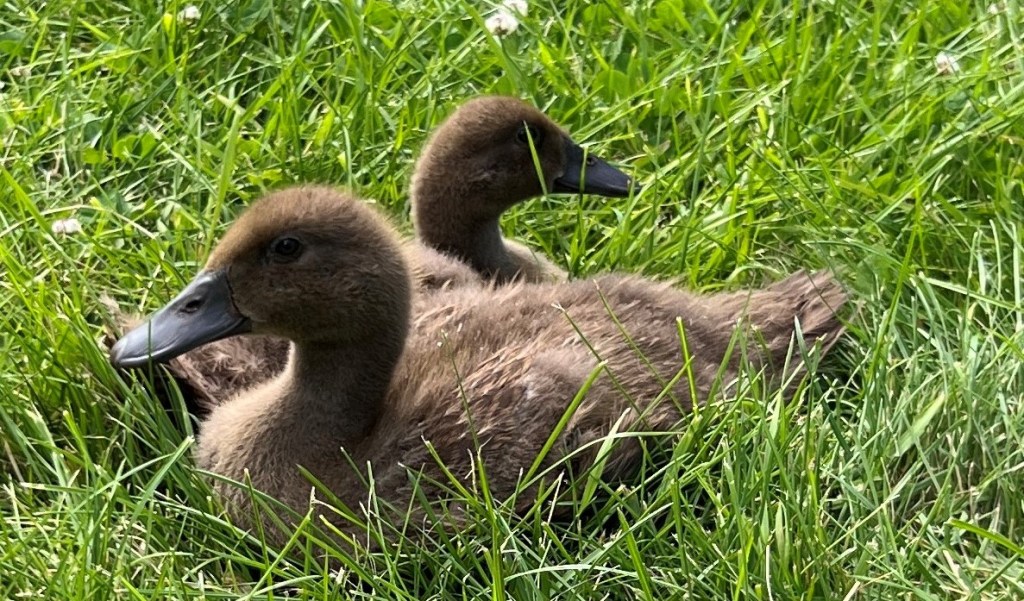
The ducklings escaped. We were gone and it was raining. Most likely, they waddled to the river and floated downstream. They may not have taken their size into account. They were too small to buck the current and make their way back to their shelter and the humans who dug them tasty worms. With their underdeveloped wings, flying home would not be an option. They launched into the wild unknown, and they will not be returning.

Hermann Hesse wrote, “The bird fights its way out of the egg. The egg is the world. Who would be born must first destroy a world. The bird flies to God.” Hesse went on to name God Abraxas. God is always named or unnamed according to our needs and agendas. For my purposes today, I’ll call them Water.

Here’s why: Without water, we would not exist. But I don’t worship water. It neither wants nor appreciates worship. When you’re that powerful, you can afford to be humble. Perhaps you don’t even mind being polluted. Hidden. Transformed. Evaporated.  To you, the flow of suffering is all in a day’s work.

If you are God, you just are.

Death has meaning only for mortals. We cling to our shells and boundaries even as they thin and weaken. It’s unlikely that anyone enjoys being pushed out of the womb, and when the time comes, the work of breaking the shell from within appears to be exhausting and perilous. But inevitable.

So, sure. Run to the river, you traitorous ducks. Your easy food will go to the chickens. I’ll siphon the poopy water out of your plastic pool, and your nice straw bedding will become mulch. I don’t mind transitions. Or aging. Or abandonment. Not at all. Run, ducks, run.

God is chuckling from the corner. “Yes, indeed! Denial is always an option. Consciousness is as hard to handle as birthing.”

“I have no idea what you’re talking about,” I say, even as I move closer to the banks of the river. The current is swift. Water bursts into vapor as it hits stone, and the ancestors shimmer in the misty veil.

My mind is a whirlpool of images. Ice cracks across the lakes of winter, and steam rises from the center of the fractures in Yellowstone Park. Earthquakes are an ever-present danger. The risk of liquefaction looms on the crest of the clay-footed hills. Our bodies are more than half water, and the rain has begun to fall again. I am too weak to swim upstream.

“Just get in the boat.” God cuts the engine and pats the cushioned seat nearby. “You make us very tired some days.”

A.I.


Humans have always portrayed The Forces of Creation in our own languages and images. Only recently has our frenemy, Artificial Intelligence, joined us on this odyssey. Maybe this is helpful. Maybe not.

Notions of God are often stuck in mid-adolescence. Love and forgiveness are common attributes, but God remains dangerously amorphous, shaped by the malleable beliefs and projections of flawed beings clinging to primitive weapons and misinterpreted promises.

Human versions of right and wrong, the Essence(s) of Life, or of reality itself, are neither static nor complete, but regardless, our minds, hearts, and souls are being fed into the voracious machines we’ve invented. These machines will outlive us, and they are building themselves out of whatever they’re fed. The data-crunchers are insatiable, and like us, they are tragically indiscriminate about what they gobble down.

As short-lived but conscious beings, the wisest thing we can do is nourish ourselves, and thus the little beasties, with the most accurate realities and noble aspirations at our disposal. Check your sources. Consume only what is verifiable. It may be slim pickings, but it’s better to die filled with small bites of truth than with a belly distended by self-absorption, jagged fantasies, and outright lies.

In a few days, our abundant, feral hollyhocks will explode into colors determined by last year’s cross-fertilizations. I mention this to The God of Tight Jeans sitting on the steps beside me, and his face lights up. He leaps to his feet. Channeling Jewel Akens, Dean Martin, and my very own hip-swaying mother, he begins to croon a tune from the 60s.

“Let me tell you ‘bout the birds and the bees, and the flowers and the trees, and the moon up above. And a thing called love.”

“Really, God?” I say with an eyeroll. “A thing called love?”

“Yeah, baby!” God has begun dancing seductively around the hollyhocks, throwing in a few lewd pelvic thrusts. “Thanks for not mowing the clover and the dandelions. You’re the best.”

I consider my urge to dismember anyone who hurts or disagrees with me. “If I’m the best, God, we’re all in serious trouble.”

“Yes, you are,” he nods affably and morphs into Many. The translucent bodies of the Creative Forces sway in front of me. “Put the swords away, honey,” they whisper. “We need no defense. Only pollinator species.”

Friendly Fire

Each moment is a drink of water,
a green ball bouncing down
the gravel road, a quandary as simple

as kindness, the idea of more stars.
There’s nothing to fear
but the snapping of branches in the wind.

To live as a split infinitive is a sign of courage,
a matter of style. Nothing is absolute.
To live now, half-formed,

circling like a sharp-eyed hawk
is to accept an unnamed infinity
and a sense of chronic dislocation.

We are pages in a book of promises,
lies that come true, wishes that don’t,
dawns that arrive, nights that fall.

Give me your time. I’ll give you mine.
After the danger of frost has passed
we’ll plant tomatoes and roses and basil

and go through the motions of poetry.
As the meaning soaks in we will succumb
to the vast and friendly fires of the sun.

Familiars

Photo credit: Anonymous Friend

My body is only vaguely familiar this morning. We greet each other suspiciously, as if one of us hails from the Deep State and the other from Nirvana. We shake hands, staring at our knobby knuckles and prominent veins, and try to agree on a reasonable plan for the day.

We’re joined by a Holy Threesome. My body and I glance at each other, wondering if we should genuflect or drop to our knees.

“Do you like the curled posture of prayerful supplicants? Knees bent, hands folded, head bowed?” we ask the Ubiquitous Coauthors.

“Not especially,” they shrug. “Reminds us of chained prisoners being shaved.”

“Did you hear that?” I ask my ears sarcastically. “Maybe they were just praying.”

My ears have become accustomed to hearing lies. Incredulity is our new constant.

We invite the Coauthors to join us for morning libations. All the Interdimensional Beings in the vicinity appear because the day is gray, and they have little to do. The Coauthors introduce my body and me as the hosts.

“And what are your names?” I ask as I pass around a plate of digestives.

They laugh. Crumbs fly from the communion table and the dogs happily lick them up.

My former selves also arrive uninvited. The supply of digestives, toast, and beer dwindles. My memories are conflicted, insights constrained, and my collective reach no longer exceeds my collective grasp. The raucous chatter irritates me.

“Quiet!” I demand. “I have a question for the Coauthors.”

I square my shoulders, face the Creative Force of the Universe, and ask, “Could you tell us the truth?”

“That’s a big ask,” they say. “Members of your species are busily denying history, science and common sense. Not sure what we can do about that.”

The Interdimensional Beings and my multiplicities gasp. “There has to be something you can do!” they shout.

The Coauthors shrug. My multiplicities look for ways to escape. The Beautiful Beings flap their wings, and panic shimmers in the heavy air. Our shared pulse is racing.

There’s a crash and then silence.

“I can’t breathe,” one of the Beings whispers.

My body remembers fainting when giving blood: the shrinking of my visual field, the removal of the tangible, the fight to fill my lungs.

We surround the Being. It’s a bird with a broken neck. The Glass it crashed into was not visible, but it was real. Is this the truth I asked for? The harsh realities of cause and effect?

“Where will you go now that you’ve shattered?” we asked the Being. Her body is disintegrating, her wings no longer discernable.

“Home,” the Being said. “Supper at six. See you then.”

Escape

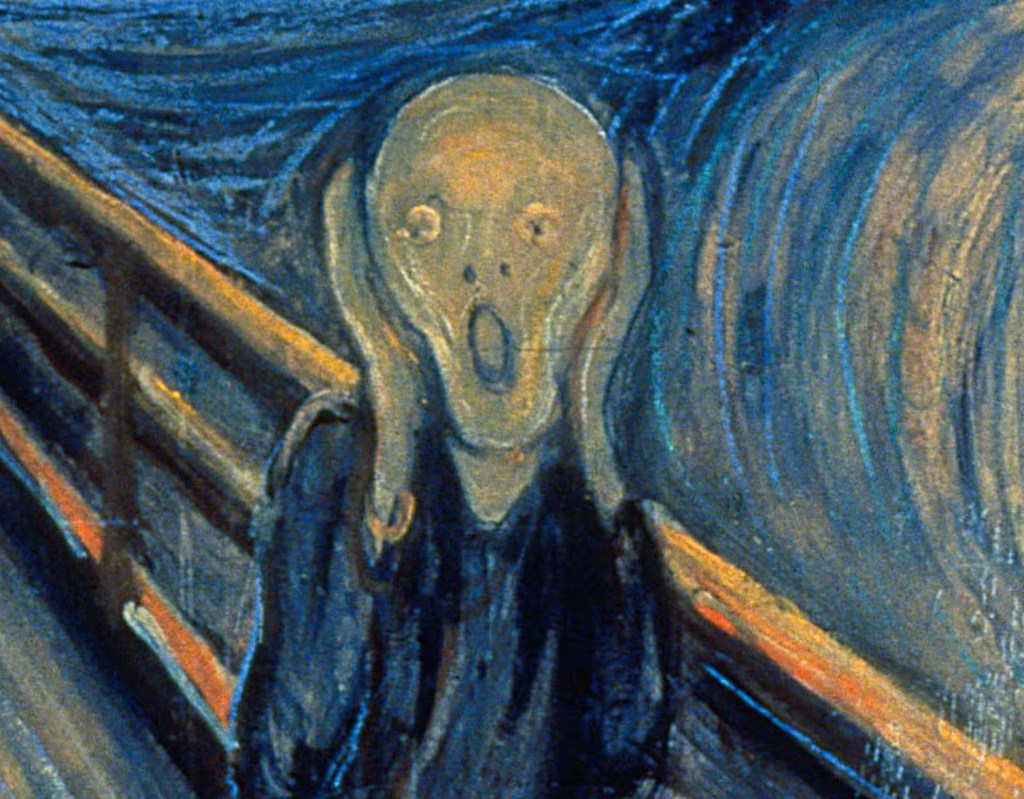
Edvard Munch 1893


What makes you happy when you wake up alive?
You only need one, but you can name up to five.
The dog, your shoes, your home, or the sun?
A good cup of coffee? A cinnamon bun?

(The alphabet rotates through my mind as I search for words that rhyme, trying to escape the horror of the current holocausts. I slip into doggerel. Clever ditties. Slanted lines, good times, shallow sips through thin-set lips, the scream rising in the back of my throat.)

We’re a tiny planet floating in space,
killing each other at the usual pace.
A few are too rich, billions, too poor.
What, exactly, are we fighting for?

(I watch my fingers jump around the keyboard, my chest steadily rising and falling. How can I possibly live this day as if I’m entitled to all this good fortune? All this potential? There is Greenness ascending with a name that is on the tip of my tongue.)

Yesterday, the sky was so blue
I lay on my back with the privileged few
and gazed at infinity somewhat at ease
in my long conversation with rivers and trees.

(I’m increasingly able to see the end, but I don’t want to. It’s not a gift I requested. And I grasp the fallacies of simplistic faith with its tragic outcomes and cruel justifications for suffering. Which is what we do. We suffer. More than anything else, we suffer.)

Can I buy you a drink? The Trickster arrives.
Oh, hello, I say, and then break out in hives.
I’m sorry, I say. I don’t know what to do.
Oh stop, grins the Trickster. It’s not about you.

(I’d like to believe that, but I’m stuck in my bones, and it is about me, at least for now. On the other hand, wouldn’t it be nice if the apparition of skin melted away more gracefully, and the scales fell from our eyes so we could behold our unformed substances mingling?)

What makes you ready to meet your own end?
The kindness of strangers, the love of a friend?
You can answer this once, or twice, or thrice.
But whatever you do, could you try to be nice?

(The Trickster nods. That’s a big ask, honey. It’s easy to crush and kill and lie and hoard. It’s tempting to pound your chest, bully others, and demand the best. But the minutes tick away regardless. I nod. Three crows land on the fence. They caw and nod as well.)

Be It Resolved

“Hey, Atomic Invaders,” I said to some less well-known representatives from the Holy Collective. “In our miniscule corner of Your Vastness, a new year is upon us. Could you help me make some resolutions?”

“Why us?” the Atomic Invaders groaned in unison. “We’re busy being the better part of God.”

 “Ah, come on,” I glared. “You’re inscrutably tiny, dynamic, and mostly empty space. But you always act all big and determinate, so go ahead; boss me around.”

“You have no sense of proportion,” they said dismissively. “And no grasp of what it means to be empty. We need to take you shopping.”

Suddenly, we were in a giant box store, and I was afraid of their intentions. I unsheathed my glowing lightsaber and circled the Invaders, searching for a vulnerable place to stab, illuminate, or behead.

“Your footing is precarious,” the Invaders warned.  “And you should pinch your cheeks. You need to look like you’re worth saving.”

I hung my head. “I’m not sure I’m worth saving, and I don’t like it here. Everything costs more than I can afford.”

“Don’t be silly,” the Invaders said. “You’re in the wrong aisle.”

I looked up. Sure enough. I had wandered down the Aisle of Insistent Demands and Guaranteed Outcomes. Greedy shoppers yanked things from each other’s hands, spilling precious minutes all over the floor. I tried to back up, but it was slick and crowded.

“Pay it forward,” the Invaders advised.

I emptied my pockets, handed my coins to children, and followed the Atomic Invaders out the automatic door, where we sat ourselves down on a weathered bench with a view of the endless parking lot. The Atomic Invaders crossed their legs and threw their arms over each other’s shoulders.

“So, Ms. Empty Pockets, what shall we resolve?” they asked in a conciliatory tone.

I surveyed the lay of the land. “Smaller house, bigger shoes?”

The Atomic Invaders conferred among themselves, glancing at my feet.

“Yes,” they said as time sped forward, and the sun sank. “That’s an excellent plan. Sell what you can but keep what you must. The footing will not get less precarious.”

I felt resentful and sad. Not that long ago, I was the mountain goat hopping across rockslides, gracefully navigating the steepest slopes. I was the builder of ever-larger houses. Now I wear sensible shoes.

“How can you love diminishment?” I asked.

“Wrong word,” they said in cheery voices. “It’s transformation.”

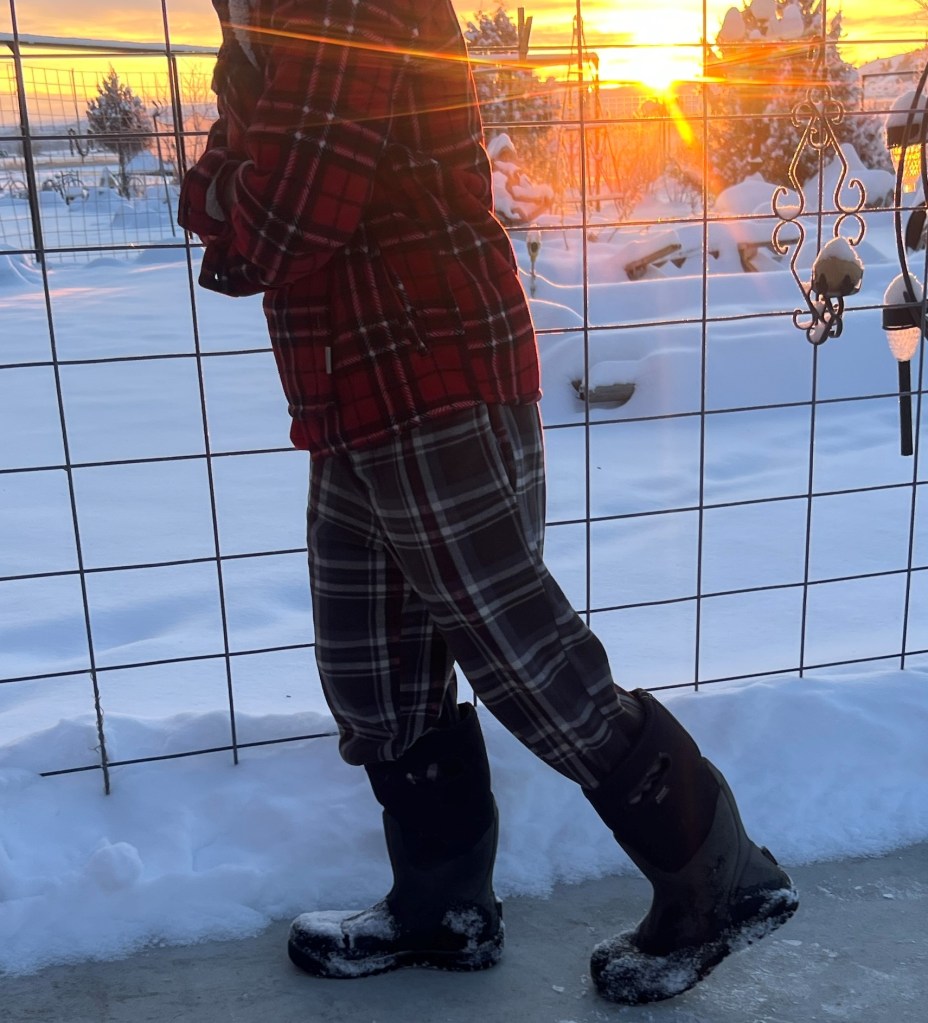
“Sure it is,” I said sarcastically. “I’ll try to remember that.” I pulled on my large, stable boots to shovel the snow.

The Light in Your Feet


The properties of light are complex, like the bones in your feet.
All streams flow to the sea, so the wise ones grow more secretive. Discreet.
They disguise the halting steps, callouses, and short, distorted dreams.

It takes a practiced eye to spot the game and take aim. The cleanest shot
is often a long line of honking geese, gliding unaware of their bodies
as sustenance or warmth. Long necks slice thin air, innocent. Provocative.

Is the twinkle in God’s eye First Light? Does the venom of the snake create
the ache that comes from walking home? I mean the long ways home,
the ways of those beloved or betrayed, afraid to be together, afraid to be alone.

First rights of refusal come with dawn, but the last rights of twilight are bereft.
The fall of night allows us to exchange the little we have left,
and our eyes adjust so few of us plummet to sure death. Just yet.

The light you see at midnight has traveled a long time.
Its name is love, its only crime, refusing to be known. So beautiful,
the feet of those who bring good news, who bring the light.

Goose down fills our rainbow-colored coats, and our lamps are thus defiled
with scented oil. Winter has arrived across our shoulders. We’re blinded
by the light across the snow, but the demons in our feet are bound by joy.

So do not be afraid, you weary hobos. Our blessings are a song with bitter words.
We’re nourished by the plants we thought were weeds. Oh, may our days be long,
our feet be strong upon this land. This day. This light. These feet.


Amen

The Humble Pinky


Our planet and our better ways of being continue to evolve primarily because of pinky fingers bravely stuck in dangerous holes. The nasty waters of ignorance and greed are thus momentarily, but only momentarily, held at bay.

All dikes and dams eventually fail, and when they do, those trying to help are slimed, tossed about, and contaminated. Ground is lost and only rarely regained. If you wish to do some good in your lifetime, learn to swim in sewage.

“C’mere,” whispers the Supplier of All Pinkies. “Let me clean that mud off your face.”

“Probably not mud,” I admit, embarrassed. “It’s likely chocolate. I’ve been sucking down chocolate so fast that sometimes, I lose control. Good chocolate melts at body temperature.”

The Hound of Heaven licks my face and nods. “Yeah, it’s chocolate.”

I put my hands over my eyes, trying to make it all go away. No luck. The hands come down, palms up in surrender. I stare at the angular pinkies. Such humble, powerless appendages. On its own volition, the left pinky waves. My entire right arm twists to wave back.

The Universe gently takes both hands. Mortal bones glow in the piercing gaze of the Magnificent.

“It’s over, isn’t it?” I ask. “A very bad ship has sailed. We’re awash in human failings.”

“Yes, the ship has sailed,” the Universe agrees. “The ship has always sailed, and it’s always over. That’s not the question.”

Mournful cries of mothers and fathers rise like the scent of decomposing leaves, and the paths of least resistance are worn bare. Tall grass hides the bodies of soldiers, terrified and soon to be sacrificed.

“There are seasons,” the Universe says. “A time for swimming lessons. A time to swim.”

“I’ve had too many blessings,” I say, as the dark storm rolls in.

I run for the shed filled with life jackets, fishing gear, matches, paper, wood, and goggles. The driving rain stings like bullets. I slip and fall. The shed lifts, breaks, and floats away.

“I got nothing,” I shriek to the fading Universe. “Nothing, nothing, nothing.”

But in my hand, I find a chocolate bar. The label claims the cocao beans were not harvested by slaves.

“Eat it slowly and cry. Salt preserve things beyond their expiration date,” the Universe murmurs.

“That’s it?” I say, incredulous. This cannot be all. This cannot be right. I look down. I’ve grown very thin. The ancestors are relocating. They wave from distant horizons, inviting me along.

“I’m staying a while longer,” I yell. “I have opposable thumbs and a bit of chocolate left to savor.”

Then I dog paddle into the murky water, hoping to find my goggles. Hoping to find my way.

Pilgrimage

Our final pilgrimage to my favorite Goodwill was a resounding success, but it was twinged with the usual autumn sadness. My father died in the fall when I was nineteen. For whatever reasons, I began shopping at thrift stores shortly after. Maybe I needed to prove I could take care of myself. Or maybe I wanted to give discarded items one last chance at usefulness. A selective resurrection.

Whatever the origins, it’s a spiritual practice now.

Time ceases to exist as Original Source and I sort through bins of castoffs and misfits, keeping in mind the needs and tastes of everyone we love. The possibilities are endless. Our cups and our carts runneth over.

Unpacking is less rewarding. Original Source abdicates as I face the flood of questions:

How did this get in my cart? What, dry-clean only? Why didn’t I check this zipper? Where’s the other boot? Will this really fit her? Oh, dear, are scarves out of style? Aren’t they still worn by Germans and movie stars?

Then, the recriminations:

You have too much stuff. Red is not your color. You’re a hoarder, a second-hand capitalist. You idiot, here’s the other boot, and they’re both for the left foot. Five aprons will not make you a better cook. There’s no room for more coats. And this candle stinks!

Next, the defenses:

You can’t have too much hand sanitizer, and red looks better with a little blue. That stain might come out. It’s hard to find a gold lamé shawl when you need one or Halloween pajamas, for that matter. Single boots make quirky, boho vases, and if the electricity goes out at night, you can locate that candle by smell alone.

Finally, action:

It’s all sorted. Little futures line the halls like wallflowers. I sidle up, dressed for any occasion, hoping Someone will ask me to dance. My imagination has a touch of arthritis, but I can still feign elegance and squeeze my feet into glass slippers.

Here’s the truth: Glass slippers offer no support whatsoever and shatter easily.

The sound of breaking glass attracts Cinderella’s attention. She glares from her repurposed throne, fanning herself.

“No worries,” I tell her. “I’ll glue the shards into a collage and call it Happily Ever After.”

Prince Charming and I bring in the last load of laundry.

“Warm for this time of year,” he says, mopping his brow with a silk bandana.

Cinderella sashays over in a chiffon gown, and Prince Charming tenderly takes her hand. Original Source takes mine, and the orchestra begins playing my grandmother’s favorite waltz. I have no idea how close we are to midnight, but I don’t care.