Impact

Who doesn’t (secretly or overtly) want to be a social influencer? Maybe a few humble souls are at peace with having little influence in the world, but I doubt they’re in the majority. Humans want proof that they matter—as measured by clicks, votes, money, fame, prestige, or power.

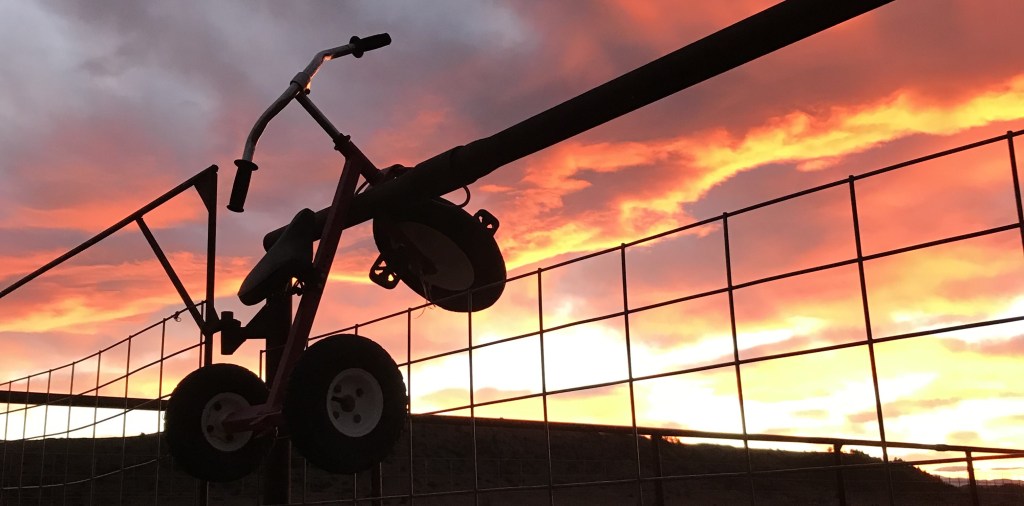
Years ago, I began learning a lesson I’m still working on. As a newly minted rehabilitation counselor, I was assigned to teach a young man with a serious brain injury how to ride his three-wheeler to the sheltered workshop where he glued pieces of wood together every day. This is harder than it might sound.

He flashed me a drooly grin as he turned a block early for the third time. I calmly redirected him, but inside, my ego was screaming. I wanted to be actualized and recognized. I wanted to be somebody. But here I was, with my master’s degree, on a back street in nowhere USA trying to help a badly damaged human being learn to navigate a three-block commute.

He gritted his teeth and pushed hard on the pedals. I pictured him before the crash, a reckless teenager, stomping on the gas in his souped-up car. He’d lost control and rolled three times. Hours later, the jaws of life had freed him to face a partial recovery followed by this new, confusing existence.

We made it to the employee entrance on his fourth try. I feigned approval, but I was resentful and exasperated. I had functional legs, strong arms, and an eager mind. I had a ten-speed bike, running shoes, three published poems, and a family that did not wish me dead.

“Can’t you give me something important to do?” I whined to the Universe. “Something that’ll make a difference?”

The day froze into a singular moment.

“Allow me to introduce you,” the Universe replied in a clear, penetrating voice. “This is my son, Clayton, with whom I am well-pleased. He needs a little help. I chose you, but if you’re unavailable, I have others.”

And as if that wasn’t enough, the Universe continued. “Clayton, dear, this is your servant, Rita. Be patient with her. She’s still figuring things out.”

So much life has flowed under so many bridges since that day, and so many Claytons have come and gone. In this waning light, Wisdom occasionally lifts her skirts to show me her ankles. But even now, instead of sitting in gratitude, I sometimes long for more. I want accolades and adoration. Assurances that I matter. Most days, I push down hard on the pedals, but I’m uncertain of which way to turn.

Obviously, I’m still figuring things out.

Thinning

When I finally realized that people are just pieces of newly broken stone tumbling downstream in the flow of time, I began to hope that I could be smoothed into something shiny and beautiful and then roll onto an exotic beach to glitter forever. But I see now that being shiny doesn’t last and I’m well on my way to dust.

God laughs and then sneezes. “See how powerful you’ll be?” She blows her nose and wipes her eyes. “Dust allergies are the worst.”

 I ignore her, grab the ash bucket and a few of the dirtier rugs, and step into the wind.

“Don’t be afraid,” she says, following me.

The wind dies down, and river nymphs skim lightly across the surface of clear mountain water, moving without resistance toward the salty sea.

“That’s not quite true,” God says. “Nothing on earth moves without resistance. But it’s less at higher elevations if you can handle the thinner air.”

I consider the lungs of the sherpas, the gills of the shark. I remember watching the eye of the lamb I held in my lap grow dull as life lifted itself away. And I remember flying.

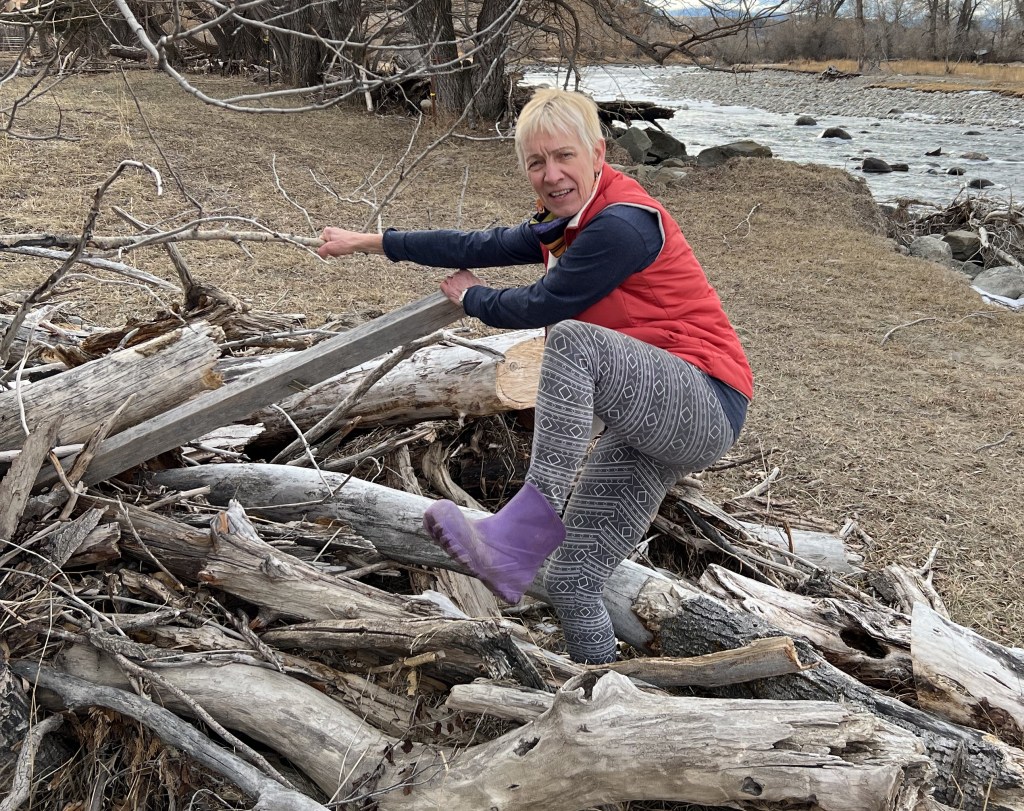
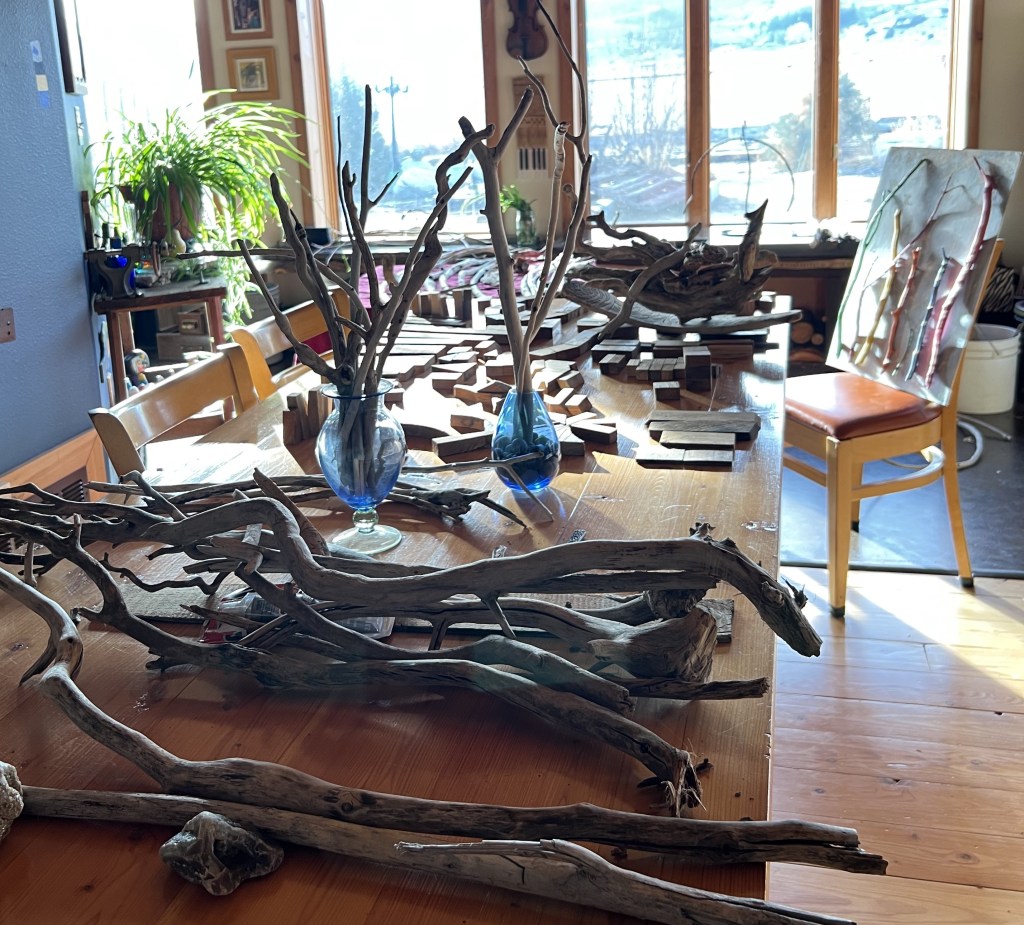
My days are filled with gleaning from piles of flood debris. I yank out planks and bent fence posts, drag burnable wood to the stove, intriguing wood to my gallery, and have a plan to bury the rest.

“Your gallery?” God chuckles. “Um, which surface or shed qualifies for that label? I’d like a tour.”

“Well, it’s a splintery, infested, movable feast, mostly in my head, mostly benign, but occasionally, I use toxic glue or graffiti paint and the fumes are outrageous.”

“I think I can handle it.” God grins.

“Oh, I wouldn’t ask you to,” I say. “Someday, I’ll have it all cleaned up and nicely displayed. I’ll serve muffins and Earl Gray tea.”

“No, you won’t,” God says. “But that’s just fine. Now, let’s take a look, shall we?”

I shrug.

We spend the day considering toxicities and redemptions, the wonders of fungi, the process of fermentation, and the fantastical cottonwood stumps with twisted roots and embedded stones, now tipped skyward. She’s not bothered by the disarray and in fact, she’s intrigued with the idea of making rainbows out of curved sticks. Tonight, we’ll share a glass of rhubarb wine near the flame, and she can help me decide which broken branches are worth burning.

Still Life

There are two granny smith apples in the basket, slightly bruised and aging out. 
The thought of eating one sets my teeth on edge. I don’t know why I buy them.
It’s a repeating pattern with me and fruit. I have unfettered access 
and there’s room in my cart, but is that reason enough? 

I sit with the ethereal miracle of vibrant green, tangerine, and sweet potato 
in the loosely woven wicker that holds things together for now.
Minutes and hours fall from the heavy sky. I keep watch, 
and in my own way, I pray.

There’s tea steeping and a bag of chips open in case God comes by. 
She likes the salt. I like the company. I try to be accepting, 
not greedy, not demanding, not intrusive, not filled 
with expectations. Just quiet and receptive.
But it sucks. It’s harder than winter.

The God small in each of us is to blame for tart apples and the long seasons 
of discontent. We are unskilled at listening, even less skilled at loving. 
I hear God in the hallway, dragging something behind her walker.
It must be laundry day.

Well, I can’t wait forever. I have errands and obligations. 
I understand how the self-important God of billions 
might ignore me now and then, but the laundry lady?
When God embodies thus, the roles reverse. 
She’ll ask me for quarters and for help
folding her flannel sheets.