
Did you know that if you push a straight edge up the outside of your apparently empty tube of toothpaste, at least a week’s worth will squish to the top? And if you cut the tube open and flay it, you’ll find even more of the goo clinging to the inside.
Labeling and packaging practices are fraught with waste, lack of imagination, and greed, often making it difficult to use up the entire contents of whatever it is you’ve purchased. And don’t get me started on single-use plastics, false recycling guarantees, and planned obsolescence.
Even well-intended containment is tricky. For instance, my own packaging has become increasingly prone to leaking, bruising, and breaking. My container has been taped up, repainted, and artificially preserved for a while now. Clearly, it’s not going to last until everything I have to offer is entirely used up.
As I struggle with this unpleasant reality, a primal protest grips me.
“Hey, Universe!” I yell. “When we age out, do our unused talents and potentialities end up in the Great Landfill of the Afterlife? Do you reabsorb our unwritten masterpieces? Our unsung songs? Hard-earned but unheeded advice? Unturned stones and dormant acts of kindness? How about the promises we meant to keep? Do you even have a plan for this obsolescence?”
God’s enormous head lifts from its heavenly repose in the sky beyond sky, and the Gaze comes to rest on the tiny speck that is our planet, that is my naked eye, that is a bioluminescent Whisper in the amniotic fluids covering the earth.
“You are not the sum of your talents, failures, passions, or fears,” the Whisper murmurs as the tide rolls in. “You’re the question, not the answer. You’re the journey, not the miles. You’re evolution’s hitchhiker, the plot of my favorite fantasy, and a transitory fraction in the equation you call eternity.”
This ethereal, evasive answer infuriates me. I want my untapped potential to guarantee longevity if not immortality. Like the spiritual toddler that I am, I throw my temporary container to the ground and beat my knobby fists against the pain of consciousness, empathy, imperfection, erosion, imagined glories, and old dogs.
The earth receives my rage and offers joy. Its undulating tenderness envelops me.
I roll onto my back and stare at the sky gathering itself into another night. The massive head of God explodes into trillions of stars, galaxies expanding, defying entropy and all attempts to limit or restrain.
Every boundary eventually gives way. Every horizon is a curvature forward. And we are all, together and forever, the trajectory of a certain hope and the substance of things not seen.
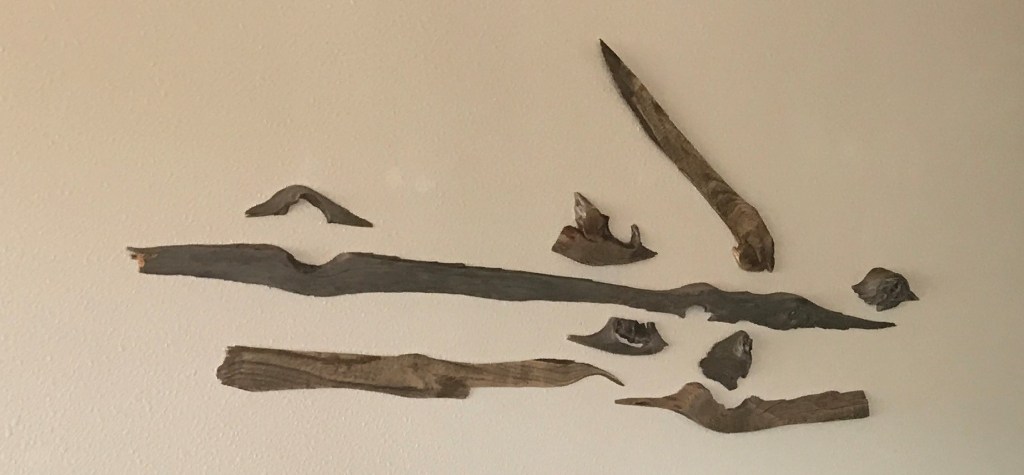
 Short visits with an honest God