Mr. Right

I

“Why can’t people just admit when they’re wrong?” I asked Mr. Right. It was early, but the new day was already blemished by the news. I found him having coffee with entities from other galaxies. He was holding forth on various topics, especially focused on the fatal errors humans are making.

Mr. Right shrugged. “How would I know?” He turned to his comrades with a smile. “Any of you ever been wrong?”

“We thought we were wrong once, but then it turned out we were right,” the Pleiades joked. Everyone groaned.

My eyes were already watering from wildfire smoke and the consequences of hateful lies, but real tears of frustration rolled down my cheeks. I wiped them away, angry at myself and the awful fragility of rightness/wrongness and all other painfully destructive hierarchies and dichotomies we live within.

Mr. Right produced a handkerchief and gallantly handed it to me. I slapped it out of his hand, and he drew his gun.

“Take the hanky, bitch,” he said.

II

“Could I buy a little time?” I asked the cashier at the convenience store outside a national park. She was luminescent. Exhausted.

“Don’t I wish, honey?” she sighed. “We don’t stock perishables. How about some everlasting chips and a soda?”

I laughed. Then asked, “So, why are you here?”

“I have no idea,” she said, biting at a hangnail. “Anyways, what would you do if I could sell you some time?”

“Make things right,” I said.

“How?” she asked.

I could tell she did not expect an answer.

III

There are giant women making taffy in the kitchen. The Largest One smiles at me.

“Do you remember how hard it is to get the consistency right and judge when it’s cool enough to pull?” she asks.

I nod. Making taffy was my favorite childhood slumber party activity, but I often ended up with blisters.

“Well, sweetheart” she continues. “The truth is like taffy. The viscosity of the truth thickens due to internal friction. It’s difficult to know how to handle it.”

I stare down at my hands, recalling the scent of cinnamon and peppermint.

She continues. “The truth is sweet for those who forgive themselves, but it’s dangerous for the thinly defended.”

One of The Smaller Ones hands me a wad of taffy to pull. “Be careful,” she warns. “It’s still pretty hot.”

My Way or the Highway

Arguing is easier than listening, even internally. It’s hard to ask myself why I believe what I believe and then to admit that sometimes, I just believe what I want to believe, whether it’s true or not.

And sadly, I’m not alone. Being wrong can be so devastating that even in the face of serious contradictory evidence, people will defend themselves to the point of absurdity, poisoning conversations and relationships as they dig ever deeper holes.  

“Are you including me in this scathing indictment?” Big Guy asks.

“Yes,” I say, without hesitation.

“Well, that’s just wrong,” he says, chuckling.

I give him a phony smile. “Tell me more,” I say, sidestepping conflict with my excellent listening skills.

“You don’t have excellent listening skills,” Big Guy counters. “And I won’t tell you more until you’re ready.”

“I’ll be the judge of when I’m ready,” I say, arms crossed, temper flaring.

“And that’s what I fear the most,” he sighs. “You, judging. You, thinking you’re ready.”

“Ready for what?” I ask, but I’ve lost track of my original premise. Arguing with Cosmicity is disorienting. Big Guy continues to chuckle, which is not helpful.

 I hate the thought of being gullible. Or wrong. My protective cloak of self-righteousness has worn spots. I need to be dead right about something. Anything. What if I’ve wasted my life swinging like Tarzan from belief to belief, only to have the final vine break? What if I’m a naïve fool? What if I grow bitter for erroneous reasons? What if I’ve leaned the ladder of success against a false wall? What if I’ve taken too many supplements all these years?

Big Guy is howling, holding his gut, peeing his pants. “You’re the best, honey. I needed that.”

“Needed what?” I ask, red-faced and defensive.

“I needed to watch you drink from the chalice of uncertainty. Elixir of the Gods, right there. Confessional magic. The meek and humble are my last hope for humanity’s continued existence.”

“So glad I could be of help,” I lie. Big Guy seems to think he’s winning an argument. He’s relishing my chagrin.

“No, and no,” he says. “I don’t relish, and I don’t win.”

“And I don’t get it,” I admit.

“Oh, but you do,” Big Guy says.

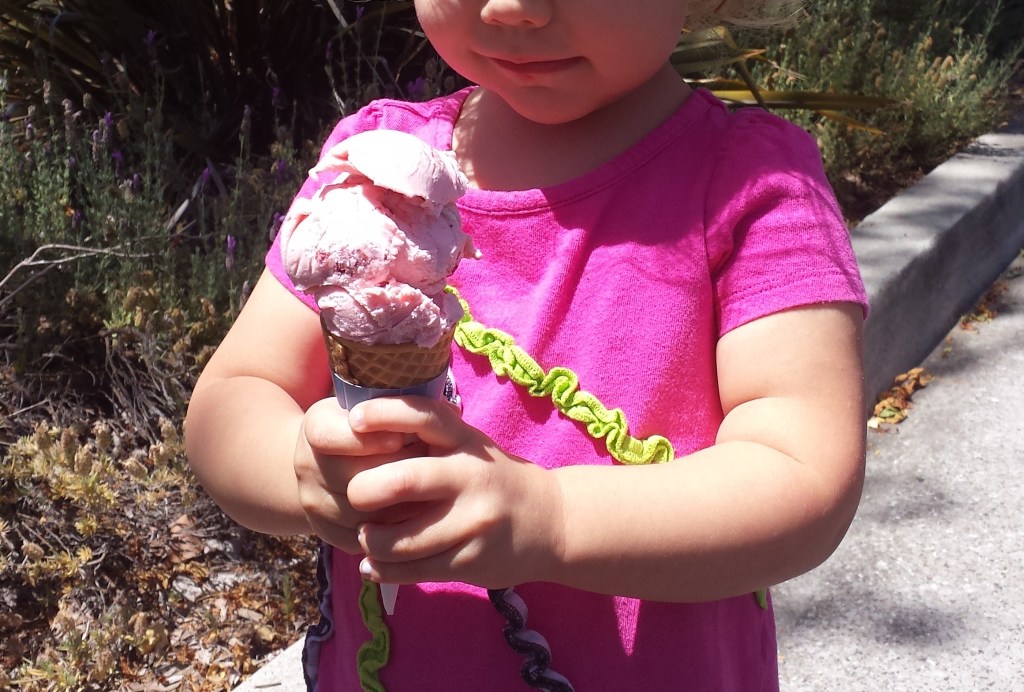
Every cliché in the known universe is screaming at me. Platitudes and blind faith parade by, tossing sweet assurances. There are cookies baking, robin eggs hatching, children laughing, ice cream melting, rounds of stiff drinks on God. So little time. So many simplicities.

“You’re ready, little one,” Big Guy whispers.

“I know,” I whisper back. “But hurry. It never lasts for long.”

Impact

Who doesn’t (secretly or overtly) want to be a social influencer? Maybe a few humble souls are at peace with having little influence in the world, but I doubt they’re in the majority. Humans want proof that they matter—as measured by clicks, votes, money, fame, prestige, or power.

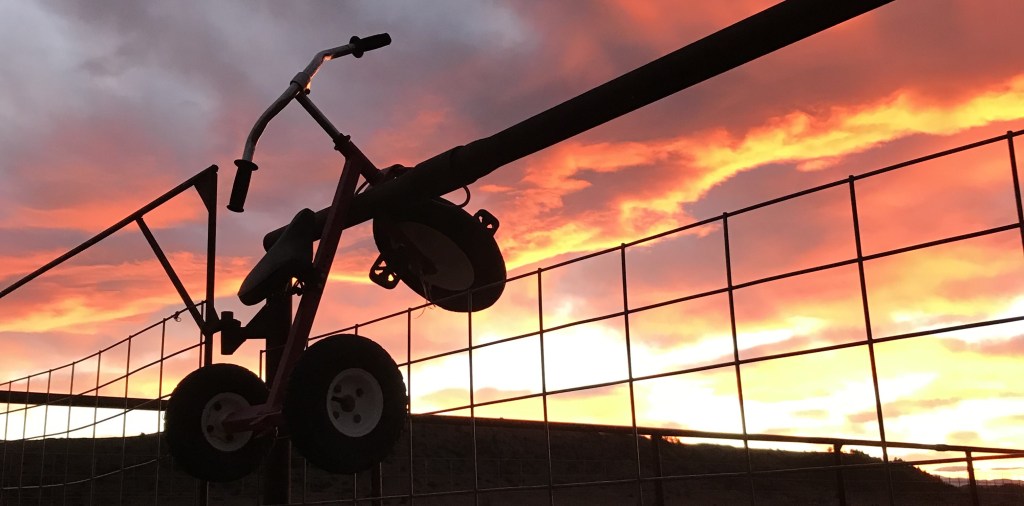
Years ago, I began learning a lesson I’m still working on. As a newly minted rehabilitation counselor, I was assigned to teach a young man with a serious brain injury how to ride his three-wheeler to the sheltered workshop where he glued pieces of wood together every day. This is harder than it might sound.

He flashed me a drooly grin as he turned a block early for the third time. I calmly redirected him, but inside, my ego was screaming. I wanted to be actualized and recognized. I wanted to be somebody. But here I was, with my master’s degree, on a back street in nowhere USA trying to help a badly damaged human being learn to navigate a three-block commute.

He gritted his teeth and pushed hard on the pedals. I pictured him before the crash, a reckless teenager, stomping on the gas in his souped-up car. He’d lost control and rolled three times. Hours later, the jaws of life had freed him to face a partial recovery followed by this new, confusing existence.

We made it to the employee entrance on his fourth try. I feigned approval, but I was resentful and exasperated. I had functional legs, strong arms, and an eager mind. I had a ten-speed bike, running shoes, three published poems, and a family that did not wish me dead.

“Can’t you give me something important to do?” I whined to the Universe. “Something that’ll make a difference?”

The day froze into a singular moment.

“Allow me to introduce you,” the Universe replied in a clear, penetrating voice. “This is my son, Clayton, with whom I am well-pleased. He needs a little help. I chose you, but if you’re unavailable, I have others.”

And as if that wasn’t enough, the Universe continued. “Clayton, dear, this is your servant, Rita. Be patient with her. She’s still figuring things out.”

So much life has flowed under so many bridges since that day, and so many Claytons have come and gone. In this waning light, Wisdom occasionally lifts her skirts to show me her ankles. But even now, instead of sitting in gratitude, I sometimes long for more. I want accolades and adoration. Assurances that I matter. Most days, I push down hard on the pedals, but I’m uncertain of which way to turn.

Obviously, I’m still figuring things out.

Time is Money and Money is Everything

“You’re pretty thick-skinned,” I tell God as we sip our morning beers. “I’m jealous.”

God sighs. “Don’t be ridiculous. My skin is so thin it’s translucent. You can see my veins pulsing.”

“Ugh!” I exclaim. “I don’t like talking about veins.”

“I know,” God says. “So let’s talk about that man on the news that got you all riled up.”

“The one who said time is money and money is everything?” I ask. “Because yeah, I hated that. For your sake.”

God laughs. We clink bottles and watch as the river rises and the earth gasps for breath. How much money would it take to clean up our mess? To feed a billion children? What does it cost to build tanks, drones, and bombs? How much, God? How much money to defeat evil or save a single soul?

God raises an eyebrow. “Money does not buy redemption or defeat evil.”

“I know,” I snap. “But it buys food. And weapons. Like Mark Twain said, I’ve been rich, and I’ve been poor. Rich is better.”

“So you’re saying money is everything?” God asks.

“I don’t know what I’m saying,” I admit.

God’s cadence slows. “Money and time are seductive, addictive distractions, but time is not money, and of course, money is not everything. Money might buy you votes or a short journey through the house of distorted mirrors, but life eventually comes down to focus and flow. Acceptance and gratitude. Servanthood and humility. Depending on motive, a vow of poverty can be as pointless as vaults full of gold.”

I gaze at the Servant on my sofa who repeatedly urges me to choose generosity and compassion. She’s a willow with rotting roots, a hatched egg in a dislodged nest, erosion, eruption, and an ever-expanding circularity.

“Are you on my side?” I ask.

“No,” the Servant says, laughing again. “Are you on mine?”

“I would be if I knew what your side was,” I say.

“Well-said,” the Servant nods. “But I need no one on my side. I’m God. You need to be on your own side. The side that might save this little planet you call home and this funky species you call human.”

“But we need help!” I say, anger rising in my throat.

“Yes, you do,” God agrees. “That’s why I’ve sent the drag queens, the nonbinary, the folk of color, the truth-speakers, the scientists, the artists, the poor, the meek, and the gentle.”

“But they aren’t enough,” I say, despairing.

“So it appears,” God agrees sadly. “So it appears.”

Speaking Terms

Yesterday, God and I were not on speaking terms. Today, a purifying spring snow is falling, the beer is cold, and I have repented. It was partly God’s fault, but I’m the one repenting. It works better that way. God can be a real handful, but after I calm down, I don’t mind cajoling him along. It’s that or fire him, and I don’t want to fire him: I need the help. We all need the help. Even the toughest among us need the help.

“Not true,” the Bruising Force of God says, smearing bacon fat on the last piece of toast. “Well, maybe true,” he admits, chewing with his holy mouth open.

“Sometimes, you disgust me,” I say, trying to focus on the garden instead of God’s missing teeth, the dead bodies in Ukraine, or the grief inherent in being human. Pandora is playing my Eva Cassidy station. I turn up the volume to drown out the smacking noises. Long ago, a friend introduced me to Eva’s voice—though Eva had already died of breast cancer. She didn’t survive long enough to enjoy her success. My friend does not remember any of this because her memories have come as untethered as cheap kites in sporadic wind.

“Cheap. Fancy. Doesn’t matter. They all come back to earth,” God says, as he brushes crumbs off his shirt. “Write that down,” he adds. “That’ll be a good line.” I glare out the window. The snow is thicker now, each flake a mesmerizing angularity, falling straight and heavy. I wonder if the weight will break branches.

“Yes,” God says, still pontificating. “Branches will break. Oceans will rise. There will be surges and recedings. But in the meantime, I’d sure like another piece of toast.”

My wish to bring God down a notch is palpable, but I manage to get up, walk calmly to the kitchen, and make more toast.

Naked in the End

You will be happy to know the accent wall is now midnight blue, the ladder-backed chair rescued from the dump, lime green, gold, maroon, and yellow, and though my life has not gotten noticeably better, I used recycled paint, so there are five fewer dented cans awaiting resurrection in the basement. They are empty. I’m happy. I’m drinking the leftover Malbec wine for breakfast, but I would prefer dark beer. We must all make sacrifices.

Among the things set free by the storm last night are five rotten cottonwoods, one majestic willow, and twenty-six irrigation pipes rattled loose from their line of duty and sent tumbling dangerously through the darkened sky. Those of us left behind have accepted the fact that we will not be able to save the planet by ourselves. The wind has agreed to help but at great cost. Millions of unwilling children have lined up along the shoreline hoping for food. The tide will rise and take them. Their elders will follow. Millions of other species have unwittingly signed on for extinction, simply by being themselves—ugly, simple, and in the way.

For a while, we will fight to save the pandas, the owls, and the wealthy; the beautiful and those who make us laugh. I, for one, will write words infused with angry sympathy for those born into suffering, born with few options, those who then hate, radicalize, and destroy. The war games continue.

I kick at the shins of God, trying to wake them up. This cannot be the Original Intention. I am a foolish Cinderella. They are a flimsy Prince Charming. I am Jack. They are the Giant. I plant magic beans. They are the purveyors of binder weed and quack grass. I install solar panels. They are the sun and patchy morning fog. They are the good witch, the man behind the curtain, the placebo effect. They are a modest chemical reaction, and we are atoms splitting, cloaked in a thick shawl we’ve drawn over our shoulders, thinking it was pure merino wool. It is not. It is denial. I have considered freezing to death instead of protecting myself with lethal and selfish lies. When souls stand naked in the end, truth will be the only shelter. Not power. Not possessions. Not beauty. Not brilliance. Truth is always grounded in humility, compassion, and sacrifice. Sometimes, to practice, I wear clothes thinned to threads by others and endure the brutally cold light for as long as I can.

The Meek

“Here’s the question,” I said to God. “Why would the meek even want to inherit the earth? After the unmeek are finished pillaging, what’ll be left anyway?”

Three distinct snow devils twirled by, and then a vicious wind blew the remnants of the last storm across the garden, blurring my view. The weather patterns have begun to express earth’s outrage at its tormentors. The meek stand at the far end of the long arc of justice and there’s no pot of gold awaiting. Only diminishment and misery.

“Interesting question,” God said. “Could I get a couple of scrambled eggs? The brown, free-range ones, if you please.”

“Why?” I asked. “What’s the point? You’re not hungry.”

God shrugged and made his own eggs.

And here’s another interesting question,” I said with some irritation. “Why is nature so exquisite? Elephants. Apple trees. Caterpillars. Orchids. Translucent baby mice, huddled in their circle of pink, bones so tiny they could be eyelashes. Wild skies. Bengal tigers. Wheat fields before harvest. Fire. Ice.” I paused, caught up in the complexity and splendor of it all. Then added, “and why are humans so destructive?”

God ate his eggs, nodding and smacking his lips. “These eggs were fertilized,” he said. “Circle of life and all that. Tasty. But this toast is questionable. I think your flour has gone bad, and I think I’d like some ice cream.”

I sighed. The wind had died down. The air was clean, my vision unimpeded, my flour rancid, my questions mostly unanswered, and for some inexplicable reason, my soul was at peace. A cold snap was rolling in, but we had enough wood. I vowed to have more faith next time and buy less flour. But I bake a lot of bread.

“Survival is a complicated, temporary equation, isn’t it?” I asked God as he zipped his down coat, wrapped his neck with a wool scarf, and pulled his rabbit fur hat down tight. I didn’t expect him to answer, but he did.

“Yes and no,” he said. “On one side are the essentials: Compassion. Humility. Sacrifice. On the other, well, you figure that out.” He took a long lick of what appeared to be licorice ice cream and added, “It may involve delight.” Then he slipped out the door to the west where joyous and majestic mountains rose to greet him. There were snowshoes strapped to his back.

Feet on the Ground

imported from the camera april 2014 413 (2)

“Crowd in here, God,” I said, patting a narrow spot on the couch. It seemed unlikely anyone would notice; there was child-induced mayhem in the air. It involved a lot of bouncing, simultaneous verbalizations some would call clamor, and wonderment in abundance. These energies were sandwiched between adult conversations and consternations. I wasn’t sure which level God would prefer, but I wanted to be hospitable.

“Uh, sure. Thanks,” God said, distracted, like maybe a couple billion others right now. Distracted. Tempted to discount, deny, whine, or freak completely out. Not God, but maybe the rest of us on those last descriptors. “Are you ready to die?” I asked myself. “Of course,” I told myself. And in some ways, this is true. I’ve had an extraordinary life. In no way do I deserve anything further, and in some ways, I don’t want anything further. But then, it isn’t about deserving, is it?

My elbow hurts—the result of ever declining proprioception and the mysterious narrowing of doorways just as I’m squeezing a table through. My sense of importance in the world has suffered, leading to a fair amount of indignation. My little personal values are all askew, and I don’t want to straighten them out. “Lean times,” I whispered to God. “I could use some help getting my feet under me.”

“Fuck that,” God said. Well. This caught me a bit off-guard. God continued, “Your feet are down there where they should be. Mop the floor. Do the dishes. Brush the dog. Observe. Think. Settle.”

“Hey!” I protested God’s language, hoping to ignore the content. “There are children present.”

“They’re busy,” God said, but the room emptied into God and me, perhaps signaling the importance of our conversation. “Your life is a whisper, little one,” God said. “Even the lives you think are big, important…they are flickering flames in a variable wind. Don’t be envious. Sit yourself down when you need to. Observe. Think. Settle.”

“But I want to know I’m loved,” I said. “I want to matter.”

“You are. You do.”

“But I want proof,” I demanded.

“Fuck that,” God said again. “I’ve done all I can on that score.”  This was said without malice. In fact, there was a hint of a chuckle in his voice, and I caught God’s eyes twinkling. From a certain perspective, the absurdity of my fretting was hilarious, and we laughed. Threw back our heads and laughed. Laughed louder than the river, the owls, the barking dogs. We laughed belly laughs until we were crying, and we just kept laughing. I breathed in some ragged air. Clean air, as far as I know.

“Oh, wow,” I said. “I needed that.”

“Yes,” God said. “You did.”