Facing the Long Good-bye

In the stillness following a midnight storm
my eyes move across the surface of morning.
First light reveals innocent branches bent low
from the weight of the wet, unseasonable snow.

Her eyes follow mine.

At least the fire danger has dropped, She notes.
You could burn all those files and broken pallets now.

Yeah. If I could find them, I say, with some resentment.

There are discernable undulations on the surface,
but the sharp edges of old ideas and things gone wrong
are hidden under this pure white shawl,
and I’d rather leave them buried.

Oh, you can find them, She says.
And with some accelerant,
you could have one hell of a bonfire.
Perfect conditions for that kind of heat
.

Where would I even begin?
I ask, but I don’t want an answer.

Twigs. Wadded up pages ripped from your journals.
Start with the small stuff.


Right, I echo. Start with the small stuff.

You’re going to ignore me, aren’t you? She smiles.

Yes, I am. I grin back.
I need to feed the chickens and shovel the walks.

Of course you do, She nods.
And I need to change the colors of the leaves.

She hands me an ancient paintbrush streaked with sunrise.
You’re welcome to help if you end up with extra time.

And in that moment, I see our destiny:
to be refracted like light
into pigments so beautiful and pure
we won’t recognize our hands anymore.

Unselfies

“No, turn your head this way.” The Creator pointed as she positioned her phone for one last shot. I felt silly playing along, but on the other hand, it’s unwise to alienate God first thing in the morning, so I tilted my head obligingly. 

The shift of perspective floored me. My eyes beheld my unformed substance at the base of the flowering clematis. The existential struggles of transformation were underway, and it was obvious that my role is miniscule. I matter and I don’t.

This was overwhelming. I grabbed the wings of sunrise and flew toward the ends of the earth. But there, I was greeted by the forces of good and evil. “Hello, Side-Effect,” they yelled cheerfully. “We saw your selfies. Not bad.”

“Those weren’t selfies,” I said. “And I’m not a side-effect.”

My Coauthor rode in in high on the breakers of an incoming tide, waving like royalty. The forces of good and evil waved back. I did not.

“Ah, why the long face?” my Coauthor asked.

“I don’t want to be a side-effect,” I said. “I want to be the pinnacle.”

“You’re both,” God smiled. “Life itself is a side effect of passion. But don’t worry. Every side effect is different. Even desperately desired descendants don’t turn out exactly as imagined, and clones individuate. Each blade of grass is a pinnacle.”

She pulled her phone out of her waterproof fanny pack, threw an arm over my shoulder, and took a series of selfies as we emerged from the depths.

“Choices,” God said. “Even side effects have choices. And those choices will have choices. That’s why I take so many pictures.”

“And that’s why I always feel like I’m to blame,” I moaned. “Choices are hard.”

“Innocence and intention coexist,” God said. “Culpability is a carriage with draped windows pulled by a team of wild horses. It’s a rough ride.”

“Aren’t you angry with the choices we’re making?” I asked.

“A little,” the Holy Hungry Immigrants shrugged. “But we’ve already laid ourselves down on the tracks. Now, we just wait for the train.”

They handed me a phone. “Could you snap a couple shots of us?” they asked. “No one will believe this back home.”

I heard the train in the distance. “Get up,” I shrieked. “Don’t be stupid.”

“We can’t.” They gazed lovingly at my horrified face. “You know we can’t.”

Waiting for Asparagus

On my belly, eye-level with thistles, there’s no sign of asparagus emerging. But this will change as the days lengthen and the rains come. For decades, I’ve made compelling requests of this ancient asparagus patch, and it has done what it can to save me. This has less to do with faith than with remembering and waiting. There are forces at work; we are at their mercy.

Waiting for Bats

Some years ago, on Father’s Day, we hung a double-chamber bat house on the warm side of our home. So far, no bats have moved in. We had hoped that they would take up residence and eat mosquitoes. Instead, a pair of robins have built a nest on top of the box, and their droppings trail down the side of the darkly stained cedar.

Waiting for Redemption

An ominous enlightenment is stirring offstage. Twice, it has missed its cue. It is an enraged bull, pawing the ground, spewing snot and indignation. It is a rusting toy. It doesn’t like its assigned role. It wants to rewrite the script.

Waiting for the Answer

This morning, I texted The Gods three times, begging for alternatives, biting back tirades and justifications. Silence is the hardest answer to accept. I left an offering at the edge of a slash pile and imagined the thick smoke bellowing skyward, hiding their thin defenses.

Waiting for the Raucous Conclusion

There are animals, wild and otherwise, who will outlive me, but there are others who will not. In fact, I will eat some before this day is done. If I were a hunter, I would make sure I had a clean shot. Then I would give thanks, waving one hand over the lifeless body, raising the other in gratitude. Hand to mouth. Heart to ashes. Dust to dust.

Planned Obsolescence

Did you know that if you push a straight edge up the outside of your apparently empty tube of toothpaste, at least a week’s worth will squish to the top? And if you cut the tube open and flay it, you’ll find even more of the goo clinging to the inside.

Labeling and packaging practices are fraught with waste, lack of imagination, and greed, often making it difficult to use up the entire contents of whatever it is you’ve purchased. And don’t get me started on single-use plastics, false recycling guarantees, and planned obsolescence.

Even well-intended containment is tricky. For instance, my own packaging has become increasingly prone to leaking, bruising, and breaking. My container has been taped up, repainted, and artificially preserved for a while now. Clearly, it’s not going to last until everything I have to offer is entirely used up.

As I struggle with this unpleasant reality, a primal protest grips me.

“Hey, Universe!” I yell. “When we age out, do our unused talents and potentialities end up in the Great Landfill of the Afterlife? Do you reabsorb our unwritten masterpieces? Our unsung songs? Hard-earned but unheeded advice? Unturned stones and dormant acts of kindness? How about the promises we meant to keep? Do you even have a plan for this obsolescence?”

God’s enormous head lifts from its heavenly repose in the sky beyond sky, and the Gaze comes to rest on the tiny speck that is our planet, that is my naked eye, that is a bioluminescent Whisper in the amniotic fluids covering the earth.

“You are not the sum of your talents, failures, passions, or fears,” the Whisper murmurs as the tide rolls in. “You’re the question, not the answer. You’re the journey, not the miles. You’re evolution’s hitchhiker, the plot of my favorite fantasy, and a transitory fraction in the equation you call eternity.”

This ethereal, evasive answer infuriates me. I want my untapped potential to guarantee longevity if not immortality. Like the spiritual toddler that I am, I throw my temporary container to the ground and beat my knobby fists against the pain of consciousness, empathy, imperfection, erosion, imagined glories, and old dogs.

The earth receives my rage and offers joy. Its undulating tenderness envelops me.

I roll onto my back and stare at the sky gathering itself into another night. The massive head of God explodes into trillions of stars, galaxies expanding, defying entropy and all attempts to limit or restrain.

Every boundary eventually gives way. Every horizon is a curvature forward. And we are all, together and forever, the trajectory of a certain hope and the substance of things not seen.

Gifting

This morning began dark, but it has lightened to a dull gray which will soon give way to darkness again. I build a reluctant fire. God joins me, and we note the importance of a good draft. The air is heavy. My beer is cold.

I hate to admit it, but the sting of rejection has caused my joints to swell, and my dexterity is significantly reduced. The typos of life are hounding me. Blurry images of what could have been hang like abstract art in my ever-thinning soul.

“We should go shopping today,” I say. “I need to find the perfect presents and mail them to my enemies and detractors.”

God does a doubletake. She knows I hate shopping and would sooner maim or kill the monsters and idiots among us than take any kind of positive action.

“And not just my detractors!” I add, thrilled with the possibility that I’ve startled God.  “Not just my personal enemies. I’ll send gifts to crazed gunmen and billionaires. Liars. Haters. The meanest, most arrogant people on earth.”

We gaze at the fire. It’s not blazing the way it does sometimes, but it’s still fire. Still hypnotizing.

“Do you have their addresses?” God asks in a helpful, quiet voice.

“No, but I’m sure you do. Could I borrow your address book?”

“Of course,” God says. “But it’s rather futuristic. You know how some address books get outdated? Mine runs the other way. It gets ahead of itself.”

I sip my beer and consider this comforting absurdity.

“I myself have had a lot of addresses already,” I mention casually, hoping for a hint of what my future addresses might be.

“Nice try,” God says. “Could I help you with the wrapping? I love how you use old scarves and newspapers.”

“Nah.” I shake my head, deflated. “I’ve changed my mind. The jerks will just pitch the gifts out anyway.”

God hands me the scotch tape. “Doesn’t matter, sweetheart. Invest in the process. Open your soul and scrape it as clean as you can. Line it with shock absorbers, feathers, and things you honestly love. It’s not how a gift is received; it’s the giving that matters.”

 “I don’t think I believe that anymore,” I admit sadly.

“I know,” God says. “But you do.”

Comfort

God is thick like a down quilt this morning. Thick in the air, thick in the snow, thick in the garden dirt, thick in the fire, thick in sadness, thick in my chest.

Maybe lingering, maybe gone, is a loved one of such large heart and honest soul that the world has a hollow sound right now. An empty echo. The long vibration of the gong. The bell that tolls. I could look to the blackbirds for comfort or the white hills with their dusting of snow, but I don’t want comfort. I want wisdom. It eludes me.

Yesterday was warmer. I found evidence that the raspberry roots are taking life seriously and have begun to send up dark green signs of hope. We could have a bright red harvest next year and maybe even a few berries later this year. The long arc of transplantation requires patience and faith. I sat back on my haunches and gave thanks. But as the day ended, black doubts took hold, and I went to bed hungry.

“Good morning, little one,” God says gently as she shakes off the majesty of thickness and shrinks into human view. A gift. God’s body thrown across the railroad tracks of fear and despair. God, willing to be a slender apparition, glowing in momentary light. I’m torn. I know God is dead and alive, here and there, atomic and cosmic. But I’m no longer sure I speak the right language to be fully understood, and I have these wounds that open in the night. I use whatever pressure I can muster to close them, but they will never heal.

“Good morning, God,” I answer, staring out the one unshaded window. “I don’t feel like moving, or I’d offer you some coffee. Sorry.”

“No worries, honey,” God says. “I know where you keep the cups.”

Placebo

God outright refused to help edit my first run of the godblog for this week. As Co-Author, that’s God’s prerogative, so I have bowed to the forces within and without and shelved the draft about death and composting until God’s in a better mood. I may have to chew my left thumb off, but I will work until at least three hundred words have coalesced into what God and I mutually agree we should say this week. I have the vague notion that God wants to focus on hope.

“Vague notion?” God says. “C’mon. Do you think the placebo effect is an accident?”

This makes me laugh out loud. God knows how much I adore the placebo effect–the authoritative administration of an inert nothingness that, by virtue of belief, triggers healing. Good medical research is designed to factor out the placebo effect. This tickles me. Faith has to be factored out because it is such a powerful force in and of itself.

Humans have evolved to believe in things. It isn’t an afterthought or a design flaw. The leaps of faith we make are sometimes comical, sometimes tragic, often pure magic. But they all point to the nature of the Grand Leaper, my friend God, whose greatest leap of faith ever was giving us some skin in the game. Giving us a say in the matter. Giving us choice. The stakes are high. Will we poison ourselves to extinction? Will we make war until there’s no one left to kill? Will greed remain ascendant and poverty continue to be viewed as deserved?

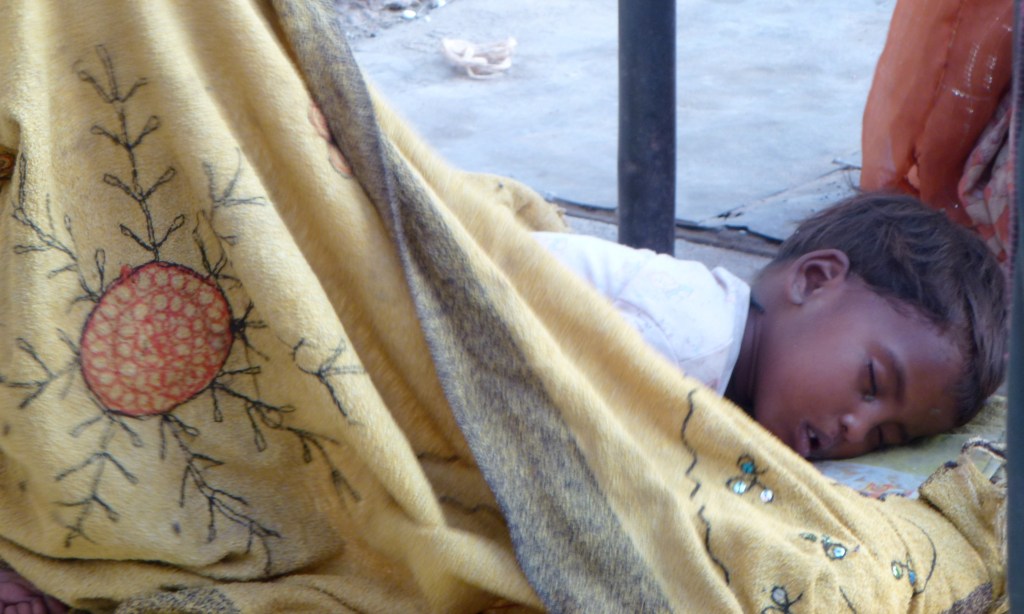
“Ah hem.” God clears his raspy old throat and hands me a cue card with the word “Hope” scrawled across the entire surface, which is sky. Which is my face reflected in all that I have. Which is you, reading. Which is a child eating a steaming bowl of sustaining gruel. That child will arise. Her name is Enough. Her name is Charity. Her name is Least Among You, and her first words are always, “Do not be afraid.” God surrounds her malnourished frame in his huge hands. The child relaxes and falls asleep, curled in the soft flesh of tomorrow. I’m surprised that such a tiny little thing can make God cry.

“It’s your move,” God whispers a little choked up. My heart skips a beat. I know it’s a trick. I take a deep breath and the right response comes to me.

“No,” I whisper back, “It’s our move. I’ll wait until she’s rested.” God grins and wipes his nose, and I add, “I know what you’re thinking. Old dog learns new trick.”  I give my own chest a congratulatory thump.

God’s grin widens until his face cracks into the full day ahead. My temporal self is sorely tempted to react and run amok, but I don’t. God will wait, and I will wait. The child will sleep.

Face Bugs

There are creatures on our faces that feast on cells and oils and then die because they have no body part to eliminate waste. This might be among the worst design flaws ever. Why do they dwell on our faces? Why do they even exist? To the naked eye, they are invisible. Ancient wisdom teaches that what is seen is transitory, but that which is unseen is eternal. This was before microscopes.

The same ancient sources suggest that God is very particular about his face and who can see it. In fact, seeing the face of God can be dangerous. But living on it could be far worse. I wonder if these microscopic organisms feast and die on God’s face like they do on mine.

“Um, God,” I say, scratching at my scalp (thinking about these creatures makes me itch). “Do you have Demodex on your face, mating at night, laying eggs around the rim of your pores, exploding with excrement when they die?”

“Of course,” God says. “They’re fascinating. I name each of them. Gives me something to do when I can’t sleep.”

“That’s gross,” I say. “Nasty.”

God looks straight at me. “Labeling something nasty means you’re afraid. It’s a primal, irrational response. You can do better than that.”

“No,” I protest. “No, I can’t.”

“Yes, you can,” God says. “Fear is the root of the problem. But fear leads to grabbing at power, which leads to lying, labeling, and leading others astray. Quite vicious. Quite sad.”

I’m befuddled. There are so many things that make me squeamish, so much nastiness…even if I somehow overcame my revulsions, I can’t see how it would help.

“Take each face in your hands,” God says. “Feel the skin, see the longing in the eyes, listen to the breathing. Layers and layers of life at work in the moment. Remember, you’re a bug yourself. A bug in a jar with holes in the lid.”

My claustrophobia hits as hard as the rest of the fears God is igniting in me: Vulnerability, insignificance, death. There’s a scream rising my throat. A howl of desperation.

“Hold the face,” God says. “Hold the face and pray.”

The alternatives are worse, so I glance at God and try to comply. In my mind, I take the jowly face crawling with hatred and look into the beady, belligerent eyes. Underneath the sheen of hatred, I see fear. My hands are on fire. I cannot find words to pray, but from the bones and ligaments of my being, a prayer arises, and my hands hold until the cold and holy silence of forever takes me entirely apart, and I am free.

“Nice,” God says in an admiring voice. “I’ll take it from here.”

God the Recycler

IMG_5156 (2)

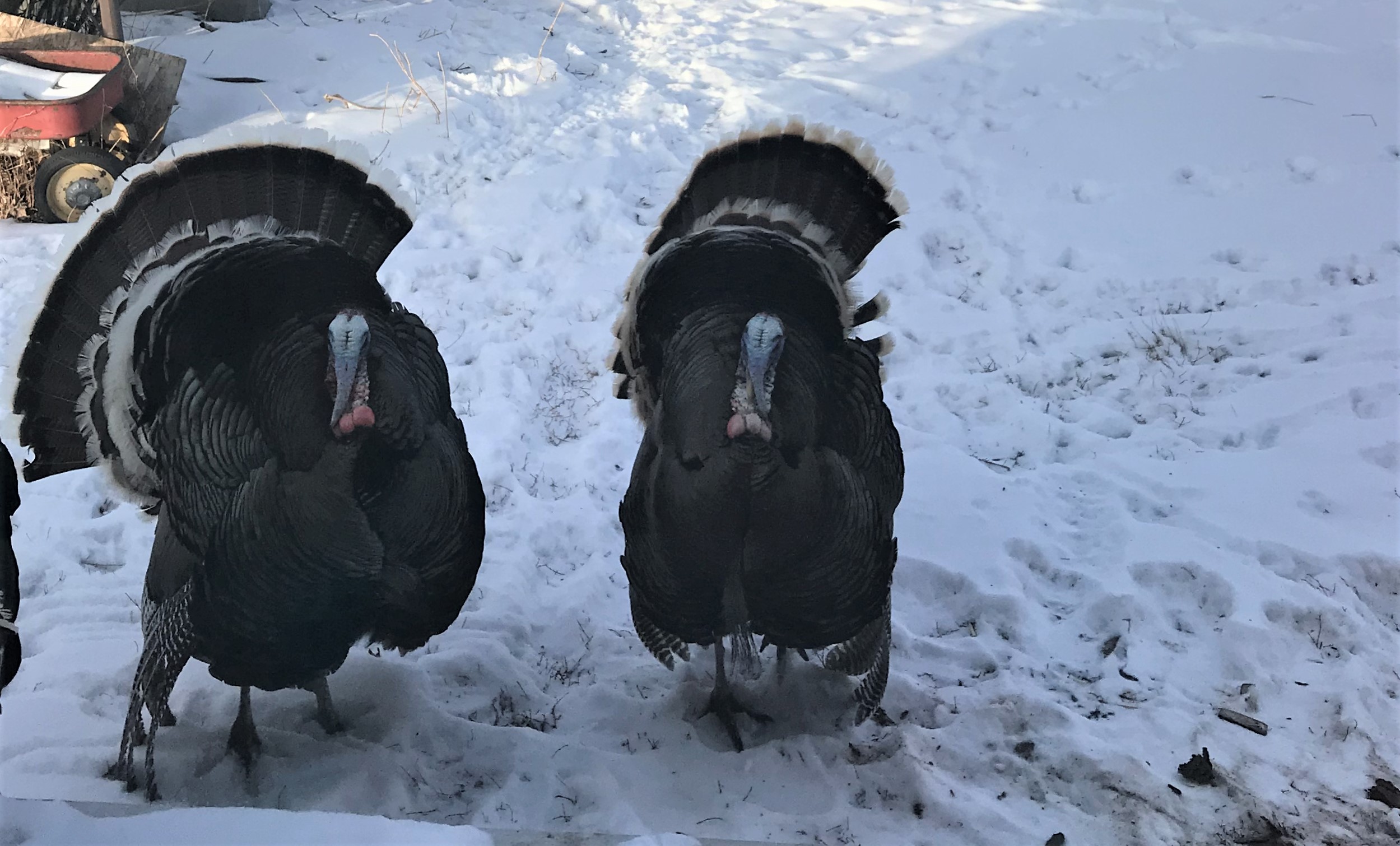
Turkeys descend on the compost pile, pecking and pooping, while the earth turns this side of herself to the light, and I sit muddled in mortality. Snow glistens with insolence but like all things seen and unseen, winter’s days are numbered. The life expectancy of a wild turkey is ten years. Of the chickadee hopping around in the chokecherry branches, it’s less than two. Fighting the false claims of linearity, I remind myself that Allah, God, Creator and Redeemer, is the ultimate recycler—a saver and transformer. But I need reassurance. “Some transformations take longer than we’ll glimpse in this life, right?” I poke an elbow into God’s ribs.

“What’d you say?” God said, startled.

“I said you’re a devoted saver. A long-haul recycler.” For once, I’d snuck up on God.

“Ah. Sorry. You’re right.” God nodded, distracted. “Say, could I ask you something?”

“Sure,” I said, glad for any diversion God might provide.

“Okay. So, I’m God. Alpha and Omega. Beyond Big. And I love every measly nano-bit of my creation. I mean beyond little. And my intention has been and will always be to provide a transformation path for everything. Everyone. Always. Forever. What do you make of that?”

“I’d say I’m glad, but you’ve got your work cut out for you.” I felt relieved that God was who I thought he was.

“It’s your work, too,” God said, taking my face in his hands. “That’s why you have consciousness. A self-reflective loop.”

“Oh.” I groaned. But I let the reassurance of those warm hands sink in. “But you’ll take care of the heavy stuff, right? I mean like Hitler and Genghis Khan and nuclear weaponry and the racist and the unrepentant greedy unsaved types, and the billionaires and liars?”

“There’s more than enough work to go around.” God sighed. “I’m always in the thick of it. And of course, there are all those ‘helpers’ who think they can decide who’s ‘saved’, and how, and when…as if it’s an end state!” God snorted and did air quotes when he said the words “helpers” and “saved.”

“Yeah,” I said. “It’s irritating. They have formulas.”

“I know,” God said. “Magic words. Allegiances with guarantees. And get this–you know what happens when I infiltrate and hint that maybe, everyone is already saved, will be saved, and will need saving again?”

“No,” I said. “I don’t try that anymore. You’re brave.”

“Well,” God said. “You’d think their hearts would leap for joy, but no, they aren’t the tiniest bit happy for the unwashed masses. They’re disappointed. Angry, even. They argue and quote scripture–to me! They can’t stand the possibility that no one is going to hell for very long.”

“Well, that’s…Ah, that’s…” My own revenge fantasies were threatening to surface. What do you say to God at this point? Luckily, I’ve hung out with God enough to realize that I don’t want to want anyone or anything to end up separated, destroyed, or useless. God and I argue sometimes, but I hardly ever argue that someone should be damned forever. It’d be futile anyway. God is not only the source and definition of love, God is beyond stubborn. God never gives up. Though I’m not equipped to glimpse the whole, I suspect his recycling program is massive, fascinating, and makes use of both joy and fire. God’s compost is to die for.

“You’re a little scary,” I said, finally. “But I like your style.”

“Thanks,” God said back, rubbing my blue-gray hair with real affection. “I like yours too.”
Charitable Giving

IMG_2809 (2)

I positioned my cold feet in the warm sunlight, determined to sit until the embers in the stove or the chickadees outside the window convinced me that anything matters. So far, it hasn’t worked. I’m in a wicked post-holiday mood. I just threw out three beautifully-rising loaves of bread after discovering that flax can indeed go rancid, and this is not good for you. I’d taken a little taste of the dough. It was unusually bitter, which led to the research, which led to the painful placement of the loaves in the compost bucket. I hate that things go rancid.

I want everything to stay whole and healthy, even in large quantities. I often cloak my hoarding tendencies under colorful claims of creativity and eventuality. But I know the truth about me. I’m a mixture of pioneer ancestors and an excessive culture. Like God, I see potential redemption in even the worst of the worst, and try to make use of everything. I hate letting go.

The chickadees are gone. Wild turkeys are pacing the perimeter of the garden, calculating whether flying over the tall fence will result in enough nourishment to justify the energy expenditure. They don’t know about the rancid flax-laden dough about to appear. This may sway their decision. I trust their digestive systems can make use of rancid flax, or they’ll know enough to turn up their pointy beaks and strut away.

“And you?” God says gently, speaking from deep within the pile of nearly-rotten wood I’m trying to burn up.

I pause to think of myself as a calculating turkey, pacing the outer edge of Eden. “No idea,” I answer. That kind of wisdom is a distant memory in the oldest part of my aging brain. But what I do know is that a great, rancid toxicity is blanketing the earth from massive accumulations of wealth. And I don’t know how to shake it off. Even as I scorn the greed of those who have too much, I wonder how I can get a little more. I hate this about myself.

I try my usual cure. “Give until it hurts, you selfish hypocrite,” I say in a nearby mirror.

God rushes toward me like a grandmother saving a child from a coiled rattlesnake.

“No!” she shouts, waving her arms. “No. Stop it. That kind of talk doesn’t help anyone.”

I jump back, startled. She throws a blanket over the mirror.

“Take a beer and sit among your possessions,” she says sternly. “Be in your body. Be in my body. Open your soul. And notice where it hurts, darling. Then, gently, give. But give until it heals. That’s all. Give until it heals.”

This is a complete impossibility. But that’s one of the things I like about God. She often pairs the impossible with dark beer.