Still Life

There are two granny smith apples in the basket, slightly bruised and aging out. 
The thought of eating one sets my teeth on edge. I don’t know why I buy them.
It’s a repeating pattern with me and fruit. I have unfettered access 
and there’s room in my cart, but is that reason enough? 

I sit with the ethereal miracle of vibrant green, tangerine, and sweet potato 
in the loosely woven wicker that holds things together for now.
Minutes and hours fall from the heavy sky. I keep watch, 
and in my own way, I pray.

There’s tea steeping and a bag of chips open in case God comes by. 
She likes the salt. I like the company. I try to be accepting, 
not greedy, not demanding, not intrusive, not filled 
with expectations. Just quiet and receptive.
But it sucks. It’s harder than winter.

The God small in each of us is to blame for tart apples and the long seasons 
of discontent. We are unskilled at listening, even less skilled at loving. 
I hear God in the hallway, dragging something behind her walker.
It must be laundry day.

Well, I can’t wait forever. I have errands and obligations. 
I understand how the self-important God of billions 
might ignore me now and then, but the laundry lady?
When God embodies thus, the roles reverse. 
She’ll ask me for quarters and for help
folding her flannel sheets.

Road Rage

When I’m driving around, sometimes a line pops into my head and I think it deserves a whole poem. Like this little phrase earlier today: The exquisite pain of knowing… The chances of remembering it for long were slim, so as I negotiated the traffic, I repeated it over and over, even though I didn’t think I was in pain. I was, instead, enraged.

The roads were terrible; people were driving stupid. It’s election day and as usual, my beloved state has gone to the highest bidders. Good, honest people ran against paranoia and lost. I knew I was angry, but when God tapped me on the shoulder I jerked the wheel and yelled, “Fuck you, God.” This surprised us both.

I’m home now but there’s no poem waiting for me. God made a hasty exit at a red light. Fine with me. Who needs any kind of God riding along, let alone a misrepresented, passive one?

To ward off a potential return, I put my fingers in my ears and sing la la la la la. I think of people who don’t love me and hate them for it. And then I retract the hate because I don’t want to be loved anyway. I’m weary of it all. I make herbal tea and wait for the end.

“Finished?” God asks, in a quiet, almost tender voice.

“Yeah,” I say. “You?”

“Oh, I’ve been finished for a very long time.”

“Did you quit or were you fired?” I’m still feeling a little hostile, but I push a slice of sourdough toast toward God. Breaking bread together might help.

“Technically, I was finished before I started,” God says, and takes a bite of the toast.

I make a face, hoping to signal that I don’t like these cryptic answers.

God also makes a face. “There’s something wrong with this toast. It’s bitter.”

“Well, why don’t you whip out your magic wand and fix it?”

God smiles. “Because as I said, I’m done. I turned in my wand so we could be friends. Maybe you should feed this to your pigs.”

“We’re going to eat those pigs someday,” I say.

“I doubt it,” God says. “But good on you for trying.”

The snow continues, and visibility is limited. There will be anger, anxiety, and accidents throughout the day. Night will fall and bring a temporary peace. This moment will be the last for some. The first for others.

God remains soft and circular. I am linear and limited, and I realize that this is the knowing that brings the exquisite pain.

No worries, I whisper to myself. You’re tough. And you can always make more bread. This isn’t true, but God doesn’t contradict me. For that, I am grateful.

From Whence We Came

Almost every day, God and I sit in a ratty blue recliner angled toward the window and sip beer. God expects me to hold still and listen. I try, but it seems nonsensical—an inefficient and unreasonable request.

Then I remind myself that efficiency isn’t the only road to success and not everything worthwhile is reasonable. The ability to reason is one ingredient in the soup that defines us, but it’s not the entire recipe. There’s sausage, kale, and wonderment. There’s an extravagance in creation that can’t be explained. Abstract thought and scientific inquiry may be the pinnacles of evolution, but pinnacles need foundations. Humans rationalize cruelty as readily as they eat that second donut.

“Working on some interesting similes and metaphors this morning, aren’t we?” God teases, sliding from chair to mirror to window to bird, sashaying to music I can barely hear.

“I’m thinking about foibles and do-overs,” I answer, happy that God seems loose and crazy today. “Could I have the last ten minutes back? I went down the wrong rabbit hole.”

“Nope,” God says. “Why do you even bother to ask? You know better.”

“No, I don’t,” I say, gleeful and untethered. “YOU know better.”

God winks and pulls me out of the chair. We do a four-pig jig creaking around the room in old bodies. We dance straight through the newly purple wall and fall, barriers breaking like bones.

I am blissfully unaware of dinosaurs, dodos, and all the hapless creatures currently facing extinction before they even have a name. They can all be Adam. They can all be Eve. I love them fiercely, but I can’t save them. I can’t even save myself (and truthfully, I don’t want to).

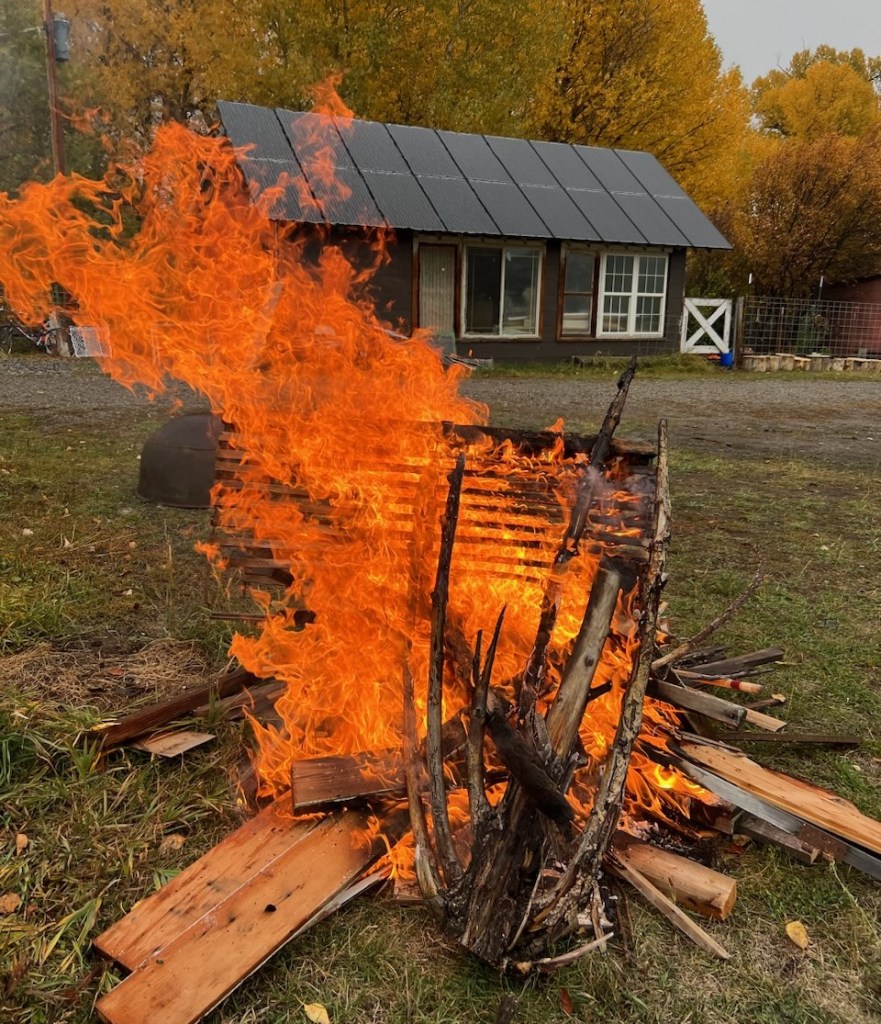
God’s reading glasses fly off while we’re cavorting. They shatter against the edge of a light green piece of granite I keep nearby for thermal mass, and small pieces fly everywhere. But no worries. The dangerous shards gather themselves into a coarse form of collective compassion, willing to return to the fire from whence they came. The fire from whence we all came. The fire to which we will all return.

“Sorry about your glasses,” I say. “I could read to you until they’re fixed if you’d like.”

“I’d like that very much,” God says.

“Do you mind if I start in the middle?” I ask. “I’ve already read the first chapters.”

“Not at all,” God says. “I suspect I know the plot.”

“I’m sure that’s true,” I say, oddly defensive. “But the descriptions are spectacular. And the details matter.”

“Yes, they do,” God agrees. “They really do.”

Stung

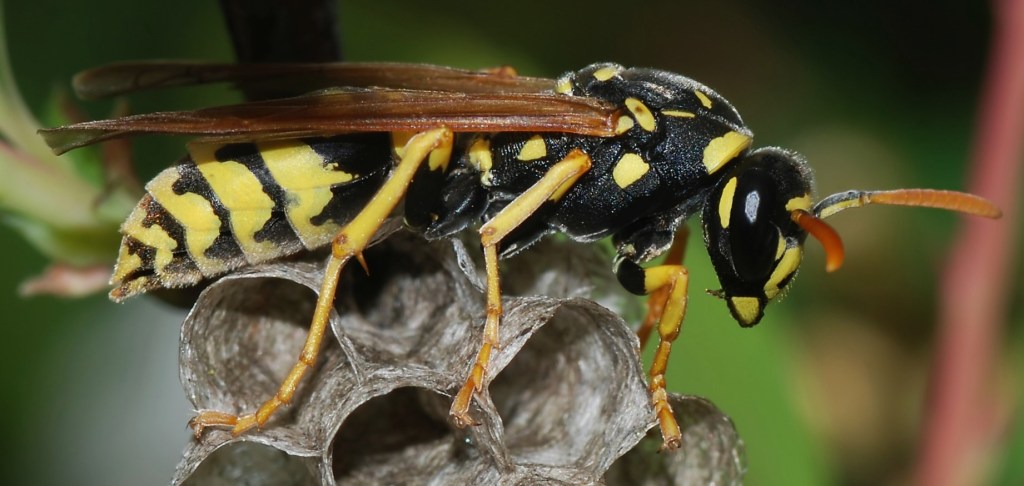
About an hour ago, I opened a shed door oblivious to the wasp nest this disturbed. The response was swift and precise. My right nostril exploded in pain, and I went a little crazy, swatting my own nose, jumping around, yelling, and running. My eyes watered, my face swelled, and a sneezing fit hit me.

I am now in recovery, subdued and holding still to keep the baking soda and Benadryl cream in place. God saw the whole thing. He raced to the house with me and is sitting nearby, but I’m not interested in chatting with anyone remotely responsible for wasps.

“Not fair,” God says.

“Whatever,” I say. “Who in their right mind would let a creature like that evolve?”

“Why do you keep assuming I have a right mind?”

“Clearly, you don’t. How about I stop thinking you’re responsible for anything?”

“That would be an improvement.”

We sit in silence. Me, nursing the sense of betrayal I feel when things go wrong, or I get hurt. God, sitting by. Just sitting by.

In a crisis, does it matter if there’s a God sitting by? Especially one who absolves itself of pestilence, pettiness, and pain? I don’t know.

God continues to sit calmly while I-don’t-knowness fills the room.

“In no way do I absolve myself,” God says. “But don’t worry. You cannot believe me into existence, and unbelief doesn’t get rid of me.”

“Why are you telling me this?” I ask, still feeling sorry for myself.

“You have a tendency to parse and attribute agency and blame. The greater Whole doesn’t come apart. There’s a reason for my name.”

“Which one?” I ask, but I know the answer. God’s first name is I AM. Simple. Overly inclusive, present tense, unequivocal, and far beyond interference or comprehension. It’s the big I AM, sitting by.

“Not sitting by,” God says. “Sitting with. Sometimes, sitting within.”

“The wasp is dead,” I say. “And I’m going to kill the rest of them.”

“I totally understand,” God says. “And for what it’s worth, I believe in you.”

“Well, that might be a badly misplaced belief.”

“I know. But it’s what I do.”

I put on layers of impenetrable clothing, grab the wasp spray, and prepare to do battle. I wish manna would drop from heaven and feed the hungry. I wish a great wind would arise to cleanse and save the earth. I wish self-absorbed liars would be seen for the vicious creatures they are. I wish the wasps would disappear like locusts at the end of a plague, but I know they won’t. Innocent others will be going through that door. Like Bonhoeffer plotting to kill Hitler, I am deeply conflicted, but it’s clear: This one’s up to me.

If I Love My Enemies, Who Will Hate Them for Me?

Loving my enemies, even if the list is limited to humans, is a tall order. If other lifeforms are included, say vicious dogs or mutating viruses, all bets are off.

“Who’s betting?” God asks. This is a trick question. Instead of answering, I distract myself by reviewing things or people I detest. First, the obvious: Covid. Putin. But the list rapidly expands until I am simmering in the cauldron of generalized hate. God waits.

The dog I’m in charge of today isn’t vicious, but she’s often overtaken with spasmodic joy when she sees me. Neither of us can contain it. She squeaks, grovels, dashes here and there, and even though she knows better, she leaps up and knocks me down. I yell “No.” She meekly allows me to put her in timeout but then howls in protest. God is still waiting.

One definition of enemy is someone or something injurious or destructive. The dog knocked me over in joy, but the bruises are the same. How does intention factor into this complicated equation?  God clears her throat. I guess I should stop ignoring her.

I’m betting,” I say. “There are too many hateable things and people.”

“You are SO right,” God says. “It’s too much for you. How about you let me do the hating?”

“That would be great!” I say. “I’ve got my list right here.” I hand it to her, but I can’t quite let go. She pulls. The list rips, leaving me clinging to a small corner of the page.

God glances down the list, rips it up, and explodes in laughter. She is a stampede of wild horses pounding the earth. She is an invasive species blooming bright yellow. She wraps her irrepressible presence around the artillery and dies blood red in the battlefield. She is chemo, killing all rapidly reproducing cells, innocent or lethal. She is a Supreme Court bent on destroying democracy, a river rising, a child playing near the den of the rattler. She is Source and the End.

“Hate won’t get you there,” she says, marching by in a parade of endangered species. She tosses me a floatation device, a flak jacket, and some abortion medications to distribute as needed. She puts a big fat hand out, taps her clawed foot, and waits. Reluctantly, I put the remaining corner of the hate list in her palm. She wads it up and eats it with determination reminiscent of Maxwell Smart. I should be happy. Relieved. But I want my list back. Hate is easier, vengeance feels good.

“Hey, God,” I say. “Turns out I don’t want you to do my hating for me. You’re not very good at it anyway.”

“You’re right,” God says. “I’m not.”

Water

The river has risen to magnificence, inflicting random agonies. I play the pain on my old guitar and the pain plays me like water. We are an unlikely duet. I yield the melody to the flooding river because my ragged vocal cords cannot handle the range this song demands. There are high notes best expressed with compassion and exquisitely controlled vibrato, and bass notes so low they trouble the souls of those with ears to hear.

God dances on the surface of the swirling eddies, a child performing in her first recital, insects reveling in abundance. Entire homes float by. “What can we take apart?” God asks, rubbing millions of wet hands in anticipation. “And how shall we put things back together?”

I know I should volunteer but I have no idea where to start or what to do. “God,” I say, speaking against the thunder of boulders rolling by. “How can I help?”

“Good question,” God replies. I’m surprised. Usually, it’s God asking the good questions.

“Climb as high as you can, look across the valley, and find the place where earth meets sky. Then hold your thumb to the horizon and notice how your perception shifts.”

This is a trick I’ve done many times to shrink the size of an imposing moon, but always with ambivalence. I usually prefer an imposing moon and my own hazy beliefs about gravity and the relative size of things.

“I don’t want to do that,” I say to God. “Any other suggestions?”

“Sure,” God shrugs. “Do what you need to do. Take the moon home for all I care. I’ve made a million moons and there are more to come. They will always agitate the water until it turns into wine.”

Uprooted trees float by, lodge, and bend the current. I wade into icy shallows, kick debris off the fence, and watch the current take it away. God shows up in bib waders. I wonder if the old guy is foolish enough to try and fish. He has worms and sinkers. I shake my head. He grins a sloppy, open-mouthed grin.

God’s first suggestion comes back to mind, and I realize elevation is not a bad thing. I pack the guitar and prepare to begin this last ascent. I’ll not lift my thumb to the horizon, though, because perception doesn’t change the order of things. Instead, I will harken to Mother Mary’s wisdom and let it be.

The Constant is Change

“A kennel is different than a fenced yard,” I explained to God last evening as we problem-solved the nature of limits, dogs, and human frailties. Dogs naturally dig, bark, jump, protect, chase, growl, and express exuberant affection. This presents problems to the elderly, newly planted marigolds, and other tender things. God seems to think containment should include flow.

“I know the difference,” God said with a twinge of disdain. “But I want to be able to open the door and be done with it. I like things simple.”

What a lie! I risked looking straight at God who then splintered into a hungry blackbird, a broken bike, unearthed seedlings, an abandoned fawn, an icy river, and hops vines using last year’s growth to climb heavenward. A teaspoon of topsoil, a glance at sky–this is all the evidence anyone needs; God does not like things simple.

“Fine. So we’re not that simple,” God admitted, fading into the late-blooming lilacs. I filled the bird feeder, replanted snapdragons, marigolds, and basil, and imagined how I could upcycle the bike. It has a kickstand. That gave me hope. Even though the river is high and noisy, I slept well.

But an intrusive idea about yet another way to rearrange the living room occurred to me this morning, and a Paul Simon tune is on replay in my head. The bike is still broken and I need to build a fence. I’m trying to focus, but distractions take root like invasive weeds—they have no natural enemies. Possibilities plague me. What should I transform next?

The angelic face of change is often made of plastic and other petroleum products designed to enslave and deplete. And yet…

Change is what we are made of.

What would we do without rust and mildew, the molding peach, the dry rot spreading through brick and mortar? Should we bow down to the power of deterioration and thank the gods of decline? I think not, but I suspect it’s all the same to the Many-Sided God; unlike me, they are free and untethered.

“Ah, but you are free to choose your tethers.” God intrudes midsentence–appearing as punctuation and grammar, a parenthetical phrase gone rogue, coauthoring away, as unbidden as Paul Simon, as pernicious as bindweed. And as dangerous as an unruly dog who is way too happy to see me.

“Get down!” I yell. This is not an ideal way to interact with God, but I have no treats or tennis balls to throw, so I drop to my knees where it’s safer and tell myself it’s not a bad thing to be adored.

Who’s to Say What Starlight Might Do to the Skin?

Yesterday, I was looking for something in one of our outbuildings but within seconds, I’d forgotten what I was looking for. Our sheds reverberate with such potential that I can’t go in and come back out the same person. Touching the chaos causes a quickening; stacks of windows become greenhouse walls; slightly-damaged doors open to somewhere nice; a child pounds joyously on the drum set; strewn with straw, the stall in the corner protects a menagerie awaiting the ark; futons offer rest (or shelving); saw blades are sharpened; the woodstove is hooked up so I can cook in an emergency; empty frames and canvases are masterpieces hung in a gallery where antiques are tastefully displayed, and the scraps of angular metal have been welded into wings.

Our buildings are all named: Yoga Studio, Bug Barn, Playhouse, Solar Shed, Old Garage, Eva House, Lean-to, River Cabin, and of course, the decrepit and dangerous Contemplation Corner. The names reflect aspirations, not content. The structures are salvage yards and sanctuaries filled with failures awaiting transformation.

“God,” I said. “Proportionally, I bet I have as much broken and discarded stuff as you do.”

“Well, hello there, Junior,” God drawled. He’d materialized beside a flat-tired trailer, chewing a blade of grass with studied nonchalance. His thumbs were hooked on the pockets of dirty overalls. “That’s not exactly what I’d call news.”

“Could you get any more stereotypic?” I asked. God shrugged and faded. I squinted into the neon orange sunset and began walking home.

I am chronically derailed by the allure of what could be, and I blame God for this. It takes resources and patience to repurpose the wrongheaded or rejected. There are days I long for everything to burn to the ground; for fire to devour the bulging collections of oddities and unlikely visions; for extreme heat to purify my remaining days.

“Tidiness does not ensure wisdom,” God said, in the voice of a patient teacher. She was resting in a rainbow-colored hammock hung between two thorny crabapple trees. “I found this hammock under a pile of flat soccer balls,” she added. “I like it.” She was wearing a sundress from the ragbag and had tipped one of my straw hats over her face.

“It’s getting dark,” I said to the spectacle that was God. “You may not need that hat.”

 “Maybe,” she agreed, throwing one unprotected, delicate arm over her head. “But who’s to say what starlight might do to the skin?”  I knew she was making fun of me.

“You’re right,” I said, offering her a sweater. “Who’s to say what starlight might do to the skin?”

Transparencies

There are days when dinosaurs, cockroaches, and head lice provide me with a certain comfort. The deliberate ignorances and cruel choices of our species are hardly inspiring, but when I consider the magnificence of survival and the wonders of extinction over the inconceivable span of years these creatures represent, I relax. We can all relax.

Consider the lesson of the glass winged butterfly (Greta Oto). Freed of human tunnel vision, we can ride the tails of invisibility and let our perspectives shrink and swell. Trippy. Who needs externally induced altered states when you can consider the history of our planet and become completely disoriented, bodily displaced? As one researcher noted, being transparent makes for great camouflage. There’s no point in hiding cumbersome errors, glaring false starts, or neon selfish longings. Why not own up to our foibles, strip down to essence, and have a good laugh at ourselves as we give up or start over? In a cosmic, tragic sort of way, we are hilarious. This may be the sole reason humans have consciousness; we can laugh. God likes to laugh.

Or maybe, it’s terror. We inflict terror on each other, and when we do, we often reach out of our bodies to see if anyone is there to help. We come apart so easily because we’re afraid of being nothing, but here’s the funny part: We are everything; the thorn and the rose.

Across the meadow, the Artist is painting roses with blood—your blood, the neighbor’s blood, God’s blood, the soldier’s blood.

“Please,” I whisper to the Artist. “No more roses.”

The Artist pauses, hands me a brush, and with a smile that brings tears to my eyes, says, “Paint what you will.”

“No, I’m not that kind of artist,” I protest, holding the dripping brush away from myself. But I see that the blood is holy, and I relent. I paint myself red. I paint the Artist red. It occurs to me we are the embodied Scarlet Letter, marked as shameful, marked as chosen, marked as doomed, marked as loved.

These absurd contradictions make God laugh. I laugh. The Artist laughs. The dinosaurs laugh. Lice and lichen, seconds and centuries, grief and gladness, daylight and starlight, the endless longing for justice, mercy, and release. In my humbled alteredness, I understand there is no greater love than to lay down your life for a friend and sadly, there’s no greater delusion than to think you can preserve your life or anything you love anyway.

“Well said,” the Artist comments gently, combing through my hair with a fine-toothed comb, checking for lice. “I have nothing to add.” I know that’s not exactly true, but I let it go for now.

Lies

Sometimes, like right now, mocking, sarcastic words get in my head, and I write them down and imagine going viral. But then I hit delete hoping to be left wordless and alone. Words are the vehicle of vanity, triviality, and lies. There has to be something true beyond words.

In daydreams, I stare steadily into the eyes of the current Russian dictator, our own recent dictator-in-waiting, Brazil’s and Britain’s buffoons; I imagine having the depth of soul to crack their stony defenses and open some tiny pocket of humanity and compassion inside them. Their grotesque, malignant egos melt away and flocks of bluebirds and goldfinches are freed from within, winging their way to freedom. Cue: Julie Andrews singing “The Hills are Alive…”

O.K., I’ll admit it. What I actually imagine is vultures pecking their eyes out while I hold them frozen in place with a magic spell. Then I smash their skulls on rocks. I… There’s a disturbance to my left. I hold up my hand. “Not now,” I say, turning to God, who always stops by midsentence. “I’m on a confessional roll.”

“You certainly are,” God says, as she multiplies and divides. She’s heavy with child. With children. She’s heavy with hope and courage. She’s heavy with bombs. She’s swallowed the detonators; the bombs will explode, and today, like every single day on this blessed earth, she will die a hundred thousand deaths. And in this fragmented, impossible way, God, too, will go viral.

“Come with me,” God says. I back up, shaking my head.

“Where?” I ask. “Nirvana? The life I deserve next? The cross? The front lines? The back alleys?  The grave?”

“Yes,” God says. “Come.”

I take a reluctant step. Then another. It’s rocky terrain. I stumble. I get up and examine my scrapes and bruises. I hurry toward the fleeting purple robe in my pointy shoes. The bridge across the icy stream has been destroyed. I try to leap across, but I slip and fall in. I think I’ve sprained my ankle. I’m wet, cold, hungry, disabled, lost, afraid, and angry. I’m a refugee, hunted prey, weakened by age and a soft life. “Stop!” I shout at God. “You’ve made your point.”

“I did?” God asks, in disbelief. “I wasn’t aware I had a point.”

“Not funny,” I say, rubbing my frozen hands together.

“Agreed,” God says. “Not funny.”