Audacity

The first day of another week arrived and God declared it good. The chickens have learned to use their new ramp and now vie with the pigs for attention and treats. The pigs are smarter; the chickens are faster and more easily airborne. Relationships always require compromise and tradeoffs. Even God’s and mine.

God is smarter, faster, and more easily airborne. But I’m tenacious.

“So am I,” God declared. “Let’s just enjoy these old lilacs for a bit, shall we? They’re as tenacious as we are.”

We sat on displaced cement steps going nowhere and marveled at the prolific purple blooms, blue sky, apple blossoms, and the speed of dandelion growth. Because I associate lilacs with Memorial Day, I brought to mind dead friends and wondered when I would be joining them. God brought to mind babies and urged me to consider their fat little legs kicking, their loose, drooly mouths smiling.

Thanks to the expansive air and insistent green of spring, I found I could hold the babies and my dead loved ones in the same space, and a profound sense of gratitude arose that surprised God as much as it surprised me.

“Nice,” God said. “That’s some impressive space you’re holding there.”

“I know. Some days, I’m so damn impressive I can hardly stand it.”

“But other days…” God gave me a look. Was it shaming? Understanding? Predictive?

I shot God an equally quizzical look. “What are you getting at?” (If you want to maintain healthy relationships, it’s better to ask than assume. But with God, there will often be too many answers or none at all.

Our newest apple tree has not recovered from the wind-whipped trip home. We should have protected it better. The hours remaining in my life will bring opportunities for despair, kindness, contemplation, meanness, largeness, smallness, giving, and withholding. The pigs will demand more food than is good for them. They’ll squeal and squabble. The chickens will scratch for worms. There will be blooming and going to seed.

God is the pollinator, the fertile idea, the distorted reflection, the broken door. How could I possibly expect a coherent answer?“

“Ah, but you keep asking, and I adore you for that,” God said. “You’re not just tenacious. You’re audacious.”

God’s right. How dare I break my realities into so many pieces, or twist verbatims into poems? But with such a photosynthetic God, how dare I not?

The lilac branches swayed as God summoned a flock of goldfinches, and together they flew toward the glaring, generative sun, leaving me and my audacious tenacity sitting content in a fragrant lavender haze of seedlings and ancestors.
I Eat Your Joy for Breakfast

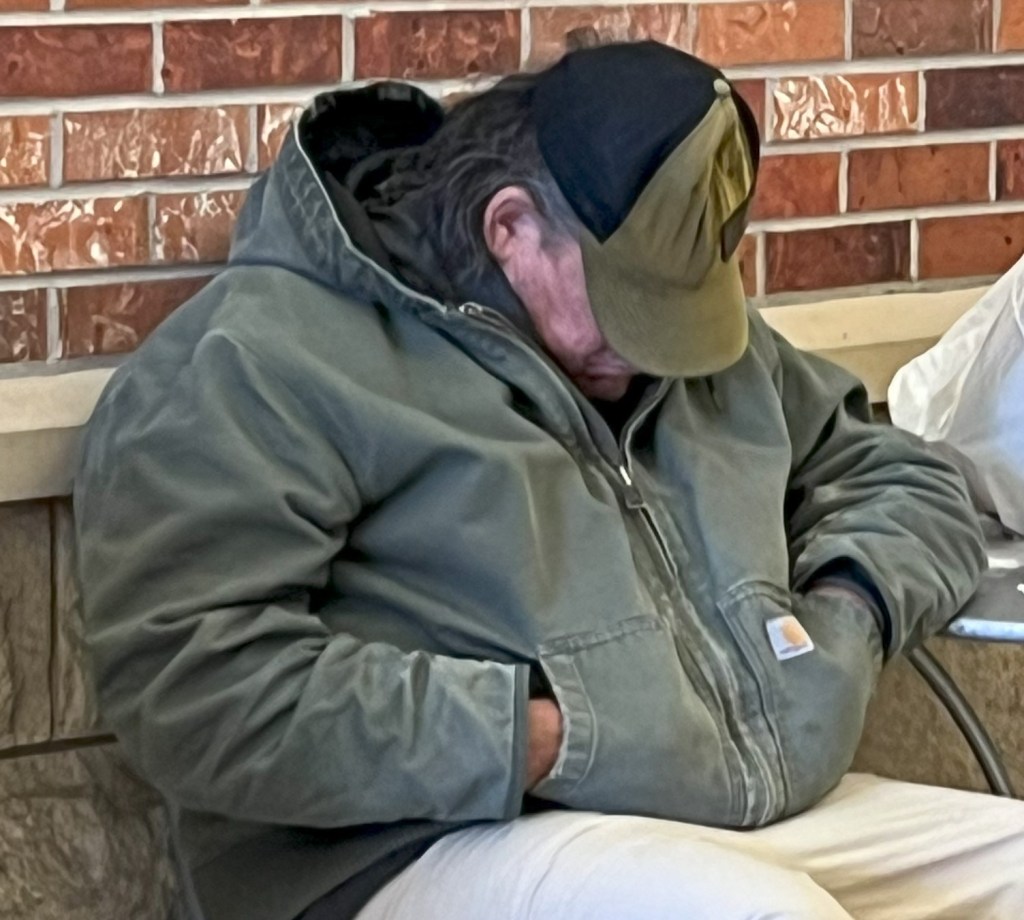
God is indulging in a morning nap, sound asleep on a weathered recliner near the garden shed. I’ve noticed that God can sleep pretty much anywhere. But I’m awake and agitated, stewing about climate change, greed, cruelty, and the limited hours at the landfill.

I clear my throat and speak loudly enough to wake anyone within ear shot. “Someone took a huge gamble when they introduced creativity and choice into their evolutionary efforts.”

God startles and sits up. “What now?” he says, rubbing his eyes, raking his fingers through his holy bedhead hair.

“Creativity,” I say. “The bored human is often a deadly human. We need to create and change things up. But then we compare. We get insecure and try to make ourselves more beautiful and have too many children and accumulate vastly more than we need. This leads to overpopulation, scarcity, and war.”

God swings his legs to the side of the recliner, stretches, and groans. “You’re so right. It’s a huge gamble. And yeah, it hasn’t gone that well so far. But it isn’t over.” He sees my scowl and adds, “I mean it’s always over, and it always isn’t.”

He lays back down, situates his hat over his eyes, and pats the space beside him. I perch on the edge. I do not know how to relate to this complacent, laissez-faire God.

“Blur,” he says in a languid voice. “Blur, mingle, melt.”

He means let go. He means he’ll carry me for a while. He intends to be a source of comfort.

“I can’t blur,” I whisper. “I know you have your ways, but I want to do something on my own. I want to make my mark.”

God sits back up. “And there you have it,” he declares.

The profound irony of what I just said hangs in the air between us.

God sighs. “You are still adolescent apes; you need to play. But your marks will all wash away. Remember, the lasting measure of worth is compassion.”

I look down at my hands. God continues. “And the nature of mercy is upside down. The gluttonous will eventually fast. The lips of liars will be purified. It’s all about balance.” He winks and adds, “When you get it right, I eat your joy for breakfast. It’s delicious.”

I stare across the expanse of my life. Finally, I say, “And when you speak, I stir-fry your words for dinner. They’re tasty.” “Fair enough,” God smiles. “That makes me happy.” But as he drifts back to oblivion, I hear him mutter, “Or at least I think it does.”

The Perfect Couch

I’ve searched for the perfect couch for a large portion of my adult life. I maintain a steady presence on the internet marketplaces and frequent the thrift shops scattered across the three states we travel the most. My couch karma is pathetic. Once, I broke my vow to only buy used items and bought a new one. That didn’t work out either.

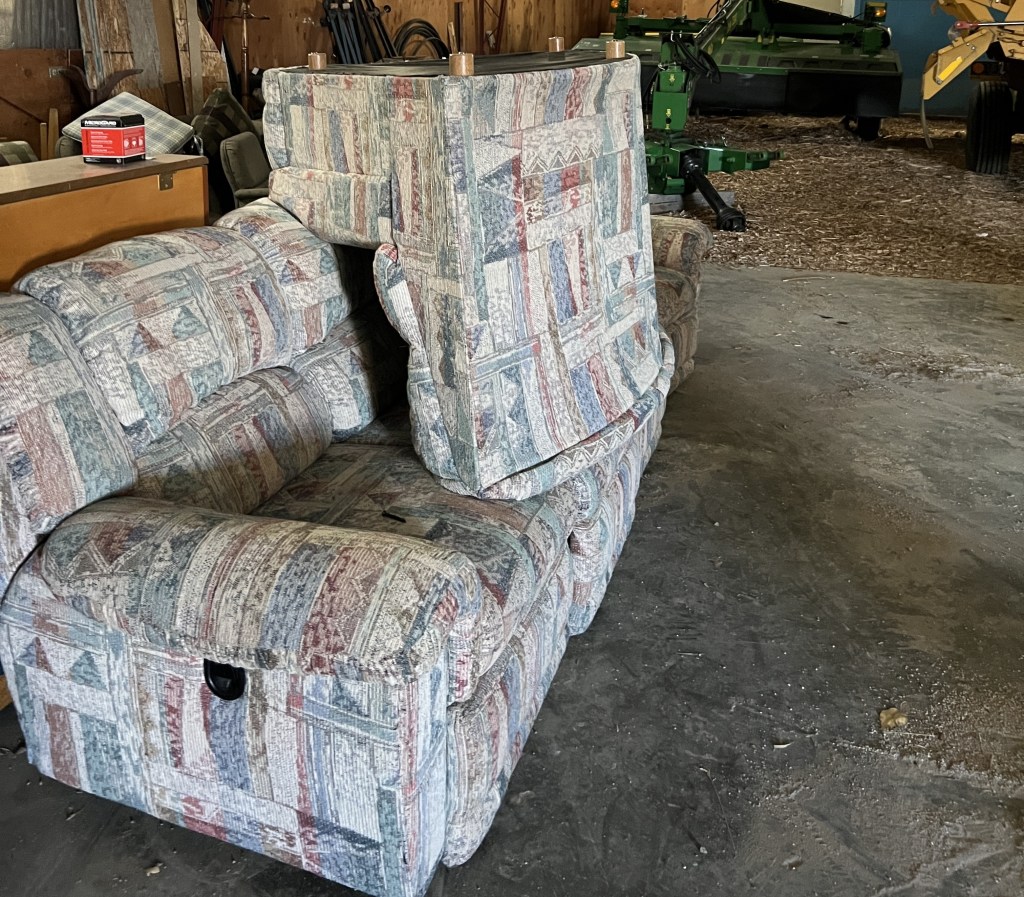
Over the years, God has cheerfully sat on each of them except for the small sectional coated with multiple layers of nearly invisible cat hair. That one didn’t even make it into the living room. Too bad. It would have matched the nostalgic recliner I’m usually sitting in this time of day. If any cat people are interested, the sectional is piled in the barn. Blue geometric design. Can’t miss it.

“You’re funny,” God says, lowering himself into the sagging cushions of my most recent attempt.

“I know,” I reply, proud but sad. My mom would have turned eighty-nine today. I didn’t engage in any “Happy Birthday in Heaven” posts, but I’ve sent my regards to wherever the essence of mothers goes.

Generally, my mom did not like secondhand furniture, but she loved this little recliner that last year because she could put the footrest up and down on her own. Limits and needs humiliated her. She would have starved rather than ask someone to cut up her meat. I can relate.

It is one of life’s ironies that if we live long enough, we come to understand the disappointments, fears, and irritating quirks of our elders from the inside out.

“No, no. That’s not irony,” God says. “That’s mercy.”

“I don’t think so,” I say. “It feels vindictive. It makes me wish I’d been nicer and tried harder to understand.”

“No amount of niceness takes mortality away. You were nice enough.”

“I’m not so sure.”

“Trust me,” God says, “You were nice enough.” Then he adds, “Say, I didn’t sleep well last night. Mind if I take a little rest?”

He yawns, snaps the wobbly footrest up, settles back, and is soon snoring peacefully. I watch his chest rise and fall while George Winston plays melancholy piano in the background. Such short lives. Such very short lives.

I guess maybe it is mercy, I think. Better to understand later than never. A rush of adoration washes over me. I lower my own footrest quietly to tuck a turquoise blanket around the vast arthritic feet of my friend, the patient creator, the weary one, snoozing on my latest bad couch.

What Condition My Condition Is In

A moment or two ago, I was hunkered down in an old Chevy van with two women I admired but didn’t know well. We were finessing undercover maneuvers to abolish some unfair hiring practices. And in the fragile and fractional ways of justice, we succeeded. I didn’t know it at the time, but they were God.

Faith was the slender, quiet one. A shaman. With the help of heavenly beings, she planned her own starvation and left for higher ground. Grace was outspoken. Irrepressible. She had a breast removed as a token of her love. “Statistically, I’m stepping up so seven other women don’t have to do this,” she joked, framing it as a willing sacrifice rather than a curse. These are the ways of the cross as I understand it.

But there is so little I understand.

The drivers of the machines of destruction let their engines idle when they’re not full throttle. I despise this ignorant, highly polluting practice. They are overweight and complacent; their masters are neither. Humans now move more carbon each year than Nature, even when earthquakes and floods are factored in.

Game on, humans. I think to myself as if I were God. You won’t win this one.

“Excuse me.” God emerges from the paralyzing fog of nostalgia and dismay, eyebrows knit downward. “I’d like a word with you, young lady.” Looks like he’s going to grab my arm and drag me somewhere out of sight for a scolding.

“Well, I’d like a word with you, too,” I answer, knitting my eyebrows to match his.

“Word,” he says.

“Word,” I answer.

We laugh.

Fed by riotous tributaries of living words, the clear lake of infinity pools up at my feet. I strip off armor, shelter, clothing, and body; I shed ideas, hopes, fears, longings, and memories. I dip everything in the sacred water, hang it all up to dry, and jump in.

 But I’m cold and uncertain. I have no idea if I should try to swim in my condition.

“And what condition might that be?” God asks, floating by on his back. For some reason, this makes me think of Kenny Rogers and the First Edition.

“Decrepit,” I say. I had been filled with self-pity, but something about that song makes me smile. God shakes his head and points at the shoreline where there are rows and rows of old Chevy vans. And so many smiling people.

Why Do I Have This Heart?

When I have time on my hands, I try to squeeze the moments into a softball-sized orb but like particles of sand, the individual instances won’t stick together. Eternity may be circular, but apparently, my life is not. It’s entirely up to me how to use my time, but it won’t roll up like a river rock or a bowling ball, I can’t hold on to it, and it won’t come by again. This adds an unwelcome gravity to my choices.

Volition is a terrible curse. It’s right up there with self-awareness, God, and the nutritional labels on packaged foods. Humans have debated the correct basis for making the right choices for as long as they could articulate the question.

“But can you articulate the question even now?” asks the Issuer of All Questions as he stomps snow off his boots and sniffs the air.

To my chagrin, my hands smell like liquid nails, creosote, and chlorine—all toxic. There are plastic containers and dried brushes on my counter. I’m doing laundry with warm water and fabric softener, eating chocolate laced with lead. I designed our house to let the sun warm it, but there are days when the sun doesn’t shine. My carbon footprint remains larger than my feet.

“Probably not,” I admit. “But I ask a lot of questions. That’s safer than locking down on one anyway, right?” I’m trying to shelve the chronic shame I feel for various shortcomings and hypocrisies. “

“I hate to say this, little buddy, but that sounds like rationalization,” the Issuer says. This could come across as judgmental, but I know him better than that. He’s just trying to help.

“Of course it is,” I admit. “But then, why do I have this brain?

The Issuer smiles. Wrinkles upon wrinkles define and deepen the beauty I’ve come to expect from that weathered face.

“That’s a fair question,” he says gently. “But here’s a better one: Why do you have that heart?”

Atlanta Airport

The Atlanta Airport is not an easy place to kick back and relax, but today we have passes for the United Club Lounge and enough time to use them. God is enjoying the free Budweiser and I’m happy to have found a salad bar, chips, salsa, and windows.

But liberated from the constraints of luggage, what I really want to find is my center. I sit on a worn sofa, consider the ebb and flow of travelers, and examine my life for signs of meaning. So far, it doesn’t look hopeful.

Nearby, a thin man eats pulled pork with collard greens, and a young woman in leather hotpants refills her plate, eyelids heavy with artificially thick lashes. God is busy chatting up one of the waitstaff in a language I don’t recognize.

A blown-up black and white photo in front of me features a row of women standing at attention. Shoes, hair, pigment, purses, smiles, skirts, hats, breasts, height, weight: identical. The shot was likely taken half a century ago. In geologic time, less than a split-second, and yet here we are. I have no explanation for anything I’m observing. None.

“You don’t need an explanation,” God whispers.

“Then why do I want to explain everything?” I whisper back.

God shakes his head. “Let it be. That’s what dogs do. Even the smartest breeds.”

“Then why wasn’t I born a dog?” I ask. I know he’s not serious. We’re just making small talk. Humans are forever asking why and insist on explaining even when we’re wrong. We seem purposefully designed to want to understand.

God grins. “Totally on purpose. Why do you think you travel?”

To those of us born before devices, the one-way conversations around me look like repeated singular insanities. My own device activates itself to urge me along. Time to check in. Time to board. Time to go.

I glance at God, not sure what he’s planning to do. He removes an earbud and looks up. “Hey, you think this place is open 24/7?” he asks, yawning.

“For you, of course,” I answer. “But is this really where you want to hang out?” I look pointedly at the retrograde picture of the lined-up women.

“Ah, those were the days.” God says. “Would you mind saving me a seat?”

“You know it doesn’t work that way,” I say as I gather my burdens. “See you in Montana?”

“You betcha.” God smiles and stretches his legs out so long I can no longer see his feet. “And you can leave your carry-ons with me if you’d like.”

Apophatic

This morning, it is my intention to ask for Nothing. Admittedly, I’m not entirely sincere. Someday, maybe. Deep in my soul, I suspect the greatest gift of all is Nothing, but Something is far easier.

Consciously or not, every living being begs, demands, or fights for something: Continued life. Sustenance. Shelter. Justice. Revenge. The right lover. Riches, recognition, health, a big win. And when the lost coin is found, the cancer recedes, there is rejoicing, and God is declared good.

But when the earth quakes or the bomb drops, the rivers flood or starvation takes another child, I see it is better to ask for Nothing. What do we say to the team that didn’t win? To the one not found? To the destitute scrambling for crumbs falling from the tables of the enormously wealthy? To the planet shrugging us off with great loss and pain?

“Are you asking me?” God’s steamy voice rises majestic from the compost pile where microbes are hard at work. Like a startled deer, I run for the hills. God runs alongside, tossing shiny bits of wisdom behind us so I can find my way back when the panic subsides.

At the summit, I collapse on lichen covered sandstone. There is nowhere left to run. The view is spectacular. God has spread itself across the face of the dying earth. Eternal, resilient, generous. I point out the gully where I hope to be buried. God laughs.

“All creation is a churning tomb,” the formless God says. “From whence you will reappear.”

“Are you Nothing or Everything?” I lay back and stare straight up, deflecting from the image of my resurrection as nutrients and organic matter.

“Yes,” answers the Sky. “And so are you.”

I shake my head but God is adamant. “You’re the performance and the applause, achievement and failure, pride and shame. You’re the darkness sacrificed to define light, and you’re the light that leaps into darkness, knowing it will not survive.”

“Sucked in by a black hole?” I ask. “Gone forever?”

God smiles. “Something like that. But not quite. You understand that I’m the place where light goes to rest, right?”

“No,” I say. “I don’t really understand that.”

I pull what’s left of myself together, move toward the day, and instead of Nothing, I ask for very little as I settle into the Unsettled Place of the Holy Dialectic. It isn’t all that comfortable, but I prefer it to the self-righteous mirage of certainty cloaking the willfully deluded, the terrified, and the cruel.

“I like what you’ve done with the place,” God says. “Suits us just fine for now.”

Keeping the Beat

“Rough night?” God asks gently from deep within the wee hours.

“You know it was,” I say with some desperation.

“Yeah, I guess I do.” God looks haggard. “Thanks for not pelting me with your anxieties. I needed the rest.”

Though it may be blasphemous to report this, I’ve lost track of the number of times I’ve glimpsed God limping across my consciousness, disillusioned, tired, and sad.

The act of construing (or being) God beyond the guarantees and constraints of our limited vision is sometimes labeled blasphemy by those with frightened rigid streaks. And it can be dangerous. There are still people defending God by killing other people.

We sit. The day lumbers forward.

I have a gallon of forest green paint and an array of possible surfaces. God has a universe in mortal pain. Is it blasphemous to pity God? If I forget the dance steps, is it heretical if I just move in a way that meshes with the music and the tempo?

“Funny you mention tempo,” God says. “I could use a new set of drums. Mine’ve been beat to hell.”

“No surprise there,” I sigh. “Everything about you has been beat to hell.”

“And back?” God asks with a hopeful tilt of the head.

“And back.” I nod. “Maybe that’s why you get so wiped out. Hell and back is a rugged journey to make over and over.”

We sit. Afternoon has somehow arrived.

“You’ve made that trip for me a few times, haven’t you?” I don’t have to ask; I was along for the ride.

“It was worth it.” God ruffles my hair, looking a little perkier.

“Want some pasta?” I offer a plate of leftovers I’ve warmed up. “Happy to share.”

“That’s kind of you,” God says. “But I think you better eat it yourself. And open the paint. And get on with what’s left of the day. There’s another night coming.”

“I know,” I say.  “And I’ll do my best.”

An army of motley angels is marching by.

“What do we want?”

“Justice.”

“When do we want it?”

“Now.”

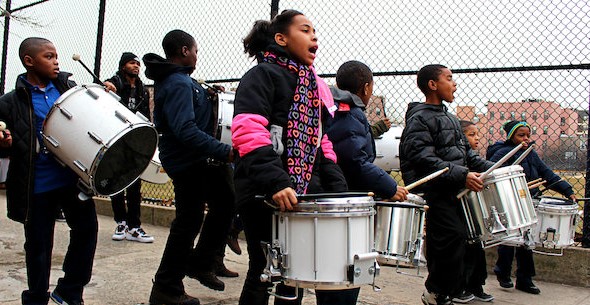
“Gotta go,” God says, and begins to parade down the hall, a whole battery of raucous and enthusiastic drummers. I want to cling or march along, but God waves and shouts, “Baby, open the paint. And even if it gets crazy dark, try to keep the beat.”

Interruptions

“Have you noticed how often you interrupt me?” God asks, annoyed.

My verbal output may have been somewhat one-sided, driven by holiday agitation. I was holding forth about the ways of the world, all things irritating or ignorant, the costs of blind faith, and how positive and upbeat I think others should be. Including God.

“Sorry,” I say. “Go ahead. I’ll try to listen better.”

“Never mind,” God says. “I forgot what I was going to say anyway.”

Unlikely, I think to myself. How could the Living Word forget what she was going to say? But I sit politely as if I believe her, and she sits politely as if she’s not upset. As if she’s not reading my thoughts. As if people in the Ukraine aren’t very, very cold right now. As if people in my own community aren’t planning how to cheat on taxes and take more than their share. As if goodness and honesty and peace might have a chance.

Managing ourselves, three dogs, and four piglets in subzero weather has made everyone snippy. When it’s this cold, all manner of things can go wrong. Yes, I regularly interrupt God and the natural order, but isn’t that the human story? Most of us don’t want to die of exposure, physical or otherwise. We burn fossil fuels and hide among falsehoods and fairytales.

I follow God’s gaze to one of my many disorganized bookshelves. It’s a motley rainbow of words in shiny covers. I love books. I would get up and touch them, but I don’t want to spoil God’s revery. It’s obvious she finds comfort in the books, the words, the great and mighty abstractions contained in those bound and precious editions. I’m glad we have this in common.

“Do you ever interrupt yourself?” I ask God after our shared silence has run its course.

“Oh, yes,” she nods with a sad look. “Many times. It’s always tragic.”

She turns her hands palms up, stares at the scars, and like George Harrison’s guitar, she begins to gently weep. This always makes me cry.

She looks straight at me, wipes away the tears, and drops us into a bittersweet world where true words are like heirloom seeds; planted and watered, converting light to something verdant, innocent, and delicious. No comforting myths. No lies. No interruptions.

I know we cannot stay, but I give thanks before we return to the inescapable veracity of dogs, pigs, and fire. Mulled wine. Good cheer. In the chaos of Christmas, God and I make eye contact, and despite the contradictions, we vow to be respectfully conversant with this fragmented, freezing world.