Walking Meditation

Last night, I tried to calm my restless body by changing my mental focus from doomscrolling to consciously observing each muscle involved in rolling over. Impossible. There are so many intricacies in even such mundane movements that my mind gave up and wandered back to the terrors facing humanity.

At a silent retreat decades ago, I learned about walking meditation. You progress at a snail’s pace, noticing each miniscule dimension of your body moving forward. As the foot comes up, are the calf and quad engaged? Does the foot adjust its angle, ready to be placed forward on the floor? Is the surface level? What are your eyes doing?

Gradually, the lifted foot glides down, settles, and the process shifts to the other side.

Such deliberate awareness requires concentration, patience, and time. And if a novice sees a daddy long-legs climbing up her jeans, her reflexes will override all that consciousness, and the sequence will be blown to smithereens. Trust me on this.

Humans are a bundle of electrical/chemical communication systems, most of which we neither notice nor understand. Our neurotransmitters interact with electrical impulses to give us motion, thoughts, and feelings, some of which are based in reality, some of which are not.

If you imagine a slice of lemon on your tongue, you’ll likely salivate. The salivation is real, but there’s no lemon there. It’s the power of mind over body. But our bodies can send signals that are open to interpretation. The power of body over mind. We’re a jungle of actions, reactions, reasons, biases, and instincts. Though we think we make conscious decisions, somewhere near 95% of the forces that influence what we do, think, and feel are outside our awareness (including the latest evolutionary mutation: algorithms).

“So, am I real?” the Intruder asks in a sly voice.

“You’re a figment. A fragment. An iron fist and a fuzzy notion. There’s definitely something real about you,” I answer, defenses at the ready.

“And do you love me?”

My teeth begin to grind. To love the Other Within runs against the grain of most conscious urges. We’re built to procreate, not sacrifice. We’re a me-first, guilt-ridden species.

“Is that a look of panic on your face?” my Coauthor asks with fake innocence.

I freeze.

“Relax,” She continues. “We’ve written a little Psalm that may help.”

 What you know may not be true.
You see mostly what you want to see.
Insisting that you’re right is wrong.
Choosing to be loving is like sucking lemons.
But the alternatives are worse.
Trust me on this.

God beams and slugs my shoulder. I flinch a little and slug back. We walk.
Closed Captioning

During the witching hour last night, my electric blanket turned itself on and fried me to a crisp. Light from my flaming hair revealed the outline of God burning beside me which provided strange comfort. Over time, I’ve had various vague ideas about the best ways to die. I’d not thought of this one, but it seemed an acceptable alternative. Our charred bodies were soon unrecognizable. It was over.

The enormity of waking has overwhelmed me. I’m the walking dead, moving through my morning chanting please, please, please. I don’t know what I’m asking for, but I’m certain I’m supposed to ask. Being dead absolves the body. Being alive requires fortitude, vision, and help.

One of our chickens lost an eye to a predator, but she’s still laying eggs. The garden is buried in snow, flat and pristine except for the tall dry stalks of late blooming weeds. The exhaustion of autumn always gives these invaders an unfair advantage. Spring will bring renewed energy for the inevitable skirmishes, but there will be no definitive victor. The spoils of war are never what one might imagine.

Since the thousand-year flood two years ago, we monitor the river with new respect. God and I are working steadily on the basement with an eye to evacuation. We’ve moved our vulnerabilities to higher ground, aware of the futility but content to at least be doing something. Doing something. Doing something. I am the walking dead doing something.

God routinely disappears and only explains their whereabouts in languages I do not understand. Multiple translations scroll across the bottom of the screen. I’m forced to suspend my agenda and hold very still as I struggle to grasp the plot of the cosmic drama. I wish God spoke simple English. Then I could do two things at once.

Instead, I must contend with the tongues of angels and demons, the vernacular of eagles and earthworms, the dialects and dialogues of the infinite all rising on waves of unprecedented heat, wrapping the earth in a shroud of utterly brilliant sunsets. Or are they sunrises?

God wears the tattered ozone like a cape and lands gracefully beside me. I am still chanting please, please, please as I accept the bent elbow and march down the aisle toward the edge.

“I hear you,” my Escort whispers, leaning down. “But you might try a thank you now and then.”

The dark and troubled waters below offer no sustaining image, but I don’t need one. I am the walking dead, learning to navigate weightlessness. I am the walking dead, slowly, slowly, slowly letting go. Letting go. Letting it all go.

That Lonesome Valley

One of the harder things about human consciousness is the realization that we are mortal. No one knows exactly how to handle this, but as the generations ahead of us decline and pass, we bear witness, one way or another. Some claim that the last task entrusted to sentient beings is to die well.

My own mom was a fighter. Even though beset by serious medical limitations, she renewed her realtor license in her eightieth year. My dad died when Mom was thirty-nine. She was utterly shattered. She arranged for immediate family to be seated in the back pew at the funeral, and afterwards, she never set foot in the church again. She was done with that version of God, and who can blame her?

“Not me!!” God interjects. “No blame here.”

Even though she unchurched herself, Mom held a steadfast belief that when she died, she would meet my dad in heaven and give him a full account of how she held on to the ranch and finished raising the kids.

I glance at God, sad, proud, and a little embarrassed at the childlike simplicity of her assumptions.

“No worries,” God says gently. “Even if that’s not exactly how things work, I appreciate the ways humans create myths and rituals to find strength and resolve. Your mom’s resilience was epic.”

“Yeah. But remember how she felt about mirrors and getting old? She hated the reflection of her aging face. Really hated it. And it was tough for me, too. I could see what was coming, not only for her, but eventually for me.”

“Oh, I remember,” God nods. “But I’ve noticed you don’t hide from mirrors. In fact, you seem drawn to them.”

“Maybe,” I laugh. “Morbid curiosity.” I lean into my antique trifold mirror, pull my skin back toward my ears, make a goofy face, and add, “Mirrors prove that I’m still here.”

My grin fades as I continue to stare. “But God, I see the etching of the years, I see what my children see, and it breaks my heart. I wish I could protect them.”

“I know. But you can’t. Love isn’t always about protection or denial. Love tells the truth and then offers to help,” God says, as the room floods with mirrors. Every wall is now reflective.

“Like what you’re doing right now?” I ask. “Is this love?”  

I fight the urge to close my eyes and cover my face. Instead, I square my shoulders and press my palm against the cold glass. From deep within, the ancient eyes of God twinkle, and God’s palm meets mine. The glass warms.

The Circle, The Fall, and The Fat-Faced Child

From the perspective of a maggot, a cadaver is not an ending. It’s a feast. But then maggots are a banquet for geckos who are later gobbled up by mice. Laying hens peck mice into bite-sized pieces, and I enjoy chunks of chicken in my stir-fry.

Yeah, yeah. Circle of life and all that.

But are we more than maggot fodder? This has been debated since we invented the language necessary to express the longing and horror the question evokes.

“Of course, you’re more than maggot fodder,” The Ether speaks.

I sigh with relief, but I don’t let my guard down.

“And…?” I ask.

The Ether laughs. “You’ll be gecko excrement as well!”

“And there it is.” I roll my eyes.

“Seriously, honey, you’re not one thing now, and you never will be. The Holy Procession always breaks things down.”

I fight to stay coherent and unbroken in the moment.

The Ether materializes as a fat-faced child. Blond and defiant. I stare at the face. I wonder if it will wrinkle and hollow with age or stay pink and ebullient forever. I wonder if I will get my youthful body back someday.

“You wonder some crazy shit,” God says.

“You would too if you lived here. If you watched the news. If you had an inkling of what it means to deal with a real body.”

“Oh, but I do.”

“No, I live here. I am. And I do. You only pretend.”

The Fat-Faced Child frowns and begins to build a doll house out of Lincoln logs and Legos. “I’m gonna paint this pink and live here,” she says. “You’ll see.”

Her energy could easily swallow me alive. I go to the basement to get paint. Hot pink first. Then lemon yellow, lime green, royal purple, and turquoise. With this pungent, tangible turquoise, we could paint ourselves into the Upper World of the Zuni, and I am filled with joy. I am ready.

“How is this possible?” I ask.

“You have to fall,” she says. “Sometimes hard. Sometimes soft. But you have to let go and fall.”

In front of the doll house, a circle of my dearest friends are singing. Ring around the rosy. Pockets full of posies. Ashes, ashes. We all fall down, and they begin to fall. But The Fat-Faced Child falls first. Even in diminishment and grief, this is something I’ve always known.

  The Fat-Faced Child Falls First

Accusatory cataracts

drop from my eyes

And I realize

The Fat-Faced Child

has always fallen first.

Always suffered most.

Always broken the fall

for the rest of us.

And in the endless ruination,

The Fat-Faced Child

uses all the jagged bones

and tender tissue

to build again.

When You Don’t Have Ruby Red Slippers

“I’m in no shape to make decisions or small talk today,” God said. “So leave me alone.”

He was doing a very bad job of hiding under the daybed. Drawers were askew, and his feet extended past the base like the protruding feet of the wicked witch of the east, but there were no ruby red slippers, and his socks had holes.  It was laughable.

“What’s up?” I asked in the phony, solicitous voice I use to hide disdain for signs of weakness.

“I’m old,” God said.

I stood silent for a minute and then said, “Ah, yeah. So?”

“And you’re older.”

Again, I stood silent. A great sadness twisted his face. The slippage of time thickened the air and dampened the Christmas gifts and wrapping paper strewn around the room. I don’t like this season, but I force myself to make an effort.

“Stop moping,” I said. “You’re ruining things.”

“Not my fault,” God said, and turned his head toward the wall.

“Yes, it is,” I said. “When you see how bad things are and feel sorry for yourself, you swallow entire star systems without realizing it. People go blind. Mold and mildew thrive. There are great displacements and unsettlings, and no one knows which way is up.”

“No one knows that anyway,” God snapped, still quite out of sorts. “Please just leave me alone.”

I shrugged and eased myself out of the holiness.

Clearly, God needed to lick his wounds, but he’s got the entirety of time and space at his disposal. Why hide in the middle of my half-hearted holiday preparations? Why lash out in such a childish way? So I’m older than God? Ha! It’s true that I often feel that way…

“HELP!” God shouted, interrupting my thoughts. “Come back.”

Like a mother whose child calls out in the night, I ran instinctively toward God’s voice.

“It’s too cold in here,” he said. “And too hot. And I can’t see you. I’m afraid.”

My insides clenched and my familiar internal battles flared. He always asks the impossible. The world is so hot and so cold and so afraid, I often back away, hands raised in denial and defeat.

But here’s the worst of it; he backs away with me. He seems to enjoy the surrender. The picnics, the doodles, the badly wrapped second-hand gifts. He joins in the revelry and drinks all the wine. He laughs with his mouth full, and bits of food twinkle in the holiday air like strings of light.

Such intensity, such accompaniment has to be exhausting. Maybe that’s why I find God hiding under the daybed occasionally. I should probably be more patient.

A Few of Our Favorite Things

Me:      Sticks, stones, and silence. Dark beer, mirrors, paint, and blackberries.

(God, you know I’d name you, but you’re not a thing.

You’re a puzzle I will never solve.)

God:    Feathers and fur. Fire and ice. Darkness and light when they shatter.

(I would say sacrifice, but you always get that wrong, so never mind.

It’s a thing, though. I assure you, it’s a thing.)

Me:      Clean floors and bike rides. Threatening skies. Gnarled trees. Honesty.

(I don’t mind a little sacrifice, here and there. It adds texture.

It helps me see you. That might be good.)

God:    Dogs. Horses. Cats. Earthworms. Birds. All birds. I love birds.

Birds eat earthworms. Cats eat birds. It’s all so tragically beautiful.

And chickens eat anything—even weaker chickens.

Me:      Oh my God! Why do you always ruin things?

This isn’t fun. I don’t want to play anymore. You’re disgusting.

(God lets out a loud guffaw. Tears run down the wizened cheeks.)

God:    Bone of my bone. Flesh of my flesh. The earth is my body, broken.

Like I said, you get a lot of things wrong. Especially sacrifice. And loss.

Hunger has a purpose, darling. Your uneasiness is holy.

Me:      If holiness exists, it’s overrated. I don’t want to be holy.

You make me question everything all the time.

So, either it’s all holy or nothing is.

God:    Agreed. Now, let’s get back to our favorite things.

Me:      There’s no going back.

God:    Chubby babies. Comets. Black people swimming in blue water. You.

Our eyes lock. I’m injured. Healed. Hungry and full. Something, nothing, holy, profane, resplendent with promise, soon to die. I throw my arm over God’s burly shoulder. We walk upright, eyes forward, leaning into the wind. A lot of our favorite things are blowing by.

Me:      Not a big fan of wind.

God:    Not sure which things to chase after?

Me:      Exactly.

Thin Ice

My religious friends keep warning me that God and I are skating on thin ice. Especially when God names himself Prostitute or Fat Boy. Especially when she manifests as many, and the guarantees are few. We shrug. It’s what we do.

A man named Mick once told me that our postings make him laugh until he cries. He was puzzled as to why. He reads them every Sunday in an alley where an apple tree drips fruit to no avail, and he sips a yellow beer for communion.

The peyote that is God brings paralysis. The river that is God brings release. It’s the author God who writes you using metaphor and mint, drawing symbols in the sand for your protection, throwing ashes to the wind to guide you home.

We are mostly made of water: a fluid interaction between energy and thirst, a form of transportation, a sacrificial lamb. A sheer veneer of ice embodies danger with a certain kind of grace. But the pace of truth exhausts me, and I’m tempted to give up.

God removes his mittens. Offers me bare hands. The crowd of God applauds as I stand on shaky skates and push off using boulders and other people’s dreams. The sheen of God beneath me, the sky of God above, I am hypothermic mercy and cold, defiant love.

My remaining bones grow brittle with God’s blessing. I no longer take the time to make my bed. God shakes her head. When salt dissolves in water, ions form electrons, positively charged. With saline in my veins, the poison makes a promise that I’ll live another day.

Fat Boy tries to juggle. My Prostitute wears pink. She says, “Look at me, I’m funny, and when I’m cold, I’m slick.” But when I look, it’s only water and a wiser way to die. There’s thunder in the distance. And like Mick, I start to laugh. Until I cry.

Stung

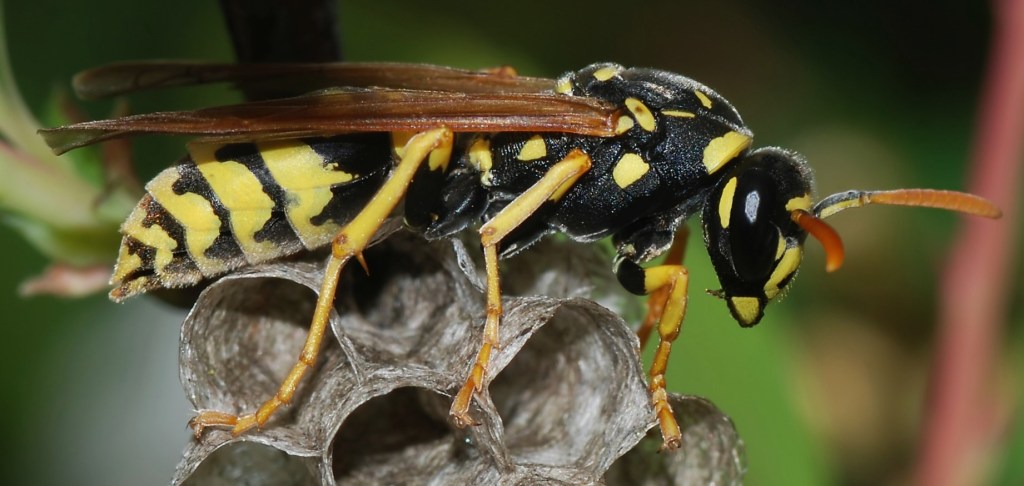
About an hour ago, I opened a shed door oblivious to the wasp nest this disturbed. The response was swift and precise. My right nostril exploded in pain, and I went a little crazy, swatting my own nose, jumping around, yelling, and running. My eyes watered, my face swelled, and a sneezing fit hit me.

I am now in recovery, subdued and holding still to keep the baking soda and Benadryl cream in place. God saw the whole thing. He raced to the house with me and is sitting nearby, but I’m not interested in chatting with anyone remotely responsible for wasps.

“Not fair,” God says.

“Whatever,” I say. “Who in their right mind would let a creature like that evolve?”

“Why do you keep assuming I have a right mind?”

“Clearly, you don’t. How about I stop thinking you’re responsible for anything?”

“That would be an improvement.”

We sit in silence. Me, nursing the sense of betrayal I feel when things go wrong, or I get hurt. God, sitting by. Just sitting by.

In a crisis, does it matter if there’s a God sitting by? Especially one who absolves itself of pestilence, pettiness, and pain? I don’t know.

God continues to sit calmly while I-don’t-knowness fills the room.

“In no way do I absolve myself,” God says. “But don’t worry. You cannot believe me into existence, and unbelief doesn’t get rid of me.”

“Why are you telling me this?” I ask, still feeling sorry for myself.

“You have a tendency to parse and attribute agency and blame. The greater Whole doesn’t come apart. There’s a reason for my name.”

“Which one?” I ask, but I know the answer. God’s first name is I AM. Simple. Overly inclusive, present tense, unequivocal, and far beyond interference or comprehension. It’s the big I AM, sitting by.

“Not sitting by,” God says. “Sitting with. Sometimes, sitting within.”

“The wasp is dead,” I say. “And I’m going to kill the rest of them.”

“I totally understand,” God says. “And for what it’s worth, I believe in you.”

“Well, that might be a badly misplaced belief.”

“I know. But it’s what I do.”

I put on layers of impenetrable clothing, grab the wasp spray, and prepare to do battle. I wish manna would drop from heaven and feed the hungry. I wish a great wind would arise to cleanse and save the earth. I wish self-absorbed liars would be seen for the vicious creatures they are. I wish the wasps would disappear like locusts at the end of a plague, but I know they won’t. Innocent others will be going through that door. Like Bonhoeffer plotting to kill Hitler, I am deeply conflicted, but it’s clear: This one’s up to me.

How I Hang On

The strands of God I braid into lifelines are made of rags, dried roots, aches, pains, snake skins, and sun. My images of God are stained by blood and the poison leaves of rhubarb, crushed, boiled, dried, and painted on muslin shipped from India, the cloth of royalty, spun with pride by beautiful brown people starving for a chance at life.

There are those who keep their meditations and rituals tight and tidy, like spiritual minimalists. They expect God to do the same. Variations on good and evil are not tolerated because of the mess that creates. But I can absolutely assure you, attempts to keep God simple and sorted out never work.

God appears or withdraws without warning. God ignores, intrudes, laughs, cries, gallops away, swims back, soars, grovels, snorts, pouts, lurks, flaps, crawls, and overstays any kind of real or imagined welcome. I lament the naïve worship of false saviors and the primitive ways we think we can protect ourselves.

“And what about plastic?” God asks, joining my foray into complexities and despair. “Tupperware was once regarded as a miracle.” God takes the shape of a vacuum cleaner, then a fridge; God infuses a book of photos of my chemo baldness and the breastless beauty of my friend’s short-term victory over cancer. God is flippant and fancy, playing the fool to cheer me up.

“Be ye still, God,” I say to all the moving pieces.

“Good one,” God laughs and pulls me onto the trampoline. God is protective, warning those close to me that I can’t be bounced as high anymore. Even though this signals the condition of my bones, I am comforted by the attention.

“I know you pretty well,” God says, watching me jump. “I wish you’d stay off ladders.”

“Oh, take a hike,” I say.

 “Good idea,” God says. And away we go.

This is the Big Truth. We can neither contain nor control God: not in rituals, not in words, not in ideas (simple or otherwise), not in rules, not in promises, not in skylines or photos—even from the Hubble telescope. God refuses to be shaken down, defined, spoken for, or reduced. Thus, it is wise to entertain sorrow, welcome the stranger, love the enemy, and find strength in the profound, complex joy that is life itself. God’s blood is the blood we bleed. It is on loan from eternity.

Outsourcing

People who insist on naming God after themselves irritate me. Same goes for people who display religious icons, symbols, carvings, or statues. Wise writers far before my time called these “graven images” (not a compliment) and indicated Yahweh (not their real name) isn’t thrilled with the idea of being portrayed in such limited, distorted ways. We invent names we can pronounce and create images we can use for signaling, comfort, or torture. The names and images come with suggested donations and membership guarantees. The in-crowd will be safe. The out-crowd will go to hell.

For convenience, I call this massive, creative, omnipotent bundle of compassion, wisdom, and potentiality “God.” Short, crisp, easy to spell. But wildly inaccurate, right God?

God slides into view, a pile of sticks, a taste of tea, an imagined joke, a yoga stretch, safety. An act of kindness, vivid forest green washing through a dream that would otherwise be drab. God isn’t shy or without preferences, but neither is God insistent. I wait.

“Ocean,” God says. “Egg of magpie. Eye of newt. Opposable thumbs. Lace. Elephants. Lilies. Those who are heavy-laden. Microscope, telescope, telltale stains on a well-worn soul. Yellow. Something gleaming on the far horizon. Mercy. Hallucinations, hallelujahs, hallways leading nowhere. Everywhere.”

“Stop!” I yell. “What in the world do you mean?

God laughs. “Not sure what you mean by “world.” Remember that just beyond your definitions, a little part of me is waiting for you. But no hurry. We have forever.”

“Blue,” I said. “Warm quilts, icy beer. Old friends. Leg of lamb, bark of dog, things that frighten me. Death. Justice. Slow arrivals. Snow falling innocent and pure. The brave song of a single child. A cracked bell ringing.” I stop and wink. “Am I getting the hang of it?”

God loves to play, but sometimes the rules of the game are hazy. The fire crackles and converts the dead apple tree to gas and soot. The temperature rises. A tiny fraction of feather escapes from a small tear in my down vest and floats on currents invisible to my naked eye. It appears to defy gravity in favor of other forces as it floats here and there. Or maybe it isn’t defiance. Maybe it’s a complex expression of faith: gravity, warm air, cool air, breath, the earth circling a star we’ve named the sun.

The wisp of feather finally settles, God fades, and I know that someday I will be free and undefined. But for now, I make up rules that suit me and name things that actually have no name.