The Ducks

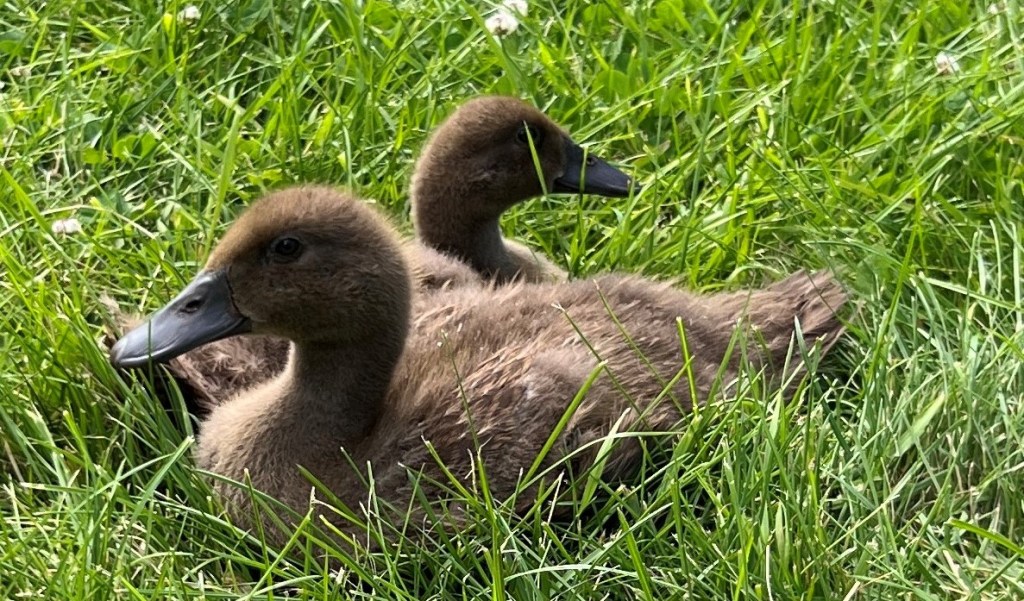
The ducklings escaped. We were gone and it was raining. Most likely, they waddled to the river and floated downstream. They may not have taken their size into account. They were too small to buck the current and make their way back to their shelter and the humans who dug them tasty worms. With their underdeveloped wings, flying home would not be an option. They launched into the wild unknown, and they will not be returning.

Hermann Hesse wrote, “The bird fights its way out of the egg. The egg is the world. Who would be born must first destroy a world. The bird flies to God.” Hesse went on to name God Abraxas. God is always named or unnamed according to our needs and agendas. For my purposes today, I’ll call them Water.

Here’s why: Without water, we would not exist. But I don’t worship water. It neither wants nor appreciates worship. When you’re that powerful, you can afford to be humble. Perhaps you don’t even mind being polluted. Hidden. Transformed. Evaporated.  To you, the flow of suffering is all in a day’s work.

If you are God, you just are.

Death has meaning only for mortals. We cling to our shells and boundaries even as they thin and weaken. It’s unlikely that anyone enjoys being pushed out of the womb, and when the time comes, the work of breaking the shell from within appears to be exhausting and perilous. But inevitable.

So, sure. Run to the river, you traitorous ducks. Your easy food will go to the chickens. I’ll siphon the poopy water out of your plastic pool, and your nice straw bedding will become mulch. I don’t mind transitions. Or aging. Or abandonment. Not at all. Run, ducks, run.

God is chuckling from the corner. “Yes, indeed! Denial is always an option. Consciousness is as hard to handle as birthing.”

“I have no idea what you’re talking about,” I say, even as I move closer to the banks of the river. The current is swift. Water bursts into vapor as it hits stone, and the ancestors shimmer in the misty veil.

My mind is a whirlpool of images. Ice cracks across the lakes of winter, and steam rises from the center of the fractures in Yellowstone Park. Earthquakes are an ever-present danger. The risk of liquefaction looms on the crest of the clay-footed hills. Our bodies are more than half water, and the rain has begun to fall again. I am too weak to swim upstream.

“Just get in the boat.” God cuts the engine and pats the cushioned seat nearby. “You make us very tired some days.”

Angles of Repose and Other Non Sequiturs

What do you suppose the angle of repose would be for those pyramids of dead bodies we’ve seen in the news over the years? (The angle of repose is the steepest angle at which a sloping surface formed of a particular loose material is stable.)

Syria. Tuam. Viet Nam. The Sudan. Gaza. The victims of Covid in Brazil. In these places, they would know.

Mass graves are frowned upon here in our modern and stolen country, so most of us will not witness haphazard heaps of people firsthand. We have refrigeration and waiting lists. We prefer to deport or enslave rather than outright slaughter.

Most mornings, I either cry or paint something. Some days, it’s yellow. Others, dark blue. Or a swirling medley of colors interacting aggressively with each other. Sometimes, I glue broken bits of mirror into new shapes. It can get messy.

“What would you like to cover today?” I ask Royal Blue. Before Royal Blue can respond, Blood Red shoves Royal Blue aside, and a firing squad tosses the sanctity of life into the air and takes aim.

“Knock it off right now,” I yell at Blood Red. “I MEAN IT.”

Blood Red shrugs. “Fine. But you know I’ll be back.”

Something ends. Something begins. Breakage and destruction are part of rebirth. A long time ago, at the end of an especially magical youth camp, I considered smashing my guitar so I could give everyone a splinter. I had the odd notion that this would keep us together. But smashing my guitar seemed a bit extreme. Instead, I pulled apart a pheasant feather that had traveled in my guitar case for years and handed the astonished circle bits of pheasant down.

 Now, most days, I wonder if I have something I could dismember to express my outrage and despair. To break hope open. To keep us together.

“Heroics come in many guises,” the Paint Brush whispers. “You do you. No need to come apart just yet.”

“That’s nice of you to say, Paint Brush,” I shake my head. “But I’m no longer flexible enough to kick myself in the butt.”

“Who cares?” Paint Brush scoffs. “Bruises aren’t the best motivators. How about a cookie?”

“Not hungry,” I mumble.

“Oh, honey,” Paint Brush says gently. “You have no idea how hungry you are.”

Friendly Fire

Each moment is a drink of water,
a green ball bouncing down
the gravel road, a quandary as simple

as kindness, the idea of more stars.
There’s nothing to fear
but the snapping of branches in the wind.

To live as a split infinitive is a sign of courage,
a matter of style. Nothing is absolute.
To live now, half-formed,

circling like a sharp-eyed hawk
is to accept an unnamed infinity
and a sense of chronic dislocation.

We are pages in a book of promises,
lies that come true, wishes that don’t,
dawns that arrive, nights that fall.

Give me your time. I’ll give you mine.
After the danger of frost has passed
we’ll plant tomatoes and roses and basil

and go through the motions of poetry.
As the meaning soaks in we will succumb
to the vast and friendly fires of the sun.

Go Gently

The world is filled with natural stompers. This is not destination dependent. No matter where the stompers think they’re going, their determined stride sends shock waves up their legs and into their surroundings. I happen to know that it’s possible to override the habitual stomp and consciously place one foot in front of the other. But beware: The resulting quiet can be unnerving. The rush to nowhere is noisy but comforting.

And why take the risk of treading lightly anyway? The Rain falls on the just and the unjust, the stompers and the dawdlers, the mindful and the misguided. The Rain falls without resistance or judgment. It clears the air for both rich and poor. On the upturned faces of lovers, the Rain falls with joy.

A beloved poet once insisted we should rage against the dying of the light, but I say to myself don’t hide from the darkening sky. Seek out the eye of the storm and walk upright in your bones, bold and welcoming. But don’t stomp. Go gently. Go with such grace that even your precariously stacked stones will start to sing, and the dry, angular roots you’ve gathered will dance like nymphs around the open tombs.

But I’m never sure of the way. There are so many trails and byways, so many routes home. I tell myself there’s no harm in wandering and no singular way to be redeemed.

But the Rain begs to differ. Surrender, she whispers. Break. Fall apart, tender. If you still have yarn or wire, you can knit yourself back together for a spell. But remember, you have gills and wings. You are the blind man tapping, the enthroned queen, and the missed opportunity. You are your own final act. You are the drunk driving victim, and you were driving the car.

I cannot accept that, I say to the Rain.

Oh, but you can, the Rain murmurs as she slides down the sides of my soul.

I admit that there are times I’m tempted to march out there and shake my fist at the distant thunder, but my boots would surely slip on the slick surfaces and even these well-formed bones would snap.

There is a certain hosanna available to those who fold their umbrellas and accept whatever comes. The relentless downpour will baptize everyone to the point of drowning, but as the flood recedes, that which remains will be a sunlit robin patiently awaiting a worm.

Flags

As consciousness ascends
the grin of the devil lingers.
My down comforter and fluffy pillows
smell like smoke.

I had intended to repair the tattered flag in the corner
but I see now that it cloaks the evil twins:
Blind allegiance and false promises.
Riches are blinders, not blessings.

A small plane drones through the dawn’s early light
strewing herds of animals hither and yon
for the pleasure of predators at the top of the chain.

“This is better than husking corn,” one of them says.

The corpses sanctify the trampled sod, now saturated with blood.
The resulting meals may justify giving thanks
but the trophies are pure vanity.

War is the thing to prepare for,
bodies the thing required.

Not this pig,” wrote the poet
before passing to the place of all poems.
We nod to the sentiment, slicing ham
and chopping bacon bits for the salad.

Bless us, oh lord, and these thy gifts…
runs on automatic replay
as I watch people refuse to sign the petition
for reproductive rights.

I’m not fooled by false equivalencies. I sign.

To live is brief. To die is certain.
This lonely insight flays the rays of morning
into the arc of promised justice
I barely believe in anymore.

“Wake up, little one. You have Now,” the Rainbow says.
“And the gossamer of Indigo.”

“But Indigo has begun to unravel,” I protest.
“And I’ve lived too long as a parable to engage with Now.”

Silence.

I polish surfaces in the kitchen
hoping for an accurate reflection.
But the granite is forest green;
the dishwater, troubled; the beer, murky.

The Distortion laughing up at me is God.

“I hope you didn’t pull yourself together on my account,” I say.

“Of course I did,” the Distortion answers.
“No one can live on Indigo alone.”

Closed Captioning

During the witching hour last night, my electric blanket turned itself on and fried me to a crisp. Light from my flaming hair revealed the outline of God burning beside me which provided strange comfort. Over time, I’ve had various vague ideas about the best ways to die. I’d not thought of this one, but it seemed an acceptable alternative. Our charred bodies were soon unrecognizable. It was over.

The enormity of waking has overwhelmed me. I’m the walking dead, moving through my morning chanting please, please, please. I don’t know what I’m asking for, but I’m certain I’m supposed to ask. Being dead absolves the body. Being alive requires fortitude, vision, and help.

One of our chickens lost an eye to a predator, but she’s still laying eggs. The garden is buried in snow, flat and pristine except for the tall dry stalks of late blooming weeds. The exhaustion of autumn always gives these invaders an unfair advantage. Spring will bring renewed energy for the inevitable skirmishes, but there will be no definitive victor. The spoils of war are never what one might imagine.

Since the thousand-year flood two years ago, we monitor the river with new respect. God and I are working steadily on the basement with an eye to evacuation. We’ve moved our vulnerabilities to higher ground, aware of the futility but content to at least be doing something. Doing something. Doing something. I am the walking dead doing something.

God routinely disappears and only explains their whereabouts in languages I do not understand. Multiple translations scroll across the bottom of the screen. I’m forced to suspend my agenda and hold very still as I struggle to grasp the plot of the cosmic drama. I wish God spoke simple English. Then I could do two things at once.

Instead, I must contend with the tongues of angels and demons, the vernacular of eagles and earthworms, the dialects and dialogues of the infinite all rising on waves of unprecedented heat, wrapping the earth in a shroud of utterly brilliant sunsets. Or are they sunrises?

God wears the tattered ozone like a cape and lands gracefully beside me. I am still chanting please, please, please as I accept the bent elbow and march down the aisle toward the edge.

“I hear you,” my Escort whispers, leaning down. “But you might try a thank you now and then.”

The dark and troubled waters below offer no sustaining image, but I don’t need one. I am the walking dead, learning to navigate weightlessness. I am the walking dead, slowly, slowly, slowly letting go. Letting go. Letting it all go.

That Lonesome Valley

One of the harder things about human consciousness is the realization that we are mortal. No one knows exactly how to handle this, but as the generations ahead of us decline and pass, we bear witness, one way or another. Some claim that the last task entrusted to sentient beings is to die well.

My own mom was a fighter. Even though beset by serious medical limitations, she renewed her realtor license in her eightieth year. My dad died when Mom was thirty-nine. She was utterly shattered. She arranged for immediate family to be seated in the back pew at the funeral, and afterwards, she never set foot in the church again. She was done with that version of God, and who can blame her?

“Not me!!” God interjects. “No blame here.”

Even though she unchurched herself, Mom held a steadfast belief that when she died, she would meet my dad in heaven and give him a full account of how she held on to the ranch and finished raising the kids.

I glance at God, sad, proud, and a little embarrassed at the childlike simplicity of her assumptions.

“No worries,” God says gently. “Even if that’s not exactly how things work, I appreciate the ways humans create myths and rituals to find strength and resolve. Your mom’s resilience was epic.”

“Yeah. But remember how she felt about mirrors and getting old? She hated the reflection of her aging face. Really hated it. And it was tough for me, too. I could see what was coming, not only for her, but eventually for me.”

“Oh, I remember,” God nods. “But I’ve noticed you don’t hide from mirrors. In fact, you seem drawn to them.”

“Maybe,” I laugh. “Morbid curiosity.” I lean into my antique trifold mirror, pull my skin back toward my ears, make a goofy face, and add, “Mirrors prove that I’m still here.”

My grin fades as I continue to stare. “But God, I see the etching of the years, I see what my children see, and it breaks my heart. I wish I could protect them.”

“I know. But you can’t. Love isn’t always about protection or denial. Love tells the truth and then offers to help,” God says, as the room floods with mirrors. Every wall is now reflective.

“Like what you’re doing right now?” I ask. “Is this love?”  

I fight the urge to close my eyes and cover my face. Instead, I square my shoulders and press my palm against the cold glass. From deep within, the ancient eyes of God twinkle, and God’s palm meets mine. The glass warms.

The Circle, The Fall, and The Fat-Faced Child

From the perspective of a maggot, a cadaver is not an ending. It’s a feast. But then maggots are a banquet for geckos who are later gobbled up by mice. Laying hens peck mice into bite-sized pieces, and I enjoy chunks of chicken in my stir-fry.

Yeah, yeah. Circle of life and all that.

But are we more than maggot fodder? This has been debated since we invented the language necessary to express the longing and horror the question evokes.

“Of course, you’re more than maggot fodder,” The Ether speaks.

I sigh with relief, but I don’t let my guard down.

“And…?” I ask.

The Ether laughs. “You’ll be gecko excrement as well!”

“And there it is.” I roll my eyes.

“Seriously, honey, you’re not one thing now, and you never will be. The Holy Procession always breaks things down.”

I fight to stay coherent and unbroken in the moment.

The Ether materializes as a fat-faced child. Blond and defiant. I stare at the face. I wonder if it will wrinkle and hollow with age or stay pink and ebullient forever. I wonder if I will get my youthful body back someday.

“You wonder some crazy shit,” God says.

“You would too if you lived here. If you watched the news. If you had an inkling of what it means to deal with a real body.”

“Oh, but I do.”

“No, I live here. I am. And I do. You only pretend.”

The Fat-Faced Child frowns and begins to build a doll house out of Lincoln logs and Legos. “I’m gonna paint this pink and live here,” she says. “You’ll see.”

Her energy could easily swallow me alive. I go to the basement to get paint. Hot pink first. Then lemon yellow, lime green, royal purple, and turquoise. With this pungent, tangible turquoise, we could paint ourselves into the Upper World of the Zuni, and I am filled with joy. I am ready.

“How is this possible?” I ask.

“You have to fall,” she says. “Sometimes hard. Sometimes soft. But you have to let go and fall.”

In front of the doll house, a circle of my dearest friends are singing. Ring around the rosy. Pockets full of posies. Ashes, ashes. We all fall down, and they begin to fall. But The Fat-Faced Child falls first. Even in diminishment and grief, this is something I’ve always known.

  The Fat-Faced Child Falls First

Accusatory cataracts

drop from my eyes

And I realize

The Fat-Faced Child

has always fallen first.

Always suffered most.

Always broken the fall

for the rest of us.

And in the endless ruination,

The Fat-Faced Child

uses all the jagged bones

and tender tissue

to build again.

Book Arrives

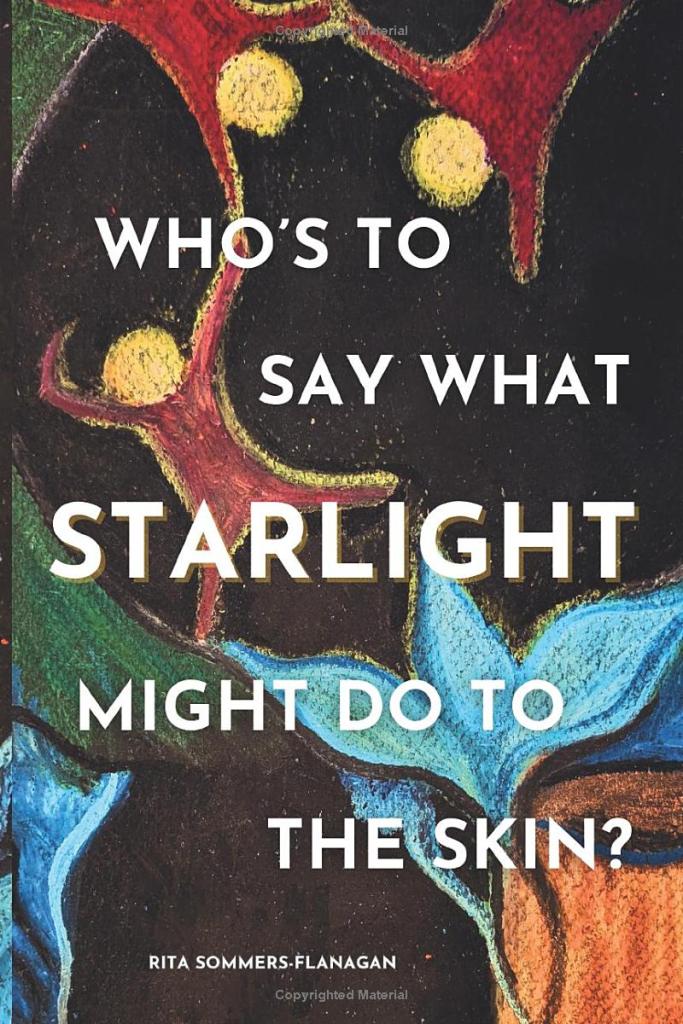
“Well, well, well. What have we here?” The snotty little god that lives in my ego held up a copy of the first volume of Godblogs. I tried to snatch it away.

“What’s with this?” She pointed to the back cover. “OMG. Did you bribe these amazing writers or just make these accolades up? Here’s what I’d say. Sanctimonious, solipsistic drivel. But never mind. No one reads the back anyway.”

I covered my ears.

“Why the cheap-looking shiny cover? The missing page numbers? The sketches seem a little blurry. Did you scan them yourself?”

I rolled my eyes.

“Why’d you publish Print-on-Demand from the exploitive Behemoth of Online Indulgences? Probably packaged by starving children soon to die of climate change. No one will appreciate having to order this.”

I shrugged.

“Sure. Roll your eyes, cover your ears, shrug me off. You’re a needy, cloying, backstage shadow. You’re pathetic.”

The barrage was starting to hurt. I curled fetal.

“SHOO! ENOUGH!” Big God arrived, waving a flyswatter. “She gets up every morning, eats breakfast, and we hang out. I dance around in her head, which gets pretty weird, but I like her reports of these encounters. Sometimes, I let her see through the cracks.”

“Fool,” little god muttered. She shot me the evil eye and faded away.

“Thanks,” I said to Big God. “But honestly, is it worth it?”

Big God winked and curtsied. “May I have this dance?”

I looked away. Our morning dances range from raves to tangos, waltzes to Irish jigs, macarena to ballroom. In the background, ranch hands do the two-step. Rappers grab their crotches. Skeletons rattle their bones. I struggle with the beat in the Circle Dance, and I wouldn’t dream of trying to fancy dance. Or would I?

“Well, the book is a little flawed,” Big God said, pulling me to my feet. “But I don’t mind. The next volume might be better. Formatting is the shits.”

“We don’t talk like that in our family,” I said, arms crossed.

“Damn right!” Big God laughed. “Honey, you can claim whatever nonsense you’d like. I know what’s in your heart. It’s a little flawed, too. But like I said, I don’t mind.”

A fiery string of forbidden expletives leapt to mind. Big Ass God should not make fun of me or poke the hell out of my fucking defenses or shine a shitty light on my pissant denials.

“I repeat, may I have this dance?” Big God was laughing out loud.

“Fine,” I mumbled. Then mustering a scrap of dignity, I added. “Just don’t step on my toes.”

“I can’t help it,” Big God said, still chuckling. “Sometimes, you’re all toes.”

Would You Like Me Better as a Bird?

Photo Credit: Scott Wolff

Sometimes God could try to be a little nicer. More fully present. Sure, there are days when we get along fine, but other days God goes silent, and I feel like the world is all my fault. For-profit prisons. Liars worshipped. Migrants capsized. Socialism demonized. Women as chattel and baby machines. The earth abused for our comfort.

On these days, I stomp, kick, and scream. I don my self-righteous armor, mount my trusty steed, and aim my lance at the nearest dark-web, conspiracy-theory, Fox-watching neighbor. This only happens in my head, but even so, I’m surly and unpleasant. Which is ironic since it likely reduces God’s motivation to stop by.

Then I notice the birds. The spectacular seed-eating bug-eating preening singing chirping flocking soaring birds. They are so present, so varied, so temporary. I see God letting them hop on her chest, giggling because it tickles. I see God lining their nests with sacred down. I see God in the lift of their wings. I see God dangling from their beaks. Their blithe innocence is sleek and beautiful.

Even in my ragged unbelief, in my sad and porous bones, I know that no sparrow falls alone. The hairs on my head, the lilies and dandelions, the war-ravaged children, the unsheltered, unloved, unknown. The conscripted. The billions unwillingly born. We’ve all been absorbed in the ocean of Knownness. Swelling buds, the receding tide: illusions of the highest order. We are figments of God’s imagination, players in a dream dreamed by God. I often think I want to free myself, but it seems I have no wings.

Is this my fatal flaw? Is this why I get mired in unlove?

Would you love me more if I could fly? I fling the question into the void, expecting only an echo back, but the Void quickens, and laughter cascades down like lava, vivid orange and dangerous.

“Oh, little fool,” the Void says. “You know I love you as much as you’ll allow.”

I tear up. There is a long, pregnant pause. Then the Void whispers, “And baby, you may not remember, but you have always known how to fly.”

This should be good news, but it frightens me.

I consider the wings of the morning and the skeletal lightness of being while young robins jump around under the lilacs to gain the strength they need to fly. Malignant tendrils of greed give way to the released and rising outbreath of the dead. The Void is right. I have always known how to fly.