A Rose by Any Other Name

Sometimes, it’s easier if I don’t call it God. I call it good haircut. I call it washed dishes. Three Macintosh apples on a spindly tree. I call it undisplacement, deep sleep, minty water, solved problem, kind gesture, and silence. I call it insight. Green light. Resolution. Red light. Arthritis. Absolution. Glimmers of compassion, splinters of life, and unwelcome but comforting absolutes. Containment.

The larger sky is impossible to grasp in its entirety, and the names we give the constellations are revealing and projective. The vertigo inducing stomach turning mind exploding body shrinking cosmos intoxicates and decimates.

It’s all so nothing and so everything. Time is a bioluminescent pebble that burns through the palm of my hand, and briefly—oh so briefly–illuminates the steps ahead.

The hollyhocks have outdone themselves this year, and the sunflowers are outrageous. Last year’s seeds, woven into a rowdy celebration of soil, rain, and light. A summer soiree. I slip in surreptitiously. There are earwigs, slugs, wasps, and other unsavory characters among the invited guests.

The sting of consciousness is unmistakably God. The cries of the cranes are God. The rich organic matter is God. The path I use to get away is God. The offer to come back is God. But most days, it’s easier to call it something else.

 “I don’t mind at all,” God assures me. And assures me. And assures me. But I am not assured. Chronic doubt, the evening news, a sudden downpour, unrelenting hunger, fire, suffering, and war—these all complicate what could be simple. Between Alpha and Omega there’s an alphabet with gaping holes and identifiable threats.

And yet.

The day we once called tomorrow has arrived and desperately needs attention. Shall we call it Now? At the subatomic level, there’s an unnamed unity. If we call it love, we might have another chance.

The Ever-presence knows how hard we try to make it fit into our calendars and fears, our agendas and excuses. It flits among the fragments and festivities. It blooms and goes to seed. A circular salvation forms like beads of dew, and without our even asking, it forgives. And forgives. And forgives.

I found a ripe tomato hidden in the weeds, round and red as blood.  

“Help yourself,” God said. And I did.

Apophatic

This morning, it is my intention to ask for Nothing. Admittedly, I’m not entirely sincere. Someday, maybe. Deep in my soul, I suspect the greatest gift of all is Nothing, but Something is far easier.

Consciously or not, every living being begs, demands, or fights for something: Continued life. Sustenance. Shelter. Justice. Revenge. The right lover. Riches, recognition, health, a big win. And when the lost coin is found, the cancer recedes, there is rejoicing, and God is declared good.

But when the earth quakes or the bomb drops, the rivers flood or starvation takes another child, I see it is better to ask for Nothing. What do we say to the team that didn’t win? To the one not found? To the destitute scrambling for crumbs falling from the tables of the enormously wealthy? To the planet shrugging us off with great loss and pain?

“Are you asking me?” God’s steamy voice rises majestic from the compost pile where microbes are hard at work. Like a startled deer, I run for the hills. God runs alongside, tossing shiny bits of wisdom behind us so I can find my way back when the panic subsides.

At the summit, I collapse on lichen covered sandstone. There is nowhere left to run. The view is spectacular. God has spread itself across the face of the dying earth. Eternal, resilient, generous. I point out the gully where I hope to be buried. God laughs.

“All creation is a churning tomb,” the formless God says. “From whence you will reappear.”

“Are you Nothing or Everything?” I lay back and stare straight up, deflecting from the image of my resurrection as nutrients and organic matter.

“Yes,” answers the Sky. “And so are you.”

I shake my head but God is adamant. “You’re the performance and the applause, achievement and failure, pride and shame. You’re the darkness sacrificed to define light, and you’re the light that leaps into darkness, knowing it will not survive.”

“Sucked in by a black hole?” I ask. “Gone forever?”

God smiles. “Something like that. But not quite. You understand that I’m the place where light goes to rest, right?”

“No,” I say. “I don’t really understand that.”

I pull what’s left of myself together, move toward the day, and instead of Nothing, I ask for very little as I settle into the Unsettled Place of the Holy Dialectic. It isn’t all that comfortable, but I prefer it to the self-righteous mirage of certainty cloaking the willfully deluded, the terrified, and the cruel.

“I like what you’ve done with the place,” God says. “Suits us just fine for now.”

What Makes God Sick

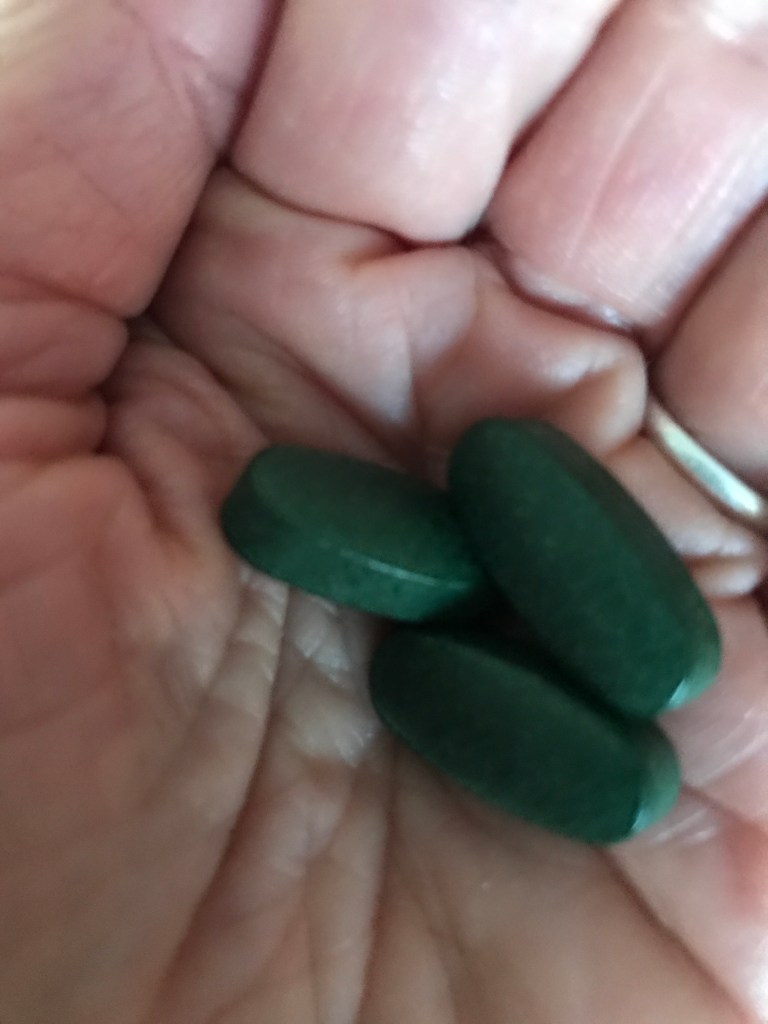
I sat down in my comfy place this morning to chat with God, but as we settled in, I noticed I’d left the kitchen lights on. I sighed, glanced at God, and went to turn them off. But before I got to the switch, there on the cluttered counter, I noticed the free sample of vitamins from my shopping trip yesterday, so I found the scissors, opened the packet, and spilled three extra-large tablets into my hand–dense, alfalfa green. The morning had been filled with horrifying images and tedious demands–and here were three ridiculously green promises of health and vitality. I laughed out loud, warmed some tea, brought the magic pills back to the couch, put my feet up on the big coffee table, turned to show God my stash…and of course, noticed the kitchen lights were still on.

I grimaced.

“What?” God asked, as I shook my head. I reached for a vitamin and swallowed it down, willing the vibrant green to restore my memory, increase my mindfulness, and make me whole, young, and beautiful. God chuckled, but she didn’t look well.

“I’ll take one of those,” God said, reaching toward me.

“Sorry,” I said. “I’m not sharing. They might be my last hope. Besides, you can just blink yourself to beauty and youth. You don’t need alfalfa.”

“True,” God said. “You’ve got a point, there. But you don’t need it either.”

I suspected I knew what God meant, but I didn’t ask. I focused on digesting the vitamin, trying to detach from the outcomes I long for; God focused on digesting whole galaxies of compost, broken people, collusion, trashed planets, and collateral damage—byproducts of wrongheaded consciousness, fear, arrogance, and hatred.

I looked straight at God. “How can you stand to eat that stuff?” I asked. “I mean, I’m grateful, but I worry there’ll come a day you can’t handle one more bite, and your body will explode, and that will be that. We’ll be bits of God-vomit on the cosmic wall.”

“Gross,” God said, making a classic adolescent face. “That’s disgusting.”

“I know,” I said, pleased with myself. It’s not easy to get God to make that face. To witness the Eternal Vulnerability openly expressed. Such moments are vast and holy. Hard to handle.

I don’t fall on my knees. I’ve tried that. It doesn’t work. Instead, I fall on my words, circling myself with images and explanations, searching for an elaborate way out. I finally fall silent, but not before I whisper, “You win.” I hand over the remaining vitamins, go back to the kitchen to get a cold cloth for God’s sweaty head, and this time, I turn out the lights.