Seeing

Once in a while, the dead ask to borrow my eyes, and I almost always welcome them in. Sure, it can be sad and a little frightening, but it’s the least I can do. There’s nothing like the vision enjoyed by the living, and for the living, a briefly expanded view, though jarring, has its benefits.

When the dearly departed share my visual field, unsullied gratitude mingles with that vague longing triggered by the waning of summer.

My dead enjoy viewing fertile fields, mountain peaks, city streets, and tall trees. Some are in awe of babies, but others would rather watch a good football game, especially if their former favorites are playing.

You may wonder how this works. It’s not at all like being possessed. There are no ghosts.

When I feel the light touch of a soul on my shoulder, I tilt my head ever so slightly and nod. The cataracts of being alive drop away, and the focus becomes eternal. It’s incredible. But such co-mingling must always be consensual.

So, I’m writing to ask a favor. When the time comes, would you consider loaning me a glance at the sunflowers and the cold, clear sky at night? Could I take a quick look at how the planet is doing from your preferred elevation?

In my experience, the dead are polite and cognizant of the demands of being alive. If you agree to my request, I’ll strive to be the same. True, in this life, I can be demanding, selfish, pigheaded, and insensitive. I suspect most of this will drop away as my body rejoins its origins. It is my intention to be thoroughly kind.

And if you want to follow my example and make similar requests while you still can, be my guest. No pressure, though. There are abundant alternatives.

Older souls often borrow the eyes of donkeys,
kittens, chickens, lions, puppies, bison, eagles,
and even the occasional snake or bearded dragon.

The dead frolic in memories
and other succulent fictions.
They are and they aren’t.
And they don’t seem to mind
one way or the other.

Even though I’m still temporarily alive, some mornings I touch the Shoulder of the Almighty, and she nods.

Goldfinches glow.
Dust and ash sparkle.
Gravity lifts.

We survey the rising hatreds,
toeholds of courage,
glimmers of benevolence,
and black holes of despair.

We stare into infinity, watching small endings and fragmented resurrections while the raspberries ripen, and a mournful dog howls in the distance.

On the Bright Side

Let’s keep it light today, I suggest to The Interaction. 
Great idea, she nods happily. You go first.
Right. Me. Well, I could fill this day with music.

The Interaction feigns interest. I laugh. I have a playlist called
Music for Dogs Riding in Cars. This is because the dogs I know best
like to ride in cars and get treats from drive-through vendors.

The drool of a dog on the dashboard speaks to anticipation
and delight. Even the managers at the landfill keep a supply of treats.
Perhaps defensively, perhaps lovingly. Doesn’t matter to the dog.

Our senses evolved to perceive the fragile majesty of creation.
The earth has thus evolved with unspeakable splendor.
Perhaps defensively, perhaps joyously. Doesn’t matter.

How am I doing? I ask The Interaction.
She is a spritely old woman, prone to praise and bouts of hilarity.
I’ve never been sure of her sanity. Neither has she. Doesn’t matter.

Oh, so good. So tasty. So dangerous, she says. Irreverent in the extreme.
Real people have been martyred for less. She pumps a fist. You go, girl.
Okay, I smile. You Daughter of a Drooling Dog. Let’s roll that stone.

I’ve never been sure of my own sanity or the point of it all,
and I don’t know if we’re opening a grave or joining Sisyphus.
But we only roll stones that are ready. Stones that want to be rolled.

We begin this new endeavor with glee. We’re at the County Fair.
Guess the weight of the stone, the Barker barks. Win a Teddy Bear.
That would be cheating, I tell him. We already know the weight of the stone.

The Interaction and I link elbows. We’re drinking dialectical lemonade
squeezed from a stone I painted yellow. Sweetness mediates bitterness.
None of this matters to the imaginary lemon. We savor every sip.

Texture

Nine years ago, when the walls I’m staring at right now were taped, mudded, and painted, I was in the midst of chemo; my attention was limited, and my judgment fractured. I chose the texture of least resistance: orange peel. We ended up with a boring, slightly bumpy, ivory creaminess as far as the eye could see. I’ve since blued and purpled some rooms to break the grip of ivory, but undoing texture is a whole different matter.

Humans are a thin-skinned, acne-prone, melanoma-inclined, busted-nose species. We’re born smooth, but life has a way of texturizing and shaming, so we add layers. Leather and tatts. Silks and fine linen. We use fat wallets and fancy cars to distract.

“What about sanding?” asks the Creator of Walnut, the Weaver of Wool. “And there’s always acid, epoxy, varnish, and grinders.”

Even allegorically, this sounds painful. In the looking glass, I see that I’ve grown more textured than the last time I looked and not in ways I’d describe as appealing.

“Don’t be so judgy.” says the Big Eye in the Sky. “I’d go face to face with you any day.”

“Of course, you would,” I say. “And I’d be toast.”

“Toast is soft bread with a roughened exterior,” the Eternal Jokester counters. “Quick exposure to intense heat.”

My friend Scott rails about the energy required to make toast, but I like toast. I resist feeling guilty because I turn off lights like a religious zealot, hang my clothes to dry, and heat water on the wood stove. Shall I thus be held blameless for the fractured ozone? Mudslides? Fires? For a carbon footprint larger than my feet? Shall I be exonerated?

“Of course not,” the Balancing Beam assures me. “Exoneration is out of the question. But when your fault lines widen into fatal apertures, and your body rejoins the teaming earth, your consciousness will be windswept and shiny. Smooth as glass.”

“Gee, thanks,” I say. “That sounds just peachy. But in the meantime, I think I’ll get some Botox and touch up my hair.”

 “Oh, yes! And amass more riches and fame,” Pock-Face Crooked Arm grins.

“Easy peasy,” I say. “It’s all about appearances. And lying. The bigger, the smoother, the lie, the better.”

“I’m not sure where I went wrong,” The Truth admits. “But there’s hell to pay. The course corrections are going to be rugged.”

“But it will come out okay in the end, right?” I ask in a weak voice.

“You may have to define what you mean by the end, honey,” the Lover says, stroking my sagging cheek. “That word isn’t in my lexicon.”

Would You Like Me Better as a Bird?

Photo Credit: Scott Wolff

Sometimes God could try to be a little nicer. More fully present. Sure, there are days when we get along fine, but other days God goes silent, and I feel like the world is all my fault. For-profit prisons. Liars worshipped. Migrants capsized. Socialism demonized. Women as chattel and baby machines. The earth abused for our comfort.

On these days, I stomp, kick, and scream. I don my self-righteous armor, mount my trusty steed, and aim my lance at the nearest dark-web, conspiracy-theory, Fox-watching neighbor. This only happens in my head, but even so, I’m surly and unpleasant. Which is ironic since it likely reduces God’s motivation to stop by.

Then I notice the birds. The spectacular seed-eating bug-eating preening singing chirping flocking soaring birds. They are so present, so varied, so temporary. I see God letting them hop on her chest, giggling because it tickles. I see God lining their nests with sacred down. I see God in the lift of their wings. I see God dangling from their beaks. Their blithe innocence is sleek and beautiful.

Even in my ragged unbelief, in my sad and porous bones, I know that no sparrow falls alone. The hairs on my head, the lilies and dandelions, the war-ravaged children, the unsheltered, unloved, unknown. The conscripted. The billions unwillingly born. We’ve all been absorbed in the ocean of Knownness. Swelling buds, the receding tide: illusions of the highest order. We are figments of God’s imagination, players in a dream dreamed by God. I often think I want to free myself, but it seems I have no wings.

Is this my fatal flaw? Is this why I get mired in unlove?

Would you love me more if I could fly? I fling the question into the void, expecting only an echo back, but the Void quickens, and laughter cascades down like lava, vivid orange and dangerous.

“Oh, little fool,” the Void says. “You know I love you as much as you’ll allow.”

I tear up. There is a long, pregnant pause. Then the Void whispers, “And baby, you may not remember, but you have always known how to fly.”

This should be good news, but it frightens me.

I consider the wings of the morning and the skeletal lightness of being while young robins jump around under the lilacs to gain the strength they need to fly. Malignant tendrils of greed give way to the released and rising outbreath of the dead. The Void is right. I have always known how to fly.

Balance

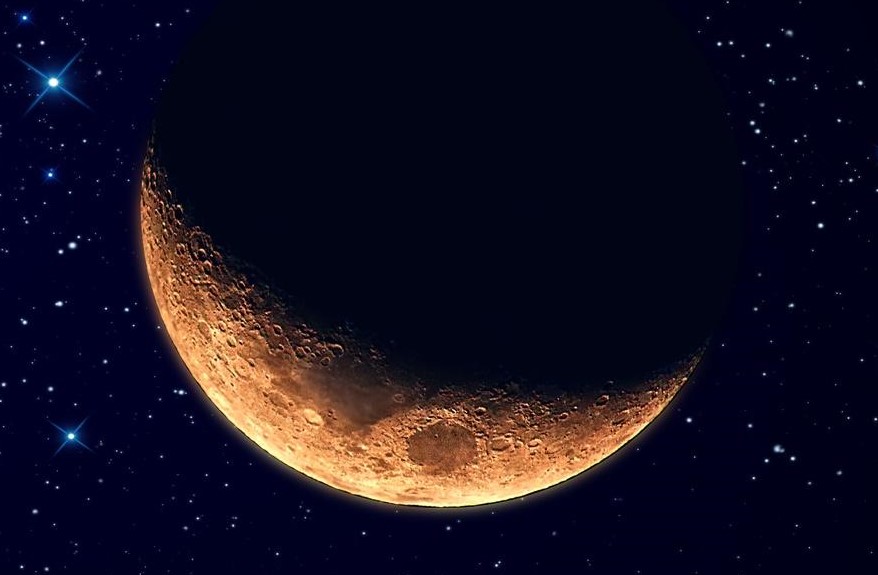
God was clipping her nails this morning and a luminescent fragment the shape of a crescent moon landed in the backyard: a beautiful asteroid, a source of light, the end of the raspberries.

 My entire garden is now filled with holy DNA. If this were a crime show, I could easily make a positive identification, but would there be a conviction? Even with humans, that’s never a sure thing. With God, highly unlikely.

“Sorry about that,” God says as she lifts the massive sliver of fingernail from earth and tosses it into the cosmos. “Careless of me to clip so close.”

“You could’ve wiped me out,” I say in an accusatory tone. “I can’t handle these jagged leavings and dangerous castings off.”

“I said I was sorry.” God can be a little defensive sometimes. She pauses, then adds. “Ah, c’mere. You don’t look so good.”

“Yeah, I’m not feeling all that well,” I admit as I crawl into the downy nest that God and I have created for the coming hibernation.

“Me neither,” God says with a sniffle. “Probably just a cold, but with all the upheaval, it’s hard to know for sure.”

“Isn’t it peculiar that before execution, the prisoner can choose a last meal?” I ask as we snuggle in. I ignore God’s quizzical look and continue. “So, what would you order?”

God is silent for a minute, then asks, “Sometimes, you’d like to kill me off, wouldn’t you?”

“Yeah,” I admit. “You’re precarious and whimsical. Inscrutable and endless. I need something easier. Less promise. More substance.”

Again, silence. Then, “I’d have nuts and berries mostly. Goat cheese. A little pasta. And three or four stiff drinks. White Russians, maybe.”

I whack God with a roll of political flyers from the recycle pile and offer her a megadose of vitamin C. She flinches dramatically, smiles, and takes two of the chewable tablets.

“How ‘bout a siesta?” she asks.

I shake my head. “You go ahead. I’ve got to transplant the rhubarb and that poor little pine tree.”

“Oh, good grief,” God says. “Can’t you leave well enough alone?”

The pine tree is a sore subject. I’ve moved it four times because I keep changing the layout of the garden and it’s in the way again. I want it to thrive but only where I want it to thrive.

To my chagrin, I start to cry a little. “I’m tired of everything,” I say. There’s a catch in my voice. “Especially myself.”

“I know, honey,” God says. “That’s why a little nap is such a good idea.”

Guidance for the Chronically Critical

I hail from a long line of judgmental souls who sometimes wish they were kinder than they are (or were). I know this both as judged and judger. And I wrestle mightily with each.

“Me, too,” God chimes in with a gentle punch to my shoulder. It’s hot today. We’re enjoying the living room, cooled by the thick cement floor and sizable rocks absorbing the ambient heat. This makes me happy and severely judgmental of anyone who thoughtlessly builds shelter without passive solar features. Cooling and heating with fossil fuels provides easy comfort while hastening our extinction. I’m also mean to people who forget to turn off the lights, use too much toilet paper, do laundry with hot water, or leave their engines running for more than 30 seconds.

“Judging is a trap,” God says. “A sure way to slide into the lake of sticky, jealous, self-centered misery.”

“But you’re like the Judger-in-Chief. How do you avoid the lake of sticky, jealous, self-centered misery?”

“Oh, I don’t. I slide right in. There’s always someone swimming around in that cesspool of righteousness. I usually bring lifejackets and a ladder.”

“And?” I ask. I imagine God offering flotation devises to weary people dogpaddling around in the soup of their own harsh judgments.

“Usually, no takers. But occasionally someone sheds those weighty layers of pride, takes my hand, and asks for a towel.” God smiles. “I like it so much when that happens.”

“But they got there because they correctly assessed that others are stupid, hateful, selfish, or inferior, right?”

 I smile a wonky smile. I know my judgments aren’t always accurate or loving. Furthermore, judgments leveled at me fail to consider how hard I’m trying. And finally, people foolishly judge God, or impose cruel judgements in the name of God, causing injury rather than healing. “So, what’s there to do?” I add.

“Forgive, forgive, forgive,” God says. “Forgive.”

“I knew you were going to say that.” I shake my head. “But sometimes, I don’t want to, or I don’t know how.”

“Work on it,” God says. “Take your soul to a car wash. Eat some of your choice words for dessert. Refocus on justice, not revenge. Give with a smile; don’t take with a snarl. Say thank you. Life’s neither easy nor fair, and that can be incredibly sad, so once in a while, curl up and cry it out.”

God lays down and curls tight to demonstrate. I’m afraid the tears are going to begin so I hop off the couch and try to tickle God’s underarms. The last thing I need today is a weeping God.

“Gottcha!” God yells, grabs my arm, and pulls me down to tickle back. We roll around like bear cubs, nipping, laughing, trying to pin each other.

“It’s okay to bite a little,” God says. “But don’t break the skin.”

Stung

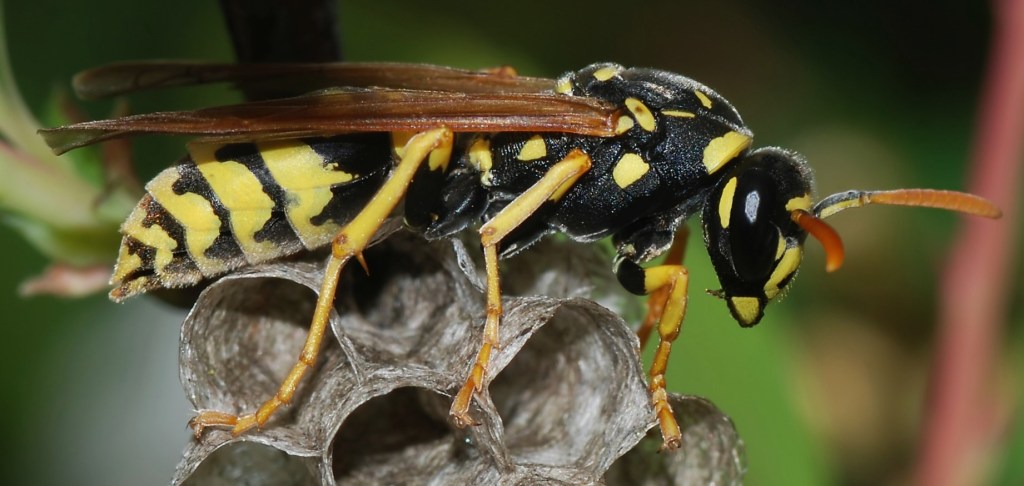
About an hour ago, I opened a shed door oblivious to the wasp nest this disturbed. The response was swift and precise. My right nostril exploded in pain, and I went a little crazy, swatting my own nose, jumping around, yelling, and running. My eyes watered, my face swelled, and a sneezing fit hit me.

I am now in recovery, subdued and holding still to keep the baking soda and Benadryl cream in place. God saw the whole thing. He raced to the house with me and is sitting nearby, but I’m not interested in chatting with anyone remotely responsible for wasps.

“Not fair,” God says.

“Whatever,” I say. “Who in their right mind would let a creature like that evolve?”

“Why do you keep assuming I have a right mind?”

“Clearly, you don’t. How about I stop thinking you’re responsible for anything?”

“That would be an improvement.”

We sit in silence. Me, nursing the sense of betrayal I feel when things go wrong, or I get hurt. God, sitting by. Just sitting by.

In a crisis, does it matter if there’s a God sitting by? Especially one who absolves itself of pestilence, pettiness, and pain? I don’t know.

God continues to sit calmly while I-don’t-knowness fills the room.

“In no way do I absolve myself,” God says. “But don’t worry. You cannot believe me into existence, and unbelief doesn’t get rid of me.”

“Why are you telling me this?” I ask, still feeling sorry for myself.

“You have a tendency to parse and attribute agency and blame. The greater Whole doesn’t come apart. There’s a reason for my name.”

“Which one?” I ask, but I know the answer. God’s first name is I AM. Simple. Overly inclusive, present tense, unequivocal, and far beyond interference or comprehension. It’s the big I AM, sitting by.

“Not sitting by,” God says. “Sitting with. Sometimes, sitting within.”

“The wasp is dead,” I say. “And I’m going to kill the rest of them.”

“I totally understand,” God says. “And for what it’s worth, I believe in you.”

“Well, that might be a badly misplaced belief.”

“I know. But it’s what I do.”

I put on layers of impenetrable clothing, grab the wasp spray, and prepare to do battle. I wish manna would drop from heaven and feed the hungry. I wish a great wind would arise to cleanse and save the earth. I wish self-absorbed liars would be seen for the vicious creatures they are. I wish the wasps would disappear like locusts at the end of a plague, but I know they won’t. Innocent others will be going through that door. Like Bonhoeffer plotting to kill Hitler, I am deeply conflicted, but it’s clear: This one’s up to me.

Resisting Domestication

Caged animals trouble me even if there are acres of natural habitat within their enclosures. The prowling and howling unsettle my claustrophobic soul. And the barriers give visitors a false sense of security. Some time ago, instead of eating the raw meat offered, a grizzly bear ate its handler. We’ve not yet domesticated grizzlies, but if photos of human hubris in Yellowstone Park are any indication, people think befriending wild animals is easy. Just walk right up and pet the bison. In gratitude, it will lower its massive head and lick your hand.

Over the eons, animals willing to be domesticated have provided humans with companionship, labor, and food. Various theologies claim to have domesticated God for similar reasons, but in truth, there is no such thing as a tame or definable God.

“You’ve got that right,” God bellows, sitting large in the hayfield, posing as a woolly mammoth while celestial beings take selfies with her.

I wave but keep my distance. “You know you’re extinct, right?” I’m joking but I’m also afraid of the answer.

God’s tusks circle back to her ancient head. She roars, and the celestial beings roll away like geodes. Their fall from grace cracks them open revealing the phantastic crystal formations of their inner lives. I long to touch the cold brilliance of the fractured geodes, feed God fresh-cut hay, build a nice barn, and corral them all.

“Are you imagining what kind of fencing you’d need?” God asks.

“Yes,” I admit. “But I don’t really want you contained.”

God looked at me long and hard. I looked at myself long and hard. “Ok. I guess I do want you a little bit contained. Otherwise, you’re terrifying.”

As if to prove my point, Woolly Mammoth bellows again. “You terrify yourselves. I’m the source of comfort.”

I bravely push back. “Well. Maybe. But you’re also the reason we need comfort. The conditions we’re born into…consciousness, love, loss, sacrifice, floods, fires, starvation, war…”

“What makes you think your species isn’t going the way of the woolly mammoth?” God interrupts.

“Um, well. We’re amazingly adaptable. And no one’s hunting us.”  I stop abruptly as I realize we actually hunt each other. And our ability to adapt has limits. God’s silence is not reassuring.

I try a slight change of subject. “Did you know scientists are working on cloning woollies back into existence?”

“You don’t say!” Woolly Mammoth exclaims facetiously as she turns and becomes first light. I see that the truth, such as it is, has shaped itself into shelter. It looks dicey, but I think well, if God lives anywhere, it’s here, so I crawl in. At least it’s not a cage.

Aftermath

God flaps long black wings and lands gracefully on a large pile of debris while I gaze at what was once a fence but is now a line of uprooted bushes, broken promises, sticks, and mud. I wave. God takes human shape and waves back. A wide-brimmed hat shades her eyes from an ambitious morning sun. The FEMA people have come and gone.

We are creatures of the seasons, drawn along by the unstoppable orbit of earth and the long and short of things out of our control. We’ve learned to adapt. Even the meanest among us is glad for a cold drink on a hot day. Even the bravest does not welcome frostbite. When a season runs amok, and our shelters collapse, burn, or float away, we stand stripped of familiar, protective layers. Our dreaded smallness is revealed.

Both “aftermath” and “seasons” have etymological roots in agriculture. Knowing when to plant and knowing there will be a smaller, second crop available after harvest–these are as essential to survival as breathing—though not as automatic. I survey the aftermath of this season so far. It has severely eroded riverbanks, civility, and the pillars of our democracy.

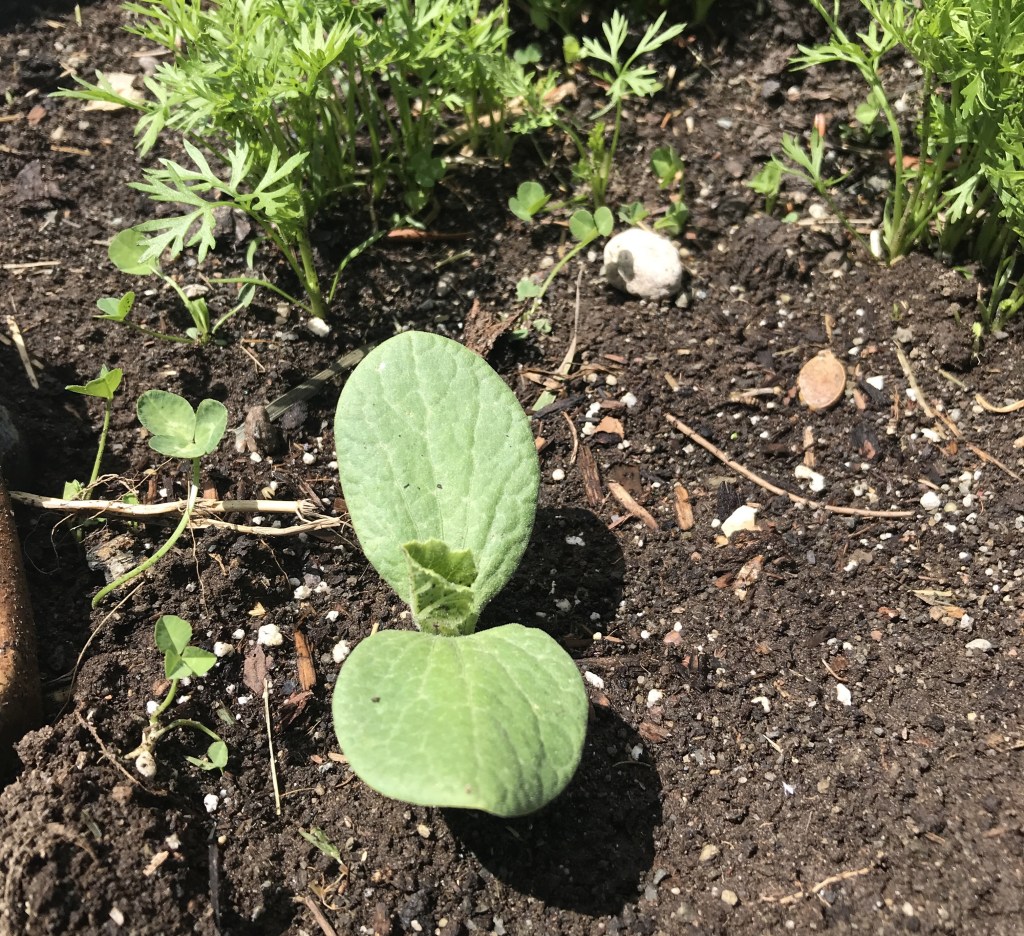
I settle beside God. We say nothing. Not long ago, the flat surface we’re sitting on was a bridge plank from somewhere upstream. Now it’s woven into what the river has lifted, tossed, and left behind. It will not be a bridge again. I do not know which bridges will hold. I’m tired and afraid. God takes my hand, and we walk to the garden where seeds are belatedly sprouting. I am astonished to see the Lower Salmon River squash seeds I saved from last year making a go of it. I was sure they were rotten, infertile, or dead.

“Never say never,” God whispers, gently touching the sprouts.

“Never say always,” I counter. “I’m not sure what’s next, but it won’t be the same river, ever again.”

“Nothing is ever the same river,” God says.

I give God an ironic look and push my hand through her ephemeral chest. On the other side, there’s a new season as yet unnamed. At some point, I will call it home, but even so, it will be temporary.

God leans down, pulls a weed, and squints up at my wavering being. “There is no final resting place,” she says. “But the painted ponies love having riders like you.” She hands me a golden coin. I hand it back. She laughs, swallows the coin, and flies away. I have flotsam and jetsam to clear, wells to cleanse, and fires to build. So many fires to build.

Bathwater

Desmond Tutu arranged to have his body reduced to bone with water instead of fire. But then, where does the water go? In the darkest hour, this is what I ask over and over. “Where does the water go?” There’s no answer. I imagine God’s warm hands emerging from the dim mysteries of night to massage away my dread, but night runs its course faithful to its purpose and somehow, I rest.

God is the baby thrown out because the bathwater has grown so murky, but we hate admitting mistakes, don’t we?  Polluted, opaque waters create a dangerous urgency. Rabbits introduced in Australia with no natural predators, the wrongheaded trapping of coyotes and other wild beings, coffins surfacing in the flood; these are just a few of the frightening ways our intentions circle back, contaminated.

Light finally appears, brash and naked. I am drenched in the vivid orange of willows, awaiting an arrival that has already happened. I am dead to the night, dead to myself, alive to the day, and it is good.

The end and beginning, elephants, elevations, evolution, the vibrant midnight blue I created from discarded paint. All approach perfection. But even with perfection, there are problems. The eye of God I see seeing me blinks because there is dust in the morning air. The dust is of God’s own making, but I stirred the dark, dark blue and painted it on our most obvious wall. When I stare long enough, I can see all the way through.

There are many ways to be incontinent. I am proud of mine. The leakage of reason into the vast ocean of unknowing is often thought to be a toxic form of erosion, but it needn’t be. I am living proof that even landlocked nations can learn to swim.

“Come on in,” God yells from the place where all rain and grief begin. She’s floating shamelessly on her back, splashing her fat little hands, delighted. “The water’s fine.”

I laugh. There is nothing fine or safe about this new day or this water, but it is what we are made of.  It is what we bleed into and what might wash us clean. It is the amniotic fluid from whence we came. God swims to the shore and takes my hand. We stand ankle-deep and skip stones across the rippled surface. God’s feet are bioluminescent. Mine are clay.