Four and Twenty Blackbirds

Long ago, Charles Dickens wisely noted, these are the best of times, and these are the worst of times. At present, the balance seems to be drifting toward the worst. Harsh judgments and general nastiness are flying every which way. Some are chronically disappointed in their own mistakes and shortcomings, while others loudly denounce the stupidities and failures of our neighbors.

And some, like me, swing both ways, genetically predisposed to identifying the egregious and erroneous both inside and out. The illusory algorithms don’t help. It’s difficult to live within myself and torturous to watch the news or go to town.

That’s why I reluctantly give thanks and praise to the giddiest, most irreverent, whimsical, Mutha of a Coauthor ever. She’s so far over the top there’s no defining or containing her. This is a horrible blessing.

Just yesterday, she livened my horizon dancing naked, ponderous brown breasts swaying like unhinged planets. Holding a rainbow flag and an assault rifle above her head, the Howling Creator finished her pirouettes, and the known universe bowed in prayer. I stood by, watchful.

She bent a witchy finger and beckoned me to come hither, but I ran for yon. The potential for defiant joy was palpable, but it’s safer to notice what’s wrong.

“Oh, my dear foolishness,” my Coauthor cackled from the back of a camouflaged pick-up. She shot off rounds with her heavenly auxiliary and scattered red and blue aster seeds in the wind.

“Asters are perennials,” I yelled from a safe distance. “And perennials often become weeds.”

She shrugged. “You need to focus on what’s good, If joy floats by, soak it up, gulp it down. Expand your innards!” She demonstrated with a thunderous belch and pounded her chest.

Despite myself, I burst out laughing.

“That’s it!” she shouted. “Now let’s expand the pie!”

She brandished a pie and sliced it open, freeing four and twenty blackbirds. Red-winged blackbirds, jubilant in flight. “You’re the niftiest little thing I’ve taunted all day!” she declared, delighted and crazed.

Our times are dark with fear. The blind are leading the blinded; the rich, filthy rich, the poor, desperately poor. Yet Creation gambols on, fighting the good fight, leaving no one behind.

We toil in the garden, be it Eden or hell, while she leaps about shouting, “All will be well.”

“Stop with the outlandish assertions,” I told her dryly. “No one believes you anyway.”

She feigned indignation, but I didn’t back down. She never tells the whole truth. She’s Queen of Poetic License, a victim of malicious misinterpretation.

She gave me a look. “I could just take my resilience elsewhere, you know.”

“I know,” I admitted. “Please don’t.”

*** *** *** *** *** *** *** ***

For more uplifting, cheery poems and conversations just like this, you can order our book from the YOU KNOW WHO online and for a mere $13.99, you can torment your soul every day. Also, I am now posting on Substack, and may drift there as my primary place to post.
The Blame Game

Having someone or something to blame for my mistakes, disappointments, and entropy in general is such a blessing. If no one, if nothing, steps up to take the fall, then what? The empty abyss of nothingness, the voracious black hole of randomness, the uncontrollable, irreparable, directionlessness of life suck me undertow, and I’m paralyzed. Blame is a very good thing.

“But everyone is trying as hard as they can, right?” God says sarcastically. “So how can you blame anyone?”

“Oh, I’m a skilled, irrational blamer,” I say with pride. And it’s true. Except when I focus my lens on myself, there is solace in blaming and excuse-making. I harbor resentments, nurse grudges, and scan my environment for everything that’s wrong with anything. When I have a chance, I point out these shortfalls in a judgy voice as if the failings I unearth are both shameful and deliberate.

“I’ve noticed that occasionally you include yourself among the damned,” God observes in a kind voice. Almost offensively kind. I’m not in the mood.

“Leave me alone,” I say. “I don’t want to be understood or placated. I want things to go my way. I want things to be shiny, warm, buttery, pretty, predictable, and trouble-free. I want everything to be right with the world.”

“Don’t we all?” God sighed.

“See? This is my problem, God.  If you’re even a thing, then why aren’t you a preventer of tragedy or at least a fixer? Seems definitional of anything called God.”

“There’s a chance you’ve got the wrong dictionary, honey,” God said.

I scowl. God stares steadily into my squinty eyes. Her love is seeping into the room, and I don’t like it. Yeah, sure, being loved should make me happy, but there are strings attached. Equanimity, acceptance, and holy detachment come at a cost.

I don’t want to face hard times or try to do better. I want my address to be Easy Street, where everyone is pain free, youthful, fat, and sassy.

I don’t want to be loved despite my imperfections. I want to be perfect. I don’t want to be loved as I decline and die. I want to be immortal.

“Ding, ding, ding,” God says, pretending she’s got a bell in her hand. “We have a winner, folks. She makes it to the bottom in record time.”

I flip God off with my knobby middle finger. She blows me kisses. I grab them out of the air and make them into a string of luminescent beads. Elegant jewelry? Noose? It appears to be my choice. But I’m never sure.

Stung

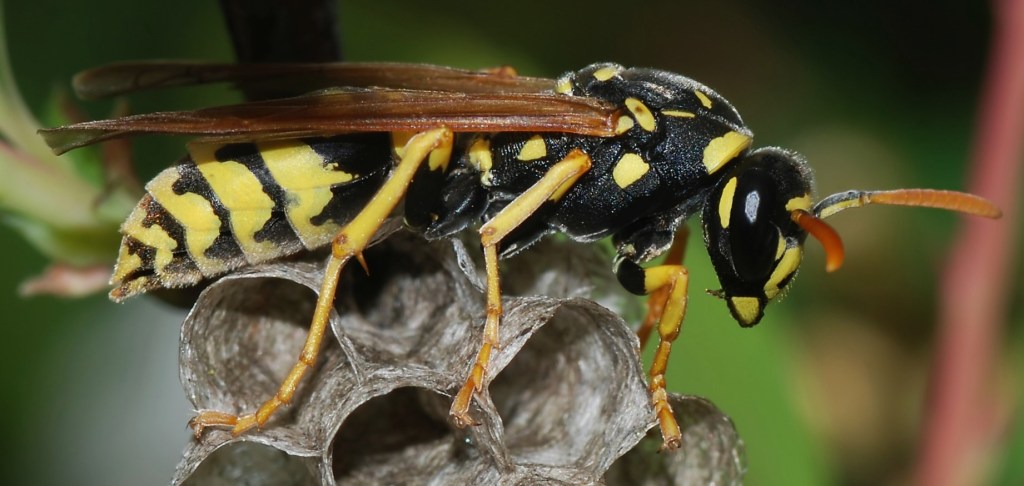
About an hour ago, I opened a shed door oblivious to the wasp nest this disturbed. The response was swift and precise. My right nostril exploded in pain, and I went a little crazy, swatting my own nose, jumping around, yelling, and running. My eyes watered, my face swelled, and a sneezing fit hit me.

I am now in recovery, subdued and holding still to keep the baking soda and Benadryl cream in place. God saw the whole thing. He raced to the house with me and is sitting nearby, but I’m not interested in chatting with anyone remotely responsible for wasps.

“Not fair,” God says.

“Whatever,” I say. “Who in their right mind would let a creature like that evolve?”

“Why do you keep assuming I have a right mind?”

“Clearly, you don’t. How about I stop thinking you’re responsible for anything?”

“That would be an improvement.”

We sit in silence. Me, nursing the sense of betrayal I feel when things go wrong, or I get hurt. God, sitting by. Just sitting by.

In a crisis, does it matter if there’s a God sitting by? Especially one who absolves itself of pestilence, pettiness, and pain? I don’t know.

God continues to sit calmly while I-don’t-knowness fills the room.

“In no way do I absolve myself,” God says. “But don’t worry. You cannot believe me into existence, and unbelief doesn’t get rid of me.”

“Why are you telling me this?” I ask, still feeling sorry for myself.

“You have a tendency to parse and attribute agency and blame. The greater Whole doesn’t come apart. There’s a reason for my name.”

“Which one?” I ask, but I know the answer. God’s first name is I AM. Simple. Overly inclusive, present tense, unequivocal, and far beyond interference or comprehension. It’s the big I AM, sitting by.

“Not sitting by,” God says. “Sitting with. Sometimes, sitting within.”

“The wasp is dead,” I say. “And I’m going to kill the rest of them.”

“I totally understand,” God says. “And for what it’s worth, I believe in you.”

“Well, that might be a badly misplaced belief.”

“I know. But it’s what I do.”

I put on layers of impenetrable clothing, grab the wasp spray, and prepare to do battle. I wish manna would drop from heaven and feed the hungry. I wish a great wind would arise to cleanse and save the earth. I wish self-absorbed liars would be seen for the vicious creatures they are. I wish the wasps would disappear like locusts at the end of a plague, but I know they won’t. Innocent others will be going through that door. Like Bonhoeffer plotting to kill Hitler, I am deeply conflicted, but it’s clear: This one’s up to me.