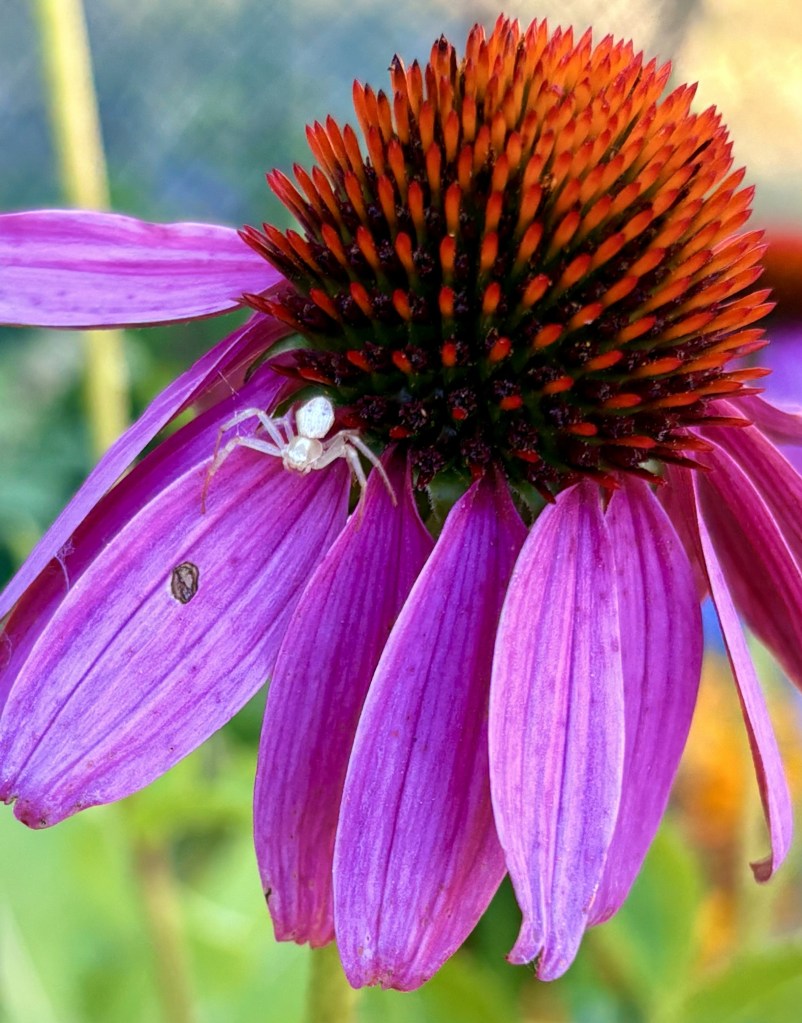
Amputations (for Monica and Joyce)

Photo Credit: Deborah Drain

An amputation does not remove the brain’s neurological urge to communicate with the missing limb. The brain says “move.” Nothing happens. Phantom pain is a chronic reminder of what isn’t there anymore. This is how grief works.

I once believed reality consisted of connections from one tangibility to another, but now I realize it’s constructed of sweet, impossible longings, memories, and the scent of rain. It is the intangibilities that answer when we cry in the night.

You may think you can rely on the Gods of your choosing, but they prefer time away from the maddening crowds. Thus, they amputate. But like starfish and newts, our extremities sometimes grow back for a season.

“That they do,” the Chief of Amputations laughs. “Which means our work is never done.”

The regenerative properties of patience and detachment are no match for evolution, opposable thumbs, or autogenesis. When you fold, you become less linear. Your grasp weakens. Where you begin and end is no longer clear. And chemical reactions occur in this process, creating alloys of enormous strength. For instance, combining iron with carbon creates the steely spines we so admire.

Scientists argue about the potential power of bending, doubling, and scrunching. And though most origins-of-life paradigms rest on linear pattern recognition, there’s a kind of salamander in Mexico that can regrow its own heart.

As your life moves along, you’ll notice that any given moment does not want to yield. But it cannot come along. Notching the tree to find the way back is foolish. There’s no way back, and trees don’t live forever. Regardless of your timeline or preferences, you will gradually morph into certain versions of your mother.

Besides Chief of Amputations, it may be comforting to know that a few of the Creators’ favorite names are The Moving Target, Now of the Now, Connective Tissue, and finally, Dog Rolling in Grass.

So roll in the Now. Gaze at the haunted horizons while you try on the scarves and hand-me-downs left behind. Some will fit. Some won’t. Load the car with donations or convert everything into rags. You’ll be none the richer either way.

View the future filtered through the translucence of honey, admire the noble ways of spiders, and if it is within your power, fill the open mouths of children. In the heat of the day or the dead of night, the banalities of life release their hold, but the radiance remains.

Here and Now


In front of me, red curtains, 47 paint brushes, and a few years.

Alongside, turquoise drapes too long for the window wells,
a boiled skull, three wishbones, a pink phone,
and the idea that I am loved.

Behind me, a life.

Around me, The Idea loosely wrapped, permissive.
Another fall day. Chilly. Firewood stacked, dry and reassuring,
not necessary yet because

I have added layers. A down vest. Scarves.

If you read these lines and do not take stock
I’ve not reached my intended audience.
This is not uncommon. Perhaps there are too many

double negatives.

Above me, asbestos held in place by sheetrock.
Sky held in place by rain.
Gates flung open, releasing all the promises, broken or not.

I wish them all soft landings, my lips dyed crimson for a final kiss.

Partying with God

“Hey, God,” I whisper, slipping quietly down the dimly-lit stairs. God’s an early riser, but others are still asleep. “Wanna party?” Sometimes, my morning mood is both desolate and overly energized. I don’t even know why I say what I say.

“You bet,” God answers with enthusiasm. “You mean like eat, drink, and be merry, for tomorrow we shall die?”

Exactly, I think to myself. I want a reassuring party with my adoring little God: a fatalistic precursor, debauchery-laced denial.

My eyes slowly adjust to the sunrise out the window. The pasture glistens far beyond a describable green. Turkeys have been eating the tops off my onion sets, and chokecherries are budding. Spring is arriving with her usual expectations, but each winter leaves another indelible mark on my psyche.

Inviting God to party is risky, but not inviting God is risky too. This one will cost me a bottle of beer, some lime-flavored chips, and the kind of scrutiny only fools and children are willing to endure. But right now, I am an unswaddled child. I’ll be fine, I tell myself.

“No, you won’t,” God says in a million joyful voices. “You won’t be fine. You are fine. There’s a difference. C’mon. Let’s get this party on the road.”  God is legion. They are many. They are beautiful. I don’t have enough beer. And even if the chips expand like the loaves and fishes, they’re stale.

“Ah, never mind,” I say. “Let’s skip the party. I need to go shopping and pull some weeds. I need to put things away, do the floors, make some calls.”

“But you invited us,” God protests. “We’re coming along, no matter how you spend your time. And we brought plenty of refreshments. You didn’t think we’d show up empty-handed, did you?”

I have endured scorn, exalted in adoration, sought invisibility, reveled in mastery, and played by myself on any number of shorelines and precipices. What possessed me to issue that rash invitation? A party with God at dawn? I might be an unswaddled child in my mind, but in reality, these stairs are a real challenge.

I sit on the bottom step, cover my ears, close my eyes, and will God to disappear. Instead, she scales down to singular and sits beside me in superhero pajamas. She hands me coffee. I hand her the day. She turns it this way and that, gazes at its beauty, touches its pain, and hands it back.

“All yours,” she says. “Enjoy.”

“I’ll try,” I say as I put the day in my pocket. And I mean it.            

“I know you will,” she says. And she means it, too.