Most people hate going gray and refuse to admit that their wits
have begun to wander.

No one loves fading to transparency, reduced to rustling air
in the back of the room.

No one enjoys not knowing. Uncertainty is worse
than being dead wrong.

So we color up, seeking a visible place amongst two trillion galaxies
in the observable universe.

“You’re blah blah blahing again,” the Gaping Mouth of the Cosmos says.
“So bite me,” I snap.
“Let us consider gray,” Gaping Mouth suggests.
“I don’t like gray,” I say. “I’m more comfortable with clarity.”

“I know,” Gaping Mouth says. “And that’s a problem
because gray is illuminance-dependent, ambivalent, and courageous.
Gray underbellies the vivid streaks of sunset
that temporarily take possession of the sky.”

I glare, clinging hard to yellow.
“Are you aware of the opponent process theory?” I ask.
“In the recesses of the retina, certain cells stimulate one color
and inhibit its opponent. I believe this explains afterimages.
And Christmas.”

Gales of laughter issue from the Gaping Mouth
and all evidence of right or wrong blows away.
Leaves of green turn red and then disintegrate.

The sun is gone. I am alone and afraid.

When the galactic glee finally dies down, Gaping Mouth closes to a Gaping Grin.
Blood red lips surround pure white teeth gleaming like stars in the blackest sky.

“Darling,” the Gaping Grin whispers as crimson lips pucker
and kiss the edges of my soul. “It will help if you remember
the transformations necessary to make light.”
In the stillness following a midnight storm
my eyes move across the surface of morning.
First light reveals innocent branches bent low
from the weight of the wet, unseasonable snow.

Her eyes follow mine.

At least the fire danger has dropped, She notes.
You could burn all those files and broken pallets now.

Yeah. If I could find them, I say, with some resentment.

There are discernable undulations on the surface,
but the sharp edges of old ideas and things gone wrong
are hidden under this pure white shawl,
and I’d rather leave them buried.

Oh, you can find them, She says.
And with some accelerant,
you could have one hell of a bonfire.
Perfect conditions for that kind of heat.

Where would I even begin?
I ask, but I don’t want an answer.

Twigs. Wadded up pages ripped from your journals.
Start with the small stuff.

Right, I echo. Start with the small stuff.

You’re going to ignore me, aren’t you? She smiles.

Yes, I am. I grin back.
I need to feed the chickens and shovel the walks.

Of course you do, She nods.
And I need to change the colors of the leaves.

She hands me an ancient paintbrush streaked with sunrise.
You’re welcome to help if you end up with extra time.

And in that moment, I see our destiny:
to be refracted like light
into pigments so beautiful and pure
we won’t recognize our hands anymore.
Odd week this week. Odd week every week. Here are three poems to consider. The first by Shel Silverstein. The second and third by me, struggling to respond to such an awful, open invitation.
------------------------------------------------
Invitation
If you are a dreamer, come in If you are a dreamer, a wisher, a liar, A hope-er, a pray-er, a magic bean buyer... If you're a pretender, come sit by the fire For we have some flax-golden tales to spin. Come in! Come in!
                                                              No Words

We have no words but carrots and beets. The corn is tasseling. There’s nothing else to report. An outbreak of peace would be nice. But outbreaks of endless revenge threaten to end it all in a flash.

We have no words of our own. Every thought is on loan, and our hands are tied. Our feet take us places we don’t want to go. All of this is prophetic. Pathetic. We don’t know where to turn.

We have no words but longings and love. Perhaps we could bake some bread and tenderly explore where it hurts. The diagnosis will be indeterminate, so we’ll remain afraid. The little we possess never includes the right words.

We have no words. Only weeds and misconceptions. Obsidian-tipped news that once flew fearless now lies twisted and broken. Redacted. Redundant. The few remaining meanings have hidden themselves.

We cling to words as if we own them and they will save us. But Words are guests. Real Words ring free and true like bells. Rods and staffs may bring comfort, but the Truth speaks softly and carries no stick. No salvation and no stick.

********************************************************
What We Serve On Platters
Come in, you old-skinned bastions of wrinkles and droopy eyes. Come in, youngsters drifting in the increasingly salty sea. Come in, bruised souls walking littered paths to nowhere.
Come in. Come in.
Here is a place at the table. Here you can relax and break bread. Here you can dream. Here you can practice forgiveness. Here your shame turns to dust. Your sharp fears grow dull.
Here.
Come in, you resistant bastards of the cruel ways, you of the emptiness. Come in, you liars who torture and violate. Who consume and destroy. Come in, monsters, devils, seekers of vengeance. You’re already burning in hell.
Come in. Come in.
Here you will be taken apart. Served in pieces at the feast. Here you will be the sacrifice you always wanted to be. Here your story will be rewritten, and you’ll return as a bird.
Here.
What is it you’re looking for? Why are you skimming? It’s all here. Stop. Breathe. Stop. Sit.
If I speak in the tongues of angels and women, of cancers, mildew, and broken teeth, but have not love, nothing much happens. Most platitudes are contradictions. Old mirrors and darkened glass neither reflect nor foretell with any degree of accuracy.
Some mornings are especially challenging. The tension created by too many Jesuses is barely offset by the comfort of familiar bedding and my jar of pencils. Sometimes, deep in the night, I try summoning one of them to ward off the neurotoxicities of unwanted wakefulness, but it never works. The Jesuses are neither respectful nor tethered to any particular reality. They argue among themselves noisily and without end. I regret inviting any of them in. I want them gone.
“I see where you’re coming from,” my Coauthor comments as she seats herself cross-legged, leaning back against the bookshelf. She shoos the contentious Jesuses away. “Go on outside. The water’s clear. The sky is lifting. The cranes could use a visit.”
I stare at my Coauthor. She stares back.
“Do you really see where I’m coming from?” I ask, hoping for sympathy and unequivocal adoration.
Her slight nod is unsympathetic. She’s sizing me up. I do not feel adored.
“And I see where you’re going,” the Voice of Creation adds.
Sunday school rears its ugly head. Dread hot-flashes through my body.
“The cross?” I squeak.
“Yes,” my Coauthor nods. “The one by the highway and the three on the hill to the south. Cut them down. The cultish homage to human brutality offends me.”
My eyes widen. “Well, that’s not very nice. What about loving thy neighbor? What about redemption?”
She laughs. The Jesuses crowd back in.
“The cranes are fine,” they report. “And the air is sweet. Everything that ever bloomed is blooming and there’s a wild greening underway.”
I want to be the sweetness in the air. I want to be a wild greening.
“Ah-ha! You’re an anti-zealot,” one of the Jesuses points with derision.
“Am not,” I retort, uncertain of what that would even mean.
“Leave her be,” my Coauthor commands, glaring at the accusing Jesus. “I brought you into this world. I can take you out.”
The Jesuses exaggerate snapping to attention. Their eyes twinkle, their lips twitch.
Then one of them shouts, “Dogpile!” and we all jump on the Coauthor, trying to tickle her into a better mood.
“Hey, I made rhubarb banana bread yesterday,” I holler above the fracas. “Let’s have some for breakfast.”
We sort ourselves out, clamor to the heart of the kitchen, and break the moist bread together, dipping morsels in milk and drizzling stolen honey into our strong black tea.
The world is filled with natural stompers. This is not destination dependent. No matter where the stompers think they’re going, their determined stride sends shock waves up their legs and into their surroundings. I happen to know that it’s possible to override the habitual stomp and consciously place one foot in front of the other. But beware: The resulting quiet can be unnerving. The rush to nowhere is noisy but comforting.
And why take the risk of treading lightly anyway? The Rain falls on the just and the unjust, the stompers and the dawdlers, the mindful and the misguided. The Rain falls without resistance or judgment. It clears the air for both rich and poor. On the upturned faces of lovers, the Rain falls with joy.
A beloved poet once insisted we should rage against the dying of the light, but I say to myself don’t hide from the darkening sky. Seek out the eye of the storm and walk upright in your bones, bold and welcoming. But don’t stomp. Go gently. Go with such grace that even your precariously stacked stones will start to sing, and the dry, angular roots you’ve gathered will dance like nymphs around the open tombs.
But I’m never sure of the way. There are so many trails and byways, so many routes home. I tell myself there’s no harm in wandering and no singular way to be redeemed.
But the Rain begs to differ. Surrender, she whispers. Break. Fall apart, tender. If you still have yarn or wire, you can knit yourself back together for a spell. But remember, you have gills and wings. You are the blind man tapping, the enthroned queen, and the missed opportunity. You are your own final act. You are the drunk driving victim, and you were driving the car.
I cannot accept that, I say to the Rain.
Oh, but you can, the Rain murmurs as she slides down the sides of my soul.
I admit that there are times I’m tempted to march out there and shake my fist at the distant thunder, but my boots would surely slip on the slick surfaces and even these well-formed bones would snap.
There is a certain hosanna available to those who fold their umbrellas and accept whatever comes. The relentless downpour will baptize everyone to the point of drowning, but as the flood recedes, that which remains will be a sunlit robin patiently awaiting a worm.
“Hey, Atomic Invaders,” I said to some less well-known representatives from the Holy Collective. “In our miniscule corner of Your Vastness, a new year is upon us. Could you help me make some resolutions?”
“Why us?” the Atomic Invaders groaned in unison. “We’re busy being the better part of God.”
“Ah, come on,” I glared. “You’re inscrutably tiny, dynamic, and mostly empty space. But you always act all big and determinate, so go ahead; boss me around.”
“You have no sense of proportion,” they said dismissively. “And no grasp of what it means to be empty. We need to take you shopping.”
Suddenly, we were in a giant box store, and I was afraid of their intentions. I unsheathed my glowing lightsaber and circled the Invaders, searching for a vulnerable place to stab, illuminate, or behead.
“Your footing is precarious,” the Invaders warned. “And you should pinch your cheeks. You need to look like you’re worth saving.”
I hung my head. “I’m not sure I’m worth saving, and I don’t like it here. Everything costs more than I can afford.”
“Don’t be silly,” the Invaders said. “You’re in the wrong aisle.”
I looked up. Sure enough. I had wandered down the Aisle of Insistent Demands and Guaranteed Outcomes. Greedy shoppers yanked things from each other’s hands, spilling precious minutes all over the floor. I tried to back up, but it was slick and crowded.
“Pay it forward,” the Invaders advised.
I emptied my pockets, handed my coins to children, and followed the Atomic Invaders out the automatic door, where we sat ourselves down on a weathered bench with a view of the endless parking lot. The Atomic Invaders crossed their legs and threw their arms over each other’s shoulders.
“So, Ms. Empty Pockets, what shall we resolve?” they asked in a conciliatory tone.
I surveyed the lay of the land. “Smaller house, bigger shoes?”
The Atomic Invaders conferred among themselves, glancing at my feet.
“Yes,” they said as time sped forward, and the sun sank. “That’s an excellent plan. Sell what you can but keep what you must. The footing will not get less precarious.”
I felt resentful and sad. Not that long ago, I was the mountain goat hopping across rockslides, gracefully navigating the steepest slopes. I was the builder of ever-larger houses. Now I wear sensible shoes.
“How can you love diminishment?” I asked.
“Wrong word,” they said in cheery voices. “It’s transformation.”
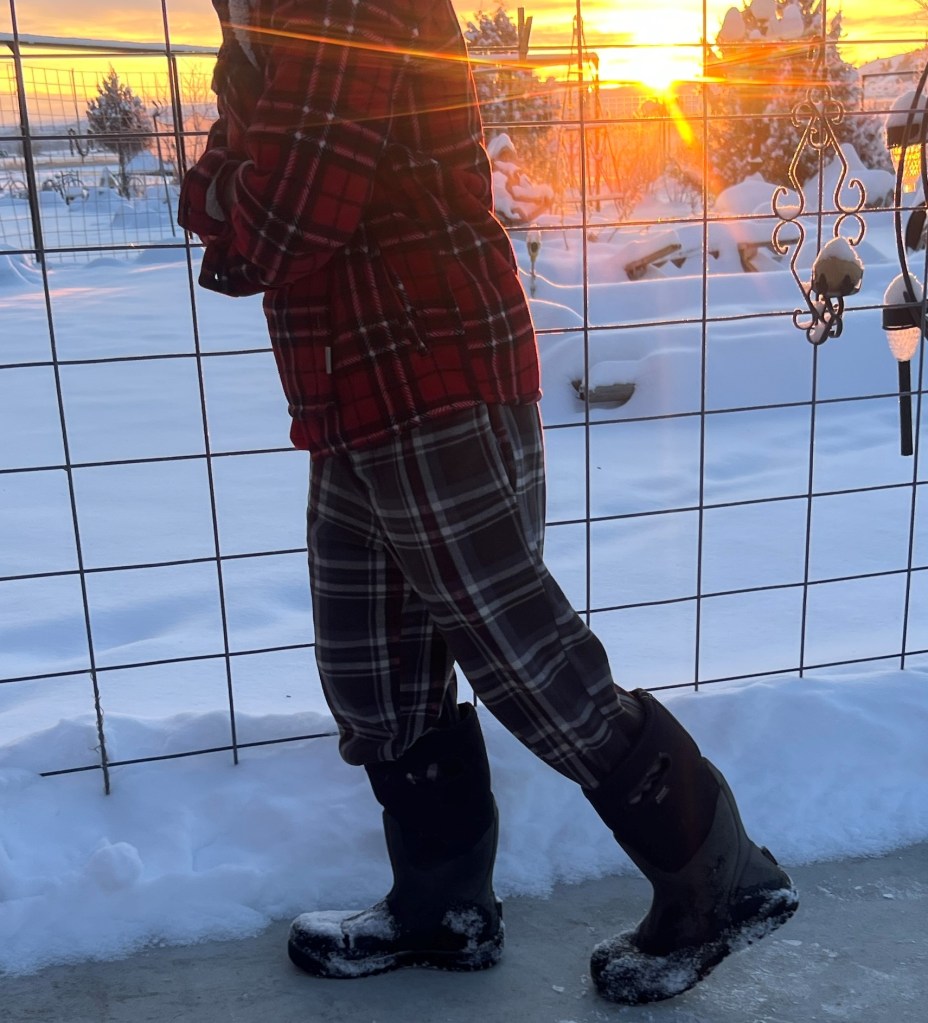
“Sure it is,” I said sarcastically. “I’ll try to remember that.” I pulled on my large, stable boots to shovel the snow.
“You don’t like being referred to as Myth and Ritual, do you?” I asked my friend, Myth and Ritual, as September settled around us.
“Not really,” Myth and Ritual answered. “But people do what they have to do. I do what I have to do. Very little is predetermined, but very little is conscious choice.”
This didn’t surprise me. I want to think people have choices. That God has choices. But it’s never that simple.
Take death, for example. Over 6,000 people will die during the hour I spend writing this morning. Not many of them will have chosen to die, but nonetheless, they will pass gently or violently, awake or asleep, young or old, into what humans call death.
“Yes, choice appears to be a rather limited concept,” I echoed. “So whose calling the shots?”
“Ah, there are so many friends invited to that party. There’s Immune System. She’s an erratic one. And those nasty twins, Greed and Poverty. Genetics is always primping in the nearest mirror, giving Folly and Fate the evil eye. War, Famine, and Pandemics all elbow in on the action. Even the occasional virus or mosquito.”
“Enough!” I shook my head. “Those are just excuses.”
“It’s all the same. When Myth or Ritual fail, we step in as the Mother of all Excuses.”
“I am absolutely not calling you that,” I said.
Myth and Ritual laughed. “Got a better idea?”
“Yeah. Today, I’m going to call you Sparky,” I said. “We’re all just walking tinder boxes. You could fan us into flames with a glance.”
“Sparky,” they said. “We like that.”
“I figured you would,” I said. “People chop you into human size chunks and then try to defend you. It’s volatile.”
“That’s outlandish and dangerous!” Sparky declared. “A true deity needs no defense.”
“But good things seem to need defending,” I said. “And bad things need explaining.”
“Yes.” Sparky looked smug. “A dialectic.”
“So, we’re back to Myth and Ritual,” I said.
Sparky frowned. “Maybe. But the horses are saddled. They know the way.”
“To where?” I asked, disoriented by all the non sequiturs.
“To fruition.” Sparky’s voice had mellowed to water. “To peace.”
“How will I know which one to ride?” I asked.
“Different times, different horses,” Sparky murmured. “They’ll come when you call them by name. Courage. Forgiveness. Compassion. Joy. And. . .” Sparky paused. “You might not like the last one.”
Outside my window, fiery autumn foliage was blowing around.
“It’s Acceptance, isn’t it?” I whispered.
The trees swayed and held their ground even as the wind stripped them bare.
Sometimes, you have to grit your mental teeth and force the images to land so you can pull them apart. The world is a damaged ship, listing dangerously starboard. Your longing to prove or fix something scratches like a cat on the screen that protects your soul, and your selfish nature hides in the weeds, rusting and jagged–a trip hazard and destroyer of lawnmower blades.
“Morning,” your Coauthor mumbles in a sleepy voice.
“Coffee?” you offer, calm on the surface, agitated inside.
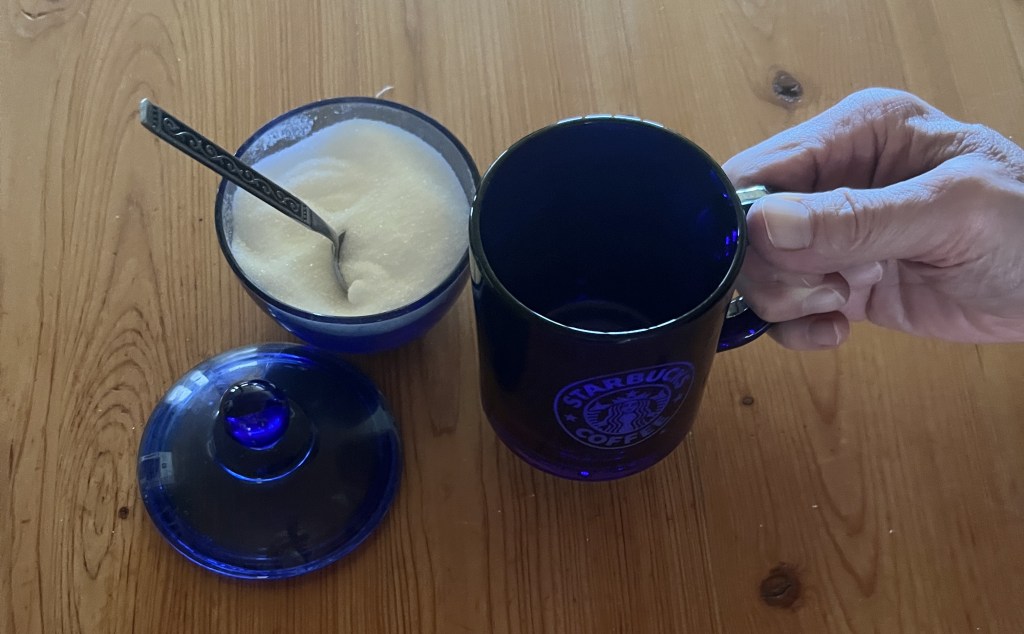
Coauthor nods, reaching for the sugar.
“What do you have in mind for today?” you ask.
“The usual,” Coauthor shrugs.
“But I don’t feel like being generous,” you say. “Or patient. Or kind.”
“How’s the joint pain?” Coauthor asks.
“Tolerable,” you frown. “How’s yours?”
“I’m always inflamed,” Coauthor admits. “And for that, I’m grateful.”
Usually, your Coauthor is clear-eyed about ailments, victories, ice cream, and the dying coral reefs. There are costs for doing business with fickle microbes and solar storms. That which can be altered is miniscule, and even if done well, evolution will occasionally circle back and bite you in the butt. That’s why most Coauthors look so chewed up most of the time. Chewed up, surly, and weary. Okay, maybe not surly. That’s more you. But weary and wounded. That’s for sure.
Your Chewed-up Chum checks the weather. Rain. Flood warnings. Wind. But later, things will clear, and there will be a deep peace that passes all understanding–which is a good thing because your current understanding is so slow that a tired donkey pulling an overfilled cart could easily pass it by. There’s nothing poetic about bombed-out homes, repeated migrations, or starvation. Nothing. Maybe you could approach the devastation symbolically, but that might make it harder. You simply don’t know.
“Understanding is essential and impossible,” Coauthor says. “The you that you think of as you can grasp only fractions of the puzzle. The complexity is beyond your fleeting singularity. Just find a corner piece and hang on.”
“What does a corner piece look like?” you ask, feigning innocence.
“Oh, you know. It’s rounded on the edges. The nobs point inward,” Coauthor grins enigmatically.
You rub your rounded belly and consider the risks of real, expansive connections. In the past, you’ve tried to force puzzle pieces to fit. Bad idea. You limp away, limp back, limp away. Each time your view expands, your energy diminishes.
“The capacity for compassion depends on being broken. Sometimes, more than once,” your Coauthor says in a matter-of-fact tone.
“Stir your coffee,” you sigh. “The sugar’s sunk to the bottom.”
“Thanks,” Coauthor says. “But I like it that way.”
During the witching hour last night, my electric blanket turned itself on and fried me to a crisp. Light from my flaming hair revealed the outline of God burning beside me which provided strange comfort. Over time, I’ve had various vague ideas about the best ways to die. I’d not thought of this one, but it seemed an acceptable alternative. Our charred bodies were soon unrecognizable. It was over.
The enormity of waking has overwhelmed me. I’m the walking dead, moving through my morning chanting please, please, please. I don’t know what I’m asking for, but I’m certain I’m supposed to ask. Being dead absolves the body. Being alive requires fortitude, vision, and help.
One of our chickens lost an eye to a predator, but she’s still laying eggs. The garden is buried in snow, flat and pristine except for the tall dry stalks of late blooming weeds. The exhaustion of autumn always gives these invaders an unfair advantage. Spring will bring renewed energy for the inevitable skirmishes, but there will be no definitive victor. The spoils of war are never what one might imagine.
Since the thousand-year flood two years ago, we monitor the river with new respect. God and I are working steadily on the basement with an eye to evacuation. We’ve moved our vulnerabilities to higher ground, aware of the futility but content to at least be doing something. Doing something. Doing something. I am the walking dead doing something.
God routinely disappears and only explains their whereabouts in languages I do not understand. Multiple translations scroll across the bottom of the screen. I’m forced to suspend my agenda and hold very still as I struggle to grasp the plot of the cosmic drama. I wish God spoke simple English. Then I could do two things at once.
Instead, I must contend with the tongues of angels and demons, the vernacular of eagles and earthworms, the dialects and dialogues of the infinite all rising on waves of unprecedented heat, wrapping the earth in a shroud of utterly brilliant sunsets. Or are they sunrises?
God wears the tattered ozone like a cape and lands gracefully beside me. I am still chanting please, please, please as I accept the bent elbow and march down the aisle toward the edge.
“I hear you,” my Escort whispers, leaning down. “But you might try a thank you now and then.”
The dark and troubled waters below offer no sustaining image, but I don’t need one. I am the walking dead, learning to navigate weightlessness. I am the walking dead, slowly, slowly, slowly letting go. Letting go. Letting it all go.
I sit with my beer and orange juice while a faithful washer groans its way through a modest load of towels and underwear. The cacophony of morning includes two-stroke leaf blowers across the street, Harley riders roaring by, and cheerful but vociferous wild things that do not apologize for their dominance of the airwaves.
Just outside the open window, the Pacific looms large. Sinewy vines have flung themselves over the shoulders of trees and wound themselves around neon blossoms and beautiful fruit.
God is not bothered by the intrusive clamor and overbearing pigmentation. I am. Yesterday, alone on a windy shore, I circled things into simple black and white.
“I don’t like being one of 7 billion,” I tell God. “The entanglement and commotion make me claustrophobic.”
“Sorry to hear that, Chip,” God teases. (She calls me Chip, as in “chip off the old block” just to bug me.) “Would you like your own planet?”
“Yes, please.” I nod, dipping my toes in salty water.
The Fluidity smiles and flexes, the tide rolls in, and I see that I am already a planet unto myself. Each nucleus spinning my direction is its own planet. The electrons dance, the stars align. I see that I am a singularity made of singularities held together by unspeakable complexities. I am one of One.
I breathe with grudging acceptance and the Fecundity loosens its grip. I relax. The grass withers. The flower fades. But the Gorilla Glue, the Relatable Pacer of the Universe doesn’t let go, doesn’t stop talking, transforming, or replaneting.
A science teacher of mine once declared, “Cell division is a goddamned miracle.” His asides were not often helpful or accurate, but from the perspective of my own DNA, he may have had a point. Cell division can be a very good thing.
God taps me on the shoulder. “Um, I hate to interrupt, but it’s time to hang the clothes.”
“I know,” I say. “Otherwise, they’ll mildew.”
The neighbor’s laughter sounds like a bird. I can’t tell anything apart anymore, and maybe I don’t want to. It’s all a bodacious blur, a heart-wrenching opera, a country-western shindig, a tsunami of sound, a smorgasbord of color.
The God of All that Ripens saunters seductively to the washer, and we begin the ritual of hanging our laundry up to dry, temporarily halting the march of mildew and mayhem. We air our grievances along with our love, holding our shape against the coming formlessness.
A haze of fruit flies rises from the feast of fallen star fruit, and I realize that even in the tumult and dissolution, all is well. All is very well.






 Short visits with an honest God