Balance

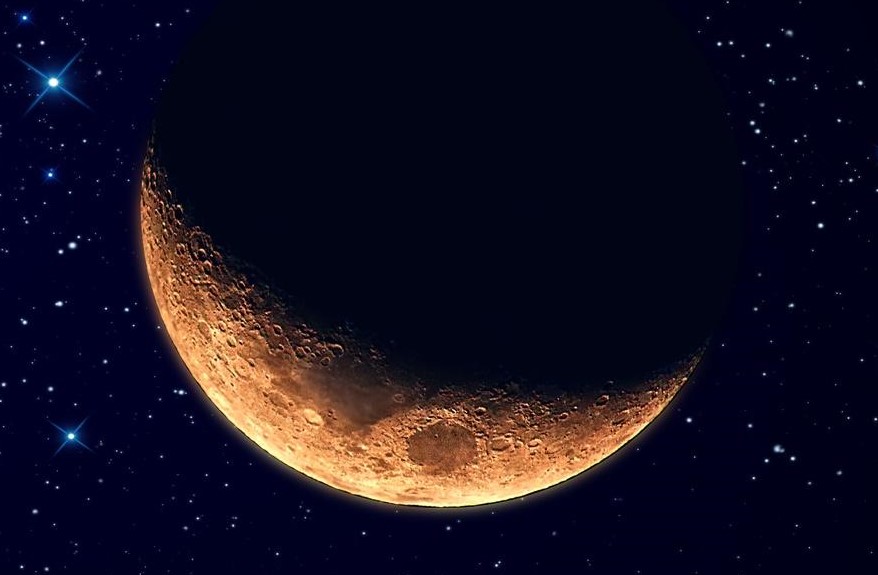
God was clipping her nails this morning and a luminescent fragment the shape of a crescent moon landed in the backyard: a beautiful asteroid, a source of light, the end of the raspberries.

 My entire garden is now filled with holy DNA. If this were a crime show, I could easily make a positive identification, but would there be a conviction? Even with humans, that’s never a sure thing. With God, highly unlikely.

“Sorry about that,” God says as she lifts the massive sliver of fingernail from earth and tosses it into the cosmos. “Careless of me to clip so close.”

“You could’ve wiped me out,” I say in an accusatory tone. “I can’t handle these jagged leavings and dangerous castings off.”

“I said I was sorry.” God can be a little defensive sometimes. She pauses, then adds. “Ah, c’mere. You don’t look so good.”

“Yeah, I’m not feeling all that well,” I admit as I crawl into the downy nest that God and I have created for the coming hibernation.

“Me neither,” God says with a sniffle. “Probably just a cold, but with all the upheaval, it’s hard to know for sure.”

“Isn’t it peculiar that before execution, the prisoner can choose a last meal?” I ask as we snuggle in. I ignore God’s quizzical look and continue. “So, what would you order?”

God is silent for a minute, then asks, “Sometimes, you’d like to kill me off, wouldn’t you?”

“Yeah,” I admit. “You’re precarious and whimsical. Inscrutable and endless. I need something easier. Less promise. More substance.”

Again, silence. Then, “I’d have nuts and berries mostly. Goat cheese. A little pasta. And three or four stiff drinks. White Russians, maybe.”

I whack God with a roll of political flyers from the recycle pile and offer her a megadose of vitamin C. She flinches dramatically, smiles, and takes two of the chewable tablets.

“How ‘bout a siesta?” she asks.

I shake my head. “You go ahead. I’ve got to transplant the rhubarb and that poor little pine tree.”

“Oh, good grief,” God says. “Can’t you leave well enough alone?”

The pine tree is a sore subject. I’ve moved it four times because I keep changing the layout of the garden and it’s in the way again. I want it to thrive but only where I want it to thrive.

To my chagrin, I start to cry a little. “I’m tired of everything,” I say. There’s a catch in my voice. “Especially myself.”

“I know, honey,” God says. “That’s why a little nap is such a good idea.”

Existential Angst

The explanation could be as simple as caffeine. Or scoldings by Ms. Manners. Or a niggling Jiminy Cricket on my shoulder whispering reminders of my failings and violations of the common good. I don’t know, but I can’t seem to get rid of the angst and sense of urgency that rob me of the peaceful existence I deserve. Something or someone is out to get me. I share the paranoia of my era. The exaggerated, anxiety-producing avoidance of death.

My father died nine days short of my 20th birthday. He exited life as I was exiting the teens. He was 44. Somehow, my grief-demolished mother hosted a random set of grandparents for a bleak commemoration of the day I was born. She made roast beef, potatoes, and a cake. It was a dark, dark birthday. I don’t know how we managed to swallow.

“But you did,” God says, joining me gently as I sit with memories flooding by on either side. “Your mother was as brave as anyone I’ve known, but I had to attend that party disguised and uninvited. She was done with me, and I don’t blame her.”

“I didn’t even know you were there!” I exclaim. “I brought a different god. He spewed platitudes and mumbled lies about God’s will and imminent resurrections and such. It was awful. Why didn’t you shut him up?”

“All in good time,” God says, her eyes filling with tears. “I’m not apologizing or defending myself, but there are days I just cry my eyes out.”

I put my arms around God while she sobs as if the loss were yesterday. And for God, it was. And is. And ever shall be. I cannot think of what to do. We are all baffled kings composing hallelujahs. Overthrown by instinct and libido, lust and love. Endless birthing. Endless dying.

“I never intend to fool or frighten anyone,” she says, taking deep ragged breaths to calm herself.

“I know, Sweetheart,” I say. I run my fingers through her unruly hair. “But we judge and fool and frighten ourselves. We can’t help it. The contradictions and losses are too much.” God slowly slips out of my embrace. She moves to the outer edges of the known, opens her thousand wings, and disappears. Behind her the path is littered with breadcrumbs, a trail of her broken self. As I follow, all things extraneous fall away, and I am slightly less afraid.

The Constant is Change

“A kennel is different than a fenced yard,” I explained to God last evening as we problem-solved the nature of limits, dogs, and human frailties. Dogs naturally dig, bark, jump, protect, chase, growl, and express exuberant affection. This presents problems to the elderly, newly planted marigolds, and other tender things. God seems to think containment should include flow.

“I know the difference,” God said with a twinge of disdain. “But I want to be able to open the door and be done with it. I like things simple.”

What a lie! I risked looking straight at God who then splintered into a hungry blackbird, a broken bike, unearthed seedlings, an abandoned fawn, an icy river, and hops vines using last year’s growth to climb heavenward. A teaspoon of topsoil, a glance at sky–this is all the evidence anyone needs; God does not like things simple.

“Fine. So we’re not that simple,” God admitted, fading into the late-blooming lilacs. I filled the bird feeder, replanted snapdragons, marigolds, and basil, and imagined how I could upcycle the bike. It has a kickstand. That gave me hope. Even though the river is high and noisy, I slept well.

But an intrusive idea about yet another way to rearrange the living room occurred to me this morning, and a Paul Simon tune is on replay in my head. The bike is still broken and I need to build a fence. I’m trying to focus, but distractions take root like invasive weeds—they have no natural enemies. Possibilities plague me. What should I transform next?

The angelic face of change is often made of plastic and other petroleum products designed to enslave and deplete. And yet…

Change is what we are made of.

What would we do without rust and mildew, the molding peach, the dry rot spreading through brick and mortar? Should we bow down to the power of deterioration and thank the gods of decline? I think not, but I suspect it’s all the same to the Many-Sided God; unlike me, they are free and untethered.

“Ah, but you are free to choose your tethers.” God intrudes midsentence–appearing as punctuation and grammar, a parenthetical phrase gone rogue, coauthoring away, as unbidden as Paul Simon, as pernicious as bindweed. And as dangerous as an unruly dog who is way too happy to see me.

“Get down!” I yell. This is not an ideal way to interact with God, but I have no treats or tennis balls to throw, so I drop to my knees where it’s safer and tell myself it’s not a bad thing to be adored.

Bruised

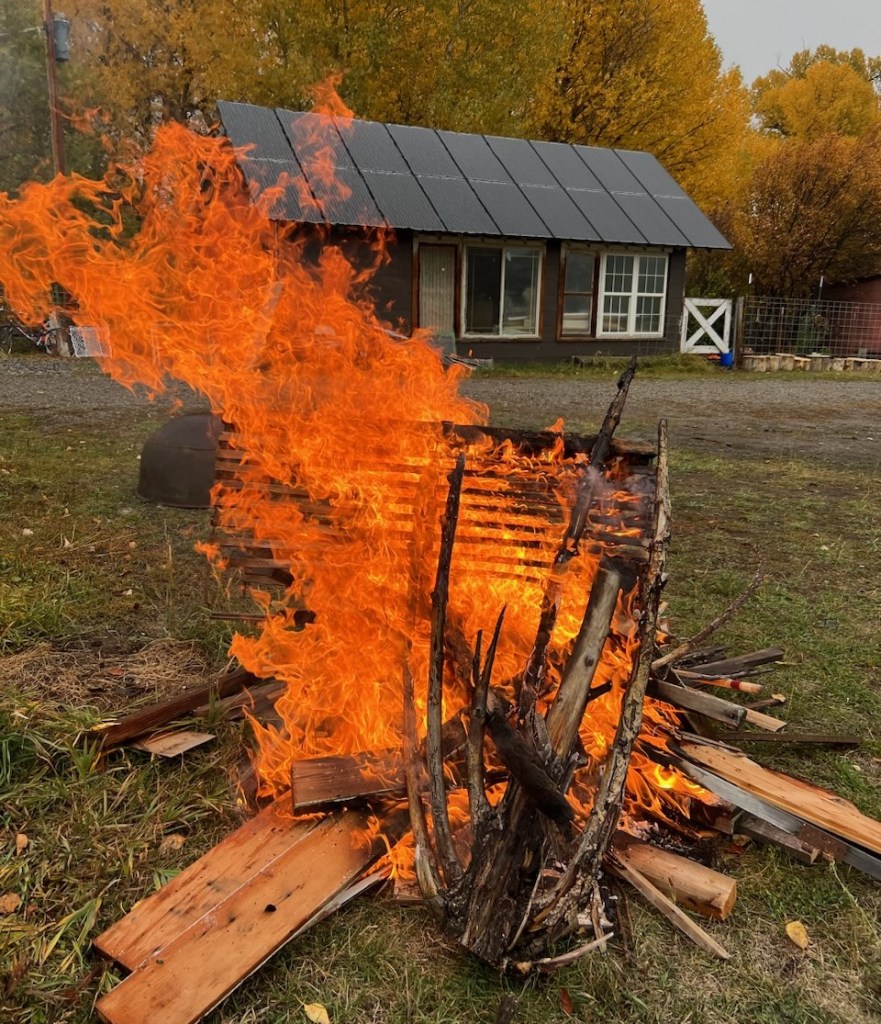
God and I were sitting in our pajamas near a nice fire, watching the sky, hoping the storm wouldn’t bring the cold temperatures predicted. Hoping the planet would somehow survive the ravages of greed. I was examining an ugly bruise on my forearm. Essentially, bruises occur when capillaries near the surface break and spill blood. Thin skin increases the risk.

Thousands of years ago, a prophet wrote that God wouldn’t take advantage of a bruised reed. There was no mention of bruised arms, egos, or disintegrating hips, but why would this assertion be necessary? What kind of God would go around beating up injured, weakened people, or break an already bruised reed?

“Um, God,” I say, “What’s your point with that whole bruised reed thing?”

God’s full attention swings toward me, a lumbering presence, a set of boots. I pull my sleeve down to cover the purple blotch. A tiny fraction of God’s focus is enough to end life as we know it, but I risk such things because in the end, it doesn’t matter. We’re sitting on a second-hand couch. I don’t care if it gets scorched.

“Why do you ask?” God says, warm breath laced with lavender and the allure of summer.

“Nice move,” I mumble and shift my gaze to the sparrows landing on the icy fence. As most four-year-olds know, Why? has no final answer. Asking why is a way to prolong the conversation, to shift the burden back.

I turn again to the God on my couch. “I ask because…” I am inundated with unwelcome insights. I hate bruised reeds. If I were God, I’d make a bonfire out of those damned reeds. How is it possible to walk alongside the bruising and the bruised? I don’t like wounded healers, and I don’t want to be one.

We sit. The wind is picking up, the chill becoming dangerous.

The ancient gaze of God is kind. “You love what you think is whole and beautiful because your vision is shallow.”

I close my eyes.

The primordial voice of God is gentle. “You love stories with endings because the untold threatens your sense of control.”

I cover my ears.

The wounded hand of God is warm as it hovers over mine. “You love stones because the bruises don’t show.”

I open one eye.

It’s not a single hand but a thousand; mottled, thick veined, and open. I choose one, entwine our fingers, and wait. God willing, the frozen ground will eventually soften toward spring when both planting and burying will be easier.  “Oh, we’re willing,” God says as the sky dumps snow. “But are you?”

The Long Gray Bird

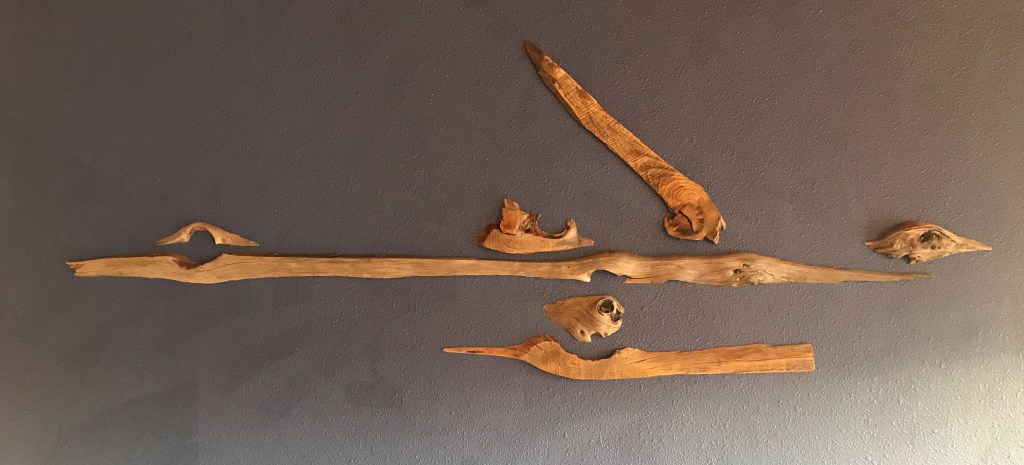
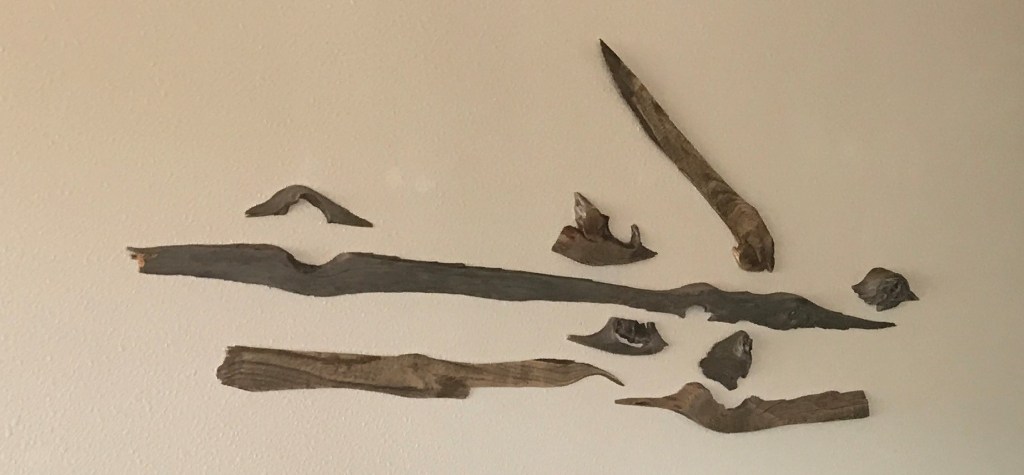
The long gray bird is back with her disconnected head and graceful wing. She defines space that would otherwise be undefined, and she does so without much deliberation. She could have easily been compost or firewood which would have been fine. But for now, she’s an expression of God and grace, small nails, and a blank wall.

Last night on the news, I saw a soldier in combat fatigues: helmet, rifle, boots. He was sitting vacant-faced on the steps of a bombed-out building, the dark child beside him barely clad. Neither of them will ever find their way to my easy world. In fact, they may not even make it home.

I sleep, and in my dream, I welcome them. They are God. To the Soldier I say, “God, darling. You are beautiful and deadly. I wish you were obsolete.” To the Child I say, “Get up and run. It’s not safe here.” The Soldier looks me in the eye and hands me his rifle. “You cannot define the space around me,” he says. “I have to do that myself.” He lifts the Child into his arms with a certain finality and cushions her head safe against his chest.

I don’t know where they’re going or if they’ll return. I wave and try my best to smile, but the departure leaves me bereft, without purpose or direction.

“God,” I whisper, awake and facing morning, “You know I’d like to extend my reach; do things that make me feel important and complete. I’d like to turn the tide of hate into an ocean of love. I’d like to make the fear go away.”

The God of early morning is often soft, responsive to my naïve and narcissistic longings. She is patient. Unafraid. She knows that in any given moment, I could pull her off the wall, snap her neck, and put her in the woodstove, thus ending the torment of hope. She laughs like smoke. She is the residue of a well-lived life, the stubble in the field. She is sapling and ash, beginning and end, warrior and rose.

“I know,” the God of early morning whispers back. I hear the murmur of wings as the gray bird takes flight. “I am of your doing, and you of mine.” I nod, and again I wave and smile. But this time, no grief. I’m at peace with the leavings. Joyful, even. There is little doubt that in my next dream, I will learn to fly.

Off-Gassing

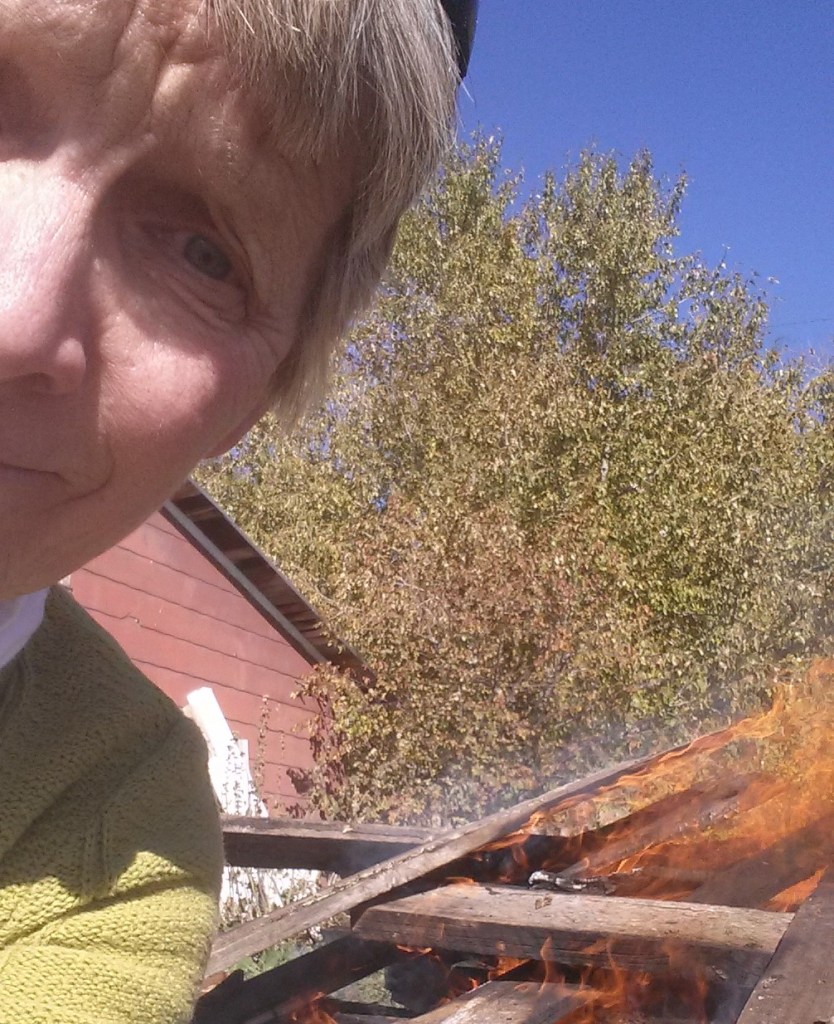
I closed doors, opened windows, turned on fans, and lit the first fire in my new wood cookstove this morning so it could begin off-gassing. Then I took my latest rock project outside to spray with clear lacquer. The smell of that stuff can ruin your day if not your lungs. Some things necessarily involve the management of toxicity. In fact, as I think about it, there’s likely no avoiding toxicity as part of a larger process. Anywhere. Ever.

“You sure about that?” God asked.

“No,” I said, “but I bet you have an opinion.”

That cracked God up. “Ha! Me? An opinion? Did you forget I’m God? I don’t have opinions.” She said this with disdain.

I felt like doing a little off-gassing myself at this point. “Fine,” I said. “But back to toxicity. It’s like evil, right? Somehow, it’s part of the point. Rotten things smell terrible. Poop is disgusting. It’s the essential tug-of-war.”

“Not exactly.” God looked bored. “What’re you wearing for Halloween?” she asked. “I’m thinking witch, but I also love going as Quasimodo. That hump and giant mole really get to people. And it’s easier than dragging along a broom.”

I stared at God and then out the window. I wondered how the fire was doing. I wondered if the stones were dry. I wondered if I would ever get a straight answer from God.

“You won’t get many,” God said. “But I’m consistent. There’s that.”

“Like ‘love your enemies’ and all those other impossibilities?” I said, in a surly voice. “You mean how you’re the definition of compassion while horrid things happen all the time, right? You mean how deception is wrong, no matter what?”

God smiled, nodded, and lifted with a thousand wings. God drifted like smoke. God surfaced, a blue whale in a vast sea. I was enfolded in something beyond myself. It was nothingness, but I wasn’t worried. Something about me was holding strong. The basics. The dialectics.

“Don’t forget Lucifer,” God whispered and rubbed what felt like my head. “I love that little pipsqueak.”

“I’ve always known that,” I whispered back. “I’ll never forget.” I was making promises I had no way of keeping, but it seemed to please God anyway.

“Set the intention,” said Blue Whale before diving to the ocean floor. “Then hang on.”

So that’s what I’m doing. Intention is set and I’m hanging on. I will minimize my toxicity as best I can. But my reach exceeds my grasp, as I suspect it always will—and that damn new stove is back-drafting.

Burgers

“God,” I said. “In order to believe in some absolute form of you and thus be falsely assured of a thin, exclusive salvation, a lot of people have silenced their hearts and blinded themselves. You’re aware of that, right?” God rubbed his forehead and looked out the window. I continued.  “They put basic truths through mental meatgrinders, make up twisted doctrines, call this faith, and hang together in paranoid groups, ignoring the obvious and applauding the hateful.”

God drummed his fingers together and used his sleeve to wipe his nose. The tears were real, even if God isn’t always real. The idea of absolute has the same problem as the idea of the perfect quilt when it’s chilly, the day free of duties or doubts, possessions that need no maintenance, the weedless garden…. Absolute is a nice idea but in our small slice of temporary reality, there’s no such thing. The quilt has lumps. The day has worries. Things break down and end. There may be no weeds visible, but just under that dark sheen lurk roots and seeds patient and tenacious.

In time, all things show their fault lines–their contradictions, inadequacies, hypocrisies, and failings. But what if we could move out of the constraints of time? What if fault lines are passageways?

God wavered and disappeared as he often does. “Come back,” I commanded in my bravest voice. “Stop feeling sorry for yourself. Enlighten me. I’m wondering if anything is absolute, and I don’t have all day. Or maybe I do, but I like you best in the morning.”

“Why?” God asked silently.

“Not sure,” I said, happy to be back in dialogue. I often chew on my left thumb when God and I visit. Today, the thumb tasted like soap because I had just washed yesterday’s dishes, and I’m not great at rinsing. I swallowed the soapy taste. “You seem fresher. More possible.”

Still no visible sign of God. “Oh, I’m absolutely possible,” he said from nowhere. “All day. Late into most nights.”

With that amorphous assurance, I put myself in motion; hung the laundry, took out the trash, wiped some dusty surfaces, touched a couple of my favorite rocks, scrubbed three fat carrots that grew despite the weeds, combed my hair, found my phone, took some vitamins, and packed the car for a trip to town.

 “What do you want to do for lunch?” I asked God, politely ignoring his absence.

“How about burgers?” God said, chuckling.

“Or not,” I smiled. I don’t like burgers. God knows this. And I absolutely know God knows. And that’s what made this reassuring. And very funny.

Detritivores

Photo credit: Andrew Cooper

We buried huge pieces of our neighbor’s fallen cottonwood in our garden a couple years ago so the soil could benefit as the wood decomposed. The Germans named this process Hugelkulture. Our neighbor had planned to burn the pile–converting decaying wood to unnecessary BTUs and ash. Not an awful thing to do, but not ideal.

Over the past couple years, deceased bodies beloved to me have also been converted to ash; rolled through a special chamber that reaches over 1400 degrees Fahrenheit, bone fragments pulverized, and the resulting remains scattered on chosen hills, sprinkled on the face of deep waters, buried alongside a rosebush, or saved in an urn.

The air stirred during one of these scatterings. Turns out it was God, shaking flour off her apron so she could join the final minutes of the ceremony. She’d been baking croissants. Thanks to her vigorous flapping, the gray powder twirled upward in micro dust devils instead of drifting peacefully to earth. “That’s what ash does,” God whispered defensively as I frowned and shook my head. “It can’t be entirely controlled or avoided even on calm days.”

“Then you’re a lot like ash,” I whispered, smiling so she wouldn’t think I was angry with her. Of course, I’m always a little angry with God but not enough to want to hurt her feelings or make her disappear. I think she feels the same about me.

“No, not ash. I’m more like the detritivores chomping away on your cottonwood stumps,” she teased back.

“Excuse me?” I raised my eyebrows.

“Look it up,” God whispered. But somehow, I knew. Detritivores are creatures that convert the dead to nutrition for the living; butterflies, maggots, and such. They thrive off waste, breaking down and cleaning up that which is left behind.

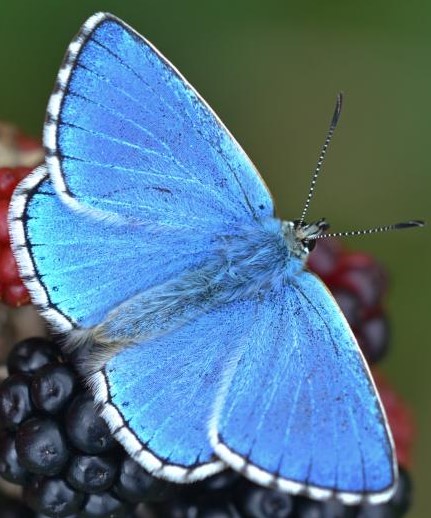
Once, I was laying in some grass and a butterfly landed in front of my nose. It was my father, long-dead, hypnotic wings the iridescent blue of his eyes. He was as attentive as ever. We talked of things, worldly and otherwise, and he flew away. Now, decades later, many more forebears have joined him.

“I’d rather go gently into dark dirt than blaze up in flames,” I muttered to God. “Is it legal to be buried in your own garden?” We’d both been rude side-talkers, but my voice may have gotten louder. God shushed me. The priest intoned the final blessing and made the sign of the cross, ignoring the ash settling on his shoulders. I leaned in close and whispered, “I bet those robes are going straight to the cleaners.” God stared straight ahead, but her mouth twitched a little as we bowed our heads for the final prayer. Neither of us closed our eyes.

Shoulder Rub

Big History Project

“Why do you bother with me anyway?” God asked, petulant. It was still dark, but I could see the hazy outline of his dejected posture. He sounded depressed and antagonistic. Oh, great, I thought. One of those moods.

“Do I have a choice?” I mumbled from my twisted blankets. I didn’t want to play this game. The answers never change. I bother with God because God bothers me, and dealing with the plague of God is my way of chopping a path through the underbrush of life.

People who believe in some form of a creator tend to give thanks for the good things or ask for favors. They bank on God’s better side, fawning over him with praise, thanksgiving, or strange offerings that range from doves to virgins. Some twirl, some tithe. Some pray constantly, some five times a day. Some use ancient supplications, others improvise. I assume they think this will please or appease. Perhaps they imagine they can influence The Entity to send rain, heal a loved one, or save us from making the planet uninhabitable. I guess it’s worth a shot. But I’ve grown more and more familiar with the underbelly of God–the tender, desperate Alpha, the grief-stricken Omega, the wily Wonderment, the inexplicable Everlasting–and I’m not so sure.

I held perfectly still under the covers, waiting for God to intrude into my head with a comment or retort, but for once, God didn’t seem to be tuned in. He was folded, self-absorbed. This did not bode well for the hours of light and toil ahead of us. Was God going to sulk all day, slimy and bleak like pond mud? Would he harden by evening, cracking in the heat of a merciless sun? And when night falls, will he leave this planet, once and for all, tired of the ignorance and blame?

I sat up. “Come here,” I said. “You know a lot of us are sorry, don’t you?” My eyes were open and steady. I motioned for him to sit on the floor beside the bed. He looked suspicious but complied, and I began rubbing his shoulders. My hands tingled as they sank down into the trapezius muscles of a tense God. I kneaded the flesh like I knead bread, my fingers probing the sore spots, my palm pressing down into the transient tangibility; a form of prayer. Easy, without words.

The body of God relaxed and bravely gave way, softening into malleable clay. I let my hands rest on the uneven, brooding surface of dawn. Billions of years stood by, talking among themselves, just loud enough to remind me that there was work to do. Today. This day.

“Let’s get a move on Sweetheart,” I said to God, giving the shoulders one last squeeze.

God shrugged, stood, and straightened himself to his full height. “Fine,” he said. “You’re the boss.”

Auto-Correct

My Co-author had to disrupt the internet to get my attention and even now, crashed and subdued, I’m trying to find ways to curl up around some happy little thought and protect myself from the simplicities and complexities of that damn self-reflective loop that causes me such trouble. It’s worse than my morning cough. Worse than my lists of things to do. Is this banquet of options meant to prove something? Should I learn to weld?

My Co-author offers no edits. The exuberant birds keep singing, even though I’m sure they’ve already mated for the season. We have water. Enough water for baths and baptisms, for chard, onions, and corn. But the way forward, the way back–always under construction. This is hard for most lifeforms and algorithms to grasp. I am among them.

With a cool breeze and sustenance, it’s easier to make space for my longings and give them a name. I will call them Holy. With a severely curtailed agenda, it is easier to befriend all those familiar demons and fears. I will call them Holy as well. I recognize my hands and consider the things they will do today. If I stare long enough, the delicate bones of God disintegrate, and to be consistent, I know I should call the disintegration Holy and make this morning into a trinity. Land, sea, and sky. Mind, body, and soul. Life, death, and passage.

God slides into distant view as an inane prompt, wondering if I want to save this document. It’s not been saved in the allotted time, nor have I, nor have the people washing up on various shores, seeking to make a better life.

“I don’t like your magnitude this morning,” I tell my Co-author.

“I know,” she says. “And I don’t blame you one bit.”

“Oh, but you do,” I say. “I feel the sun on my damaged skin. I taste the salt. The joy in the river is at an all-time low.”

“And yet, here we are,” my Co-author says, complacent.

“Would you mind editing?” I ask.

“No need,” my Co-author says. “Everything stolen shall be returned. Everything broken shall be repaired. All words misspoken shall be transformed.”

“Sounds as reliable as auto-correct.” I say in a snarky voice. “So, thanks for nothing.”

“You’re welcome,” my Co-author says, and she means it. Nothing is one of her favorite gifts.

A misguided bird has flown through the open door into our porch. I move to help it rejoin the wilder world, glad to have something obvious to do, but before I get there, it has realized its mistake and flown away.