Monday Monday

Most Mondays (the start-over day) I grope my way to coffee and toast, check the weather, listen to the news, and pause to consider the wonderment and demands of another day. Then I prowl around considering which room to declare sacred for the next couple of hours, which chair will be most inspirational, and which accoutrements might help me face the blank screen and a recalcitrant Coauthor. We have a deal. On Mondays, we will string together a set of words that speak to the human condition.

Usually, I settle into one of our old recliners, expand into everything, fold into nothing, and die a couple of times while my Coauthor courses through my circulatory systems, both physical and psychic. She glints off the shiny surfaces of my remaining life and prances naked desires across my ever-changing visual field.

I shield my eyes.

Plug my ears.

Duck my head.

Doesn’t matter.

It’s an Internal, Infernal Presence.

There’s no escape.

“Wouldn’t it be nice if everyone had a comfy recliner like you?” my Coauthor asks as she peeks from an array of books on the bookshelf and strums seven painted driftwood sticks glued to a canvas as if they were strings on a cello. As if she has become Yoyo Ma. As if this complex web of existence is intentional. As if I am among the intentions.

“Sure. Go for it,” I snap. “Whip up 7.9 billion recliners. Make them compostable and fireproof. Make sure they can serve as flotation devices and bomb shelters and can be eaten during famine. Make them vibrate with joy and catch mice and roll across all the floors of the world without leaving marks.”

“Brilliant!” she declares, clapping her many hands. “I’ll put a solar panel on the back of each one, and they’ll pivot to follow the sun.”

She gives me a meaningful glance.

“No,” I say. “I will not pivot to follow the sun.”

“Oh, my silly little minion,” she laughs. “You’ve always pivoted to follow the sun. And you always will.”

I could protest this ludicrous claim, but with the Internal, Infernal Presence, there’s no winning, no losing, and definitely, no escape.

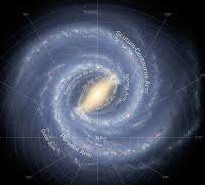
The sun is one of billions of stars orbiting the center of the Milky Way. Every 230 million years, an orbit is completed. In our heart of hearts, all silly minions know this. The Mondays will come and go until they don’t. Nothing is static. Nothing is certain. Tomorrow may rain, but in the end, we’ll follow the sun.

Planned Obsolescence

Did you know that if you push a straight edge up the outside of your apparently empty tube of toothpaste, at least a week’s worth will squish to the top? And if you cut the tube open and flay it, you’ll find even more of the goo clinging to the inside.

Labeling and packaging practices are fraught with waste, lack of imagination, and greed, often making it difficult to use up the entire contents of whatever it is you’ve purchased. And don’t get me started on single-use plastics, false recycling guarantees, and planned obsolescence.

Even well-intended containment is tricky. For instance, my own packaging has become increasingly prone to leaking, bruising, and breaking. My container has been taped up, repainted, and artificially preserved for a while now. Clearly, it’s not going to last until everything I have to offer is entirely used up.

As I struggle with this unpleasant reality, a primal protest grips me.

“Hey, Universe!” I yell. “When we age out, do our unused talents and potentialities end up in the Great Landfill of the Afterlife? Do you reabsorb our unwritten masterpieces? Our unsung songs? Hard-earned but unheeded advice? Unturned stones and dormant acts of kindness? How about the promises we meant to keep? Do you even have a plan for this obsolescence?”

God’s enormous head lifts from its heavenly repose in the sky beyond sky, and the Gaze comes to rest on the tiny speck that is our planet, that is my naked eye, that is a bioluminescent Whisper in the amniotic fluids covering the earth.

“You are not the sum of your talents, failures, passions, or fears,” the Whisper murmurs as the tide rolls in. “You’re the question, not the answer. You’re the journey, not the miles. You’re evolution’s hitchhiker, the plot of my favorite fantasy, and a transitory fraction in the equation you call eternity.”

This ethereal, evasive answer infuriates me. I want my untapped potential to guarantee longevity if not immortality. Like the spiritual toddler that I am, I throw my temporary container to the ground and beat my knobby fists against the pain of consciousness, empathy, imperfection, erosion, imagined glories, and old dogs.

The earth receives my rage and offers joy. Its undulating tenderness envelops me.

I roll onto my back and stare at the sky gathering itself into another night. The massive head of God explodes into trillions of stars, galaxies expanding, defying entropy and all attempts to limit or restrain.

Every boundary eventually gives way. Every horizon is a curvature forward. And we are all, together and forever, the trajectory of a certain hope and the substance of things not seen.

Impact

Who doesn’t (secretly or overtly) want to be a social influencer? Maybe a few humble souls are at peace with having little influence in the world, but I doubt they’re in the majority. Humans want proof that they matter—as measured by clicks, votes, money, fame, prestige, or power.

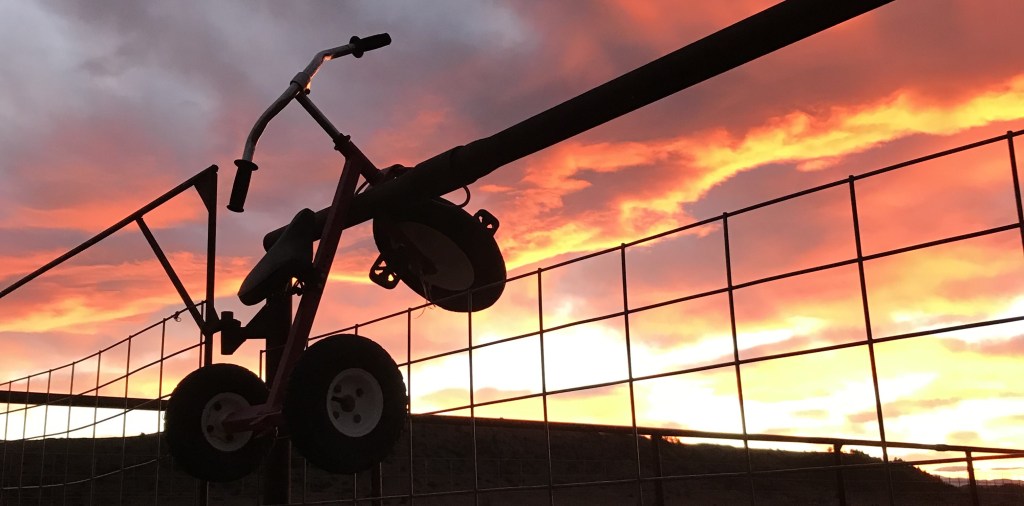
Years ago, I began learning a lesson I’m still working on. As a newly minted rehabilitation counselor, I was assigned to teach a young man with a serious brain injury how to ride his three-wheeler to the sheltered workshop where he glued pieces of wood together every day. This is harder than it might sound.

He flashed me a drooly grin as he turned a block early for the third time. I calmly redirected him, but inside, my ego was screaming. I wanted to be actualized and recognized. I wanted to be somebody. But here I was, with my master’s degree, on a back street in nowhere USA trying to help a badly damaged human being learn to navigate a three-block commute.

He gritted his teeth and pushed hard on the pedals. I pictured him before the crash, a reckless teenager, stomping on the gas in his souped-up car. He’d lost control and rolled three times. Hours later, the jaws of life had freed him to face a partial recovery followed by this new, confusing existence.

We made it to the employee entrance on his fourth try. I feigned approval, but I was resentful and exasperated. I had functional legs, strong arms, and an eager mind. I had a ten-speed bike, running shoes, three published poems, and a family that did not wish me dead.

“Can’t you give me something important to do?” I whined to the Universe. “Something that’ll make a difference?”

The day froze into a singular moment.

“Allow me to introduce you,” the Universe replied in a clear, penetrating voice. “This is my son, Clayton, with whom I am well-pleased. He needs a little help. I chose you, but if you’re unavailable, I have others.”

And as if that wasn’t enough, the Universe continued. “Clayton, dear, this is your servant, Rita. Be patient with her. She’s still figuring things out.”

So much life has flowed under so many bridges since that day, and so many Claytons have come and gone. In this waning light, Wisdom occasionally lifts her skirts to show me her ankles. But even now, instead of sitting in gratitude, I sometimes long for more. I want accolades and adoration. Assurances that I matter. Most days, I push down hard on the pedals, but I’m uncertain of which way to turn.

Obviously, I’m still figuring things out.

The Parade

God and I have been working on reining in our expectations. This is even harder for God than for me. It’s strangely comforting to know that the pain of my life’s chronic disappointments will end when I end. Not so for God. God’s unmet expectations and foiled hopes repeatedly jump the guardrails and roll around like bowling balls, bruising the same spots over and over. God’s tenacity and bravery are astonishing. Who else would willingly sign on for such endless frustrations?

“Aw, it’s not that bad,” God says, clearly pleased with my empathy and sincere admiration. “I do have a buttload of setbacks and disappointments to lug around but look at all the counterbalancing joys and successes.”

When God says things like buttload my adolescent self starts giggling, and my perspective shifts: The idea of everything going my way seems silly; fears and unfulfillments shrink; and my expectations shelve themselves in the basement pantry.

I take a few deep breaths, slap myself on the side of the head, and tell myself to grow up. But I can’t seem to stop. Buttload, I chuckle to myself, causing another hysterical outburst. I’m like a child who wants to keep laughing for the sheer delight of laughing.

“Hey goofball,” God says. “Pull yourself together. You’re late for the parade.”

What? Parade? I am instantly defiant. “I don’t like parades,” I say firmly.

Back in the day, I played saxophone in the high school marching band, waved at the crowds from homemade floats, tossed candy, handed out fliers, and once, I twirled a baton for seven miserable blocks while unimportant people clapped and cheered. I’m over all that. I’m not going.

God shrugs. “Either you go to the parade, or the parade comes to you.”

I hear the drums in the distance. On the horizon, the silhouettes of a flag-bearing honor guard move in lockstep. The floats begin to roll by, festooned with banners held aloft by my ancestors and dearly departed friends. Tears spill down my cheeks. Sheesh. What is wrong with me?

DO WHAT YOU CAN! the banners proclaim. ENJOY EVERYTHING! EXPECT NOTHING!

“Okay, God,” I sob. “You win.”

I grab a rusty frying pan and a hefty stick of driftwood. “But if it’s all the same to you, I’ll beat my own damn drum.”

“You bet,” God says, and falls in beside and around me, a swirling rainbow, a cloud of witnesses, shaking ancient tambourines. “Wouldn’t have it any other way.”

Oh Ye Who Forget That Thou Art Prey

When God stops by as humble as the Kirby salesman or the Fuller Brush Man and shows me his wares, I buy. I can’t help it. Love looks so good in the abstract. But love enacted is often irritating, complex and exhausting. It can take so damn much time and energy that I long to renege, retreat, and eat bonbons.

Well, maybe not bonbons but something mind-altering and self-indulgent. I’d be willing to eat my words if that would help, since I offer up a lot of verbiage urging acts of kindness upon myself and others.

A mountain lion killed our neighbor’s little dog this week. I’ve watched the instinctual responses of predators when edible creatures flee. Vicious jaws, brutal endings. Could instinct be a justification for bonbons? Aggression? Guns in the basement aimed at anyone planning to overpower me and eat my extra pasta?

“I’m sorry,” God says after listening to this rant for a few moments. “I can’t get into these concerns today.

“Why?” I ask. “Busy with that new little dog in heaven?” Okay. I admit I can be a real jerk when I feel scared, short-changed, or entitled.

God looks at me with compassion, turns, and walks away.

“Wait!” I shout, stricken with the shame of abandonment. “Please.”

“I can’t,” God says. “Use your new products. I’ll be back.”

I slam the door behind him, kick love to the corner, dig deep into the candy drawer, and pile wood on the fire. “No!” I bellow into the room, chaotic with yesterday’s attempts at decluttering. “Not me!!!”

The not-me arrives. She shows up whenever I yell for her and stays until she’s gorged herself on my best intentions. She’s unattractive and mean. When she finally slinks away, I’m usually sprawled on the couch, cursing my laziness, bad judgment, nasty temperament, and inadequate excuses for not saving the world or at least some little corner of it. There are chocolate smears around my mouth and thick socks on my feet.

Oh ye who forget that thou art prey; beware. And woe to ye who ignore thy forward eyes and pointed teeth reflected in thy steamy mirror. Thou art predator and thou art prey. Yet thou art also family. Therefore, thou must enter into sacrificial space, ready to share thine chocolate and thine life. That’s how it works.

That’s simply how it works.

Interruptions

“Have you noticed how often you interrupt me?” God asks, annoyed.

My verbal output may have been somewhat one-sided, driven by holiday agitation. I was holding forth about the ways of the world, all things irritating or ignorant, the costs of blind faith, and how positive and upbeat I think others should be. Including God.

“Sorry,” I say. “Go ahead. I’ll try to listen better.”

“Never mind,” God says. “I forgot what I was going to say anyway.”

Unlikely, I think to myself. How could the Living Word forget what she was going to say? But I sit politely as if I believe her, and she sits politely as if she’s not upset. As if she’s not reading my thoughts. As if people in the Ukraine aren’t very, very cold right now. As if people in my own community aren’t planning how to cheat on taxes and take more than their share. As if goodness and honesty and peace might have a chance.

Managing ourselves, three dogs, and four piglets in subzero weather has made everyone snippy. When it’s this cold, all manner of things can go wrong. Yes, I regularly interrupt God and the natural order, but isn’t that the human story? Most of us don’t want to die of exposure, physical or otherwise. We burn fossil fuels and hide among falsehoods and fairytales.

I follow God’s gaze to one of my many disorganized bookshelves. It’s a motley rainbow of words in shiny covers. I love books. I would get up and touch them, but I don’t want to spoil God’s revery. It’s obvious she finds comfort in the books, the words, the great and mighty abstractions contained in those bound and precious editions. I’m glad we have this in common.

“Do you ever interrupt yourself?” I ask God after our shared silence has run its course.

“Oh, yes,” she nods with a sad look. “Many times. It’s always tragic.”

She turns her hands palms up, stares at the scars, and like George Harrison’s guitar, she begins to gently weep. This always makes me cry.

She looks straight at me, wipes away the tears, and drops us into a bittersweet world where true words are like heirloom seeds; planted and watered, converting light to something verdant, innocent, and delicious. No comforting myths. No lies. No interruptions.

I know we cannot stay, but I give thanks before we return to the inescapable veracity of dogs, pigs, and fire. Mulled wine. Good cheer. In the chaos of Christmas, God and I make eye contact, and despite the contradictions, we vow to be respectfully conversant with this fragmented, freezing world.

Gifting

This morning began dark, but it has lightened to a dull gray which will soon give way to darkness again. I build a reluctant fire. God joins me, and we note the importance of a good draft. The air is heavy. My beer is cold.

I hate to admit it, but the sting of rejection has caused my joints to swell, and my dexterity is significantly reduced. The typos of life are hounding me. Blurry images of what could have been hang like abstract art in my ever-thinning soul.

“We should go shopping today,” I say. “I need to find the perfect presents and mail them to my enemies and detractors.”

God does a doubletake. She knows I hate shopping and would sooner maim or kill the monsters and idiots among us than take any kind of positive action.

“And not just my detractors!” I add, thrilled with the possibility that I’ve startled God.  “Not just my personal enemies. I’ll send gifts to crazed gunmen and billionaires. Liars. Haters. The meanest, most arrogant people on earth.”

We gaze at the fire. It’s not blazing the way it does sometimes, but it’s still fire. Still hypnotizing.

“Do you have their addresses?” God asks in a helpful, quiet voice.

“No, but I’m sure you do. Could I borrow your address book?”

“Of course,” God says. “But it’s rather futuristic. You know how some address books get outdated? Mine runs the other way. It gets ahead of itself.”

I sip my beer and consider this comforting absurdity.

“I myself have had a lot of addresses already,” I mention casually, hoping for a hint of what my future addresses might be.

“Nice try,” God says. “Could I help you with the wrapping? I love how you use old scarves and newspapers.”

“Nah.” I shake my head, deflated. “I’ve changed my mind. The jerks will just pitch the gifts out anyway.”

God hands me the scotch tape. “Doesn’t matter, sweetheart. Invest in the process. Open your soul and scrape it as clean as you can. Line it with shock absorbers, feathers, and things you honestly love. It’s not how a gift is received; it’s the giving that matters.”

 “I don’t think I believe that anymore,” I admit sadly.

“I know,” God says. “But you do.”

Blurred Boundaries at the Queer Bar

“None for me, thanks,” God says, when offered the security of a few defining boundaries. We’re at a queer bar. In the laughter, music, and seductive light, fireflies dart among those soon to fall. Approaching the revolving door, there’s a howling madman with guns and guns and guns. God runs her fingers through newly permed hair.

“We aren’t safe here,” I whisper.

“We aren’t safe anywhere,” God whispers back. “Relax.”

The beautiful, playful Embodiment raises her glass and winks. Hatred is creating cracks in the foundation beneath us.

“I’ve worried about you most of my life,” I tell her. “You indulge in too many altered states. You’re flimsy, malleable, and easily abused.”

God’s face breaks into a familiar hand-in-the-cookie-jar grin. “Well, at least I’m not gullible. My odds aren’t great, but that’s never stopped me from being true to myself.”

The cracks widen. Suddenly, we’re floating under an oil slick, auditing the military-industrial complex. We’re buying digital currency, baking sourdough bread, digging out from a mudslide. A child has won an assault weapon in a lottery, and ammunition is raining from a thunderous sky.

“This isn’t real,” I shout at the Body trampled by a stampeding crowd.

“Too real,” the Body shouts back, but the message is garbled. Her jaw is broken. This will make it even harder to discern her voice, and I am afraid.

“Fear not,” God declares with bravado. “I can teach you sign language. And I’ll be with you always, even to the end of the age.”

“Of course you will,” I mumble. “And that’s what I fear the most.”

“The end of the age?” God asks. “Or me?”

“Both.”

The war is vicious. The outcome, assured. As I untangle strands of vain longings and false hopes, God teaches me the signs for wonder, love, compassion, and peace, and we use them to order another drink. She sips through a paper straw.

I lean across the table to dab dried blood off her chin. My dampened handkerchief gathers the red and transforms into bolts and bolts and bolts of satin, the kind they use for lining coffins.

“I wish I could die innocent,” I say, gazing at God’s mangled face. I will always watch this face and try to wipe the blood away. But I will not die innocent.

God nods. “You should forgive yourself. Dying forgiven is better than dying innocent anyway.” She touches her chest and then mine, and we wait, knowing the music will eventually begin again.

From Whence We Came

Almost every day, God and I sit in a ratty blue recliner angled toward the window and sip beer. God expects me to hold still and listen. I try, but it seems nonsensical—an inefficient and unreasonable request.

Then I remind myself that efficiency isn’t the only road to success and not everything worthwhile is reasonable. The ability to reason is one ingredient in the soup that defines us, but it’s not the entire recipe. There’s sausage, kale, and wonderment. There’s an extravagance in creation that can’t be explained. Abstract thought and scientific inquiry may be the pinnacles of evolution, but pinnacles need foundations. Humans rationalize cruelty as readily as they eat that second donut.

“Working on some interesting similes and metaphors this morning, aren’t we?” God teases, sliding from chair to mirror to window to bird, sashaying to music I can barely hear.

“I’m thinking about foibles and do-overs,” I answer, happy that God seems loose and crazy today. “Could I have the last ten minutes back? I went down the wrong rabbit hole.”

“Nope,” God says. “Why do you even bother to ask? You know better.”

“No, I don’t,” I say, gleeful and untethered. “YOU know better.”

God winks and pulls me out of the chair. We do a four-pig jig creaking around the room in old bodies. We dance straight through the newly purple wall and fall, barriers breaking like bones.

I am blissfully unaware of dinosaurs, dodos, and all the hapless creatures currently facing extinction before they even have a name. They can all be Adam. They can all be Eve. I love them fiercely, but I can’t save them. I can’t even save myself (and truthfully, I don’t want to).

God’s reading glasses fly off while we’re cavorting. They shatter against the edge of a light green piece of granite I keep nearby for thermal mass, and small pieces fly everywhere. But no worries. The dangerous shards gather themselves into a coarse form of collective compassion, willing to return to the fire from whence they came. The fire from whence we all came. The fire to which we will all return.

“Sorry about your glasses,” I say. “I could read to you until they’re fixed if you’d like.”

“I’d like that very much,” God says.

“Do you mind if I start in the middle?” I ask. “I’ve already read the first chapters.”

“Not at all,” God says. “I suspect I know the plot.”

“I’m sure that’s true,” I say, oddly defensive. “But the descriptions are spectacular. And the details matter.”

“Yes, they do,” God agrees. “They really do.”